
Cabarrus child protection team reports rise in school suicide assessments, urges community action on online risks and safe sleep
Get AI-powered insights, summaries, and transcripts
Subscribe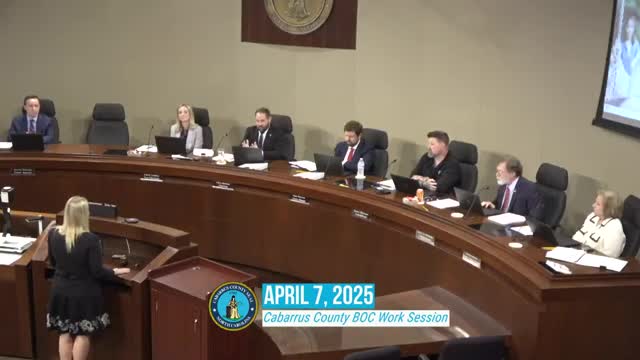
Summary
Paula Yost, chair of Cabarrus County’s Child Protection and Fatality Team, told county commissioners on April 7 that the team reviewed every child fatality in the county and that county agencies are seeing rising mental‑health crises among adolescents.
Paula Yost, chair of Cabarrus County’s Child Protection and Fatality Team, told county commissioners on April 7 that the team reviewed every child fatality in the county and that county agencies are seeing rising mental‑health crises among adolescents.
Yost said Cabarrus Department of Social Services handled 3,516 child‑abuse investigations in 2024 and accepted 1,462 reports for further action. Of those, she said, 466 were classified as investigative cases — the “worst of the worst” — and in‑home services were provided to about 68 families per month, up from roughly 45 the year before. Foster‑care counts were lower in 2024, with 77 children in care compared with 182 the prior year.
The data framed a larger presentation from health, school and public‑safety partners on trends and prevention. Amy Jewell, director of student and family support for Cabarrus County Schools, said school teams completed 420 suicide assessments in 2023 (56 of which required acute medical care) and 335 in 2024 (51 requiring acute care). Through February 2025 the district had recorded 350 assessments, 62 of which required urgent medical attention.
"Unsafe sleep traditionally has been the number 1 avoidable form of fatality in Cabarrus County among our children," Yost said, adding that the county also recorded multiple fatalities tied to accidents and prematurity in the prior review year.
Esther Schammeling, the district attorney, told commissioners that child‑exploitation investigations are increasingly finding younger victims and offenders who meet children online. "These crimes are preventable," Schammeling said. "When we're given our kids a phone, we're also giving an offender access to them." She urged parents and community members to monitor changes in mood, sleep and eating, to report concerns to school resource officers, and to use local resources she identified, including Present Age Ministries and The Lantern Project.
Schammeling also asked for political support for several law‑and‑policy changes she said would help prosecutions and investigations: (1) clearer state or federal data‑sharing policies so agencies can share relevant case details across partners; (2) tougher sentencing for adults who arrange sexual acts with minors online; and (3) faster turnaround on medical‑examiner reports for suspicious child deaths so investigations can proceed. She described the medical examiner as a state function and asked the commission to back legislation that would “fast‑track child deaths.”
Partners Behavioral Health, Cabarrus Health and the county behavioral health center described ongoing prevention work including trainings (114 sessions and more than 1,300 residents trained, the presenters said), community suicide‑prevention events, and school‑based supports. Jewell described school‑based prevention measures: QPR (question, persuade, refer) and Mental Health First Aid trainers on staff, a universal wellness screener three times per year, an anonymous reporting app, telehealth through Atrium for students and 19 school‑based therapy providers available by parent referral.
Deputy Chief Cara Clark described a new parent and infant wellness pilot run through the community paramedic program and developed with Atrium Cabarrus Hospital. Community paramedics visit consenting mothers shortly after discharge and provide simple clinical checks such as blood pressure and infant weight, safe‑sleep education, and, when needed, help connecting families to equipment and services. Clark said the paramedics helped one family obtain a safer pack‑and‑play through a local fund and installed smoke and carbon‑monoxide detectors in another household.
Yost and partners asked commissioners to help amplify prevention messaging, support school cell‑phone policies aimed at reducing online exposure, and open doors for the team to present in community settings. The child protection and fatality team said it meets monthly with 25 to 30 community partners who sign confidentiality agreements to review sensitive cases.
The presentation closed with an announcement of a public event April 11 at the child protection facility focused on suicide awareness, safe‑storage of firearms, medication take‑backs and car‑seat safety.