Get Full Government Meeting Transcripts, Videos, & Alerts Forever!
Get email alerts on the Environmental Protection Budget topic
No spam. Unsubscribe anytime.
DEP warns federal funding cuts would threaten New Jersey water systems, parks and wildfire response; asks legislature to back FY26 request
Summary
Commissioner LaTourette told the Assembly Budget Committee that cuts or terminations of federal grants threaten DEP’s ability to run drinking-water, clean-up and resilience programs and asked legislators to support the department’s FY26 priorities.
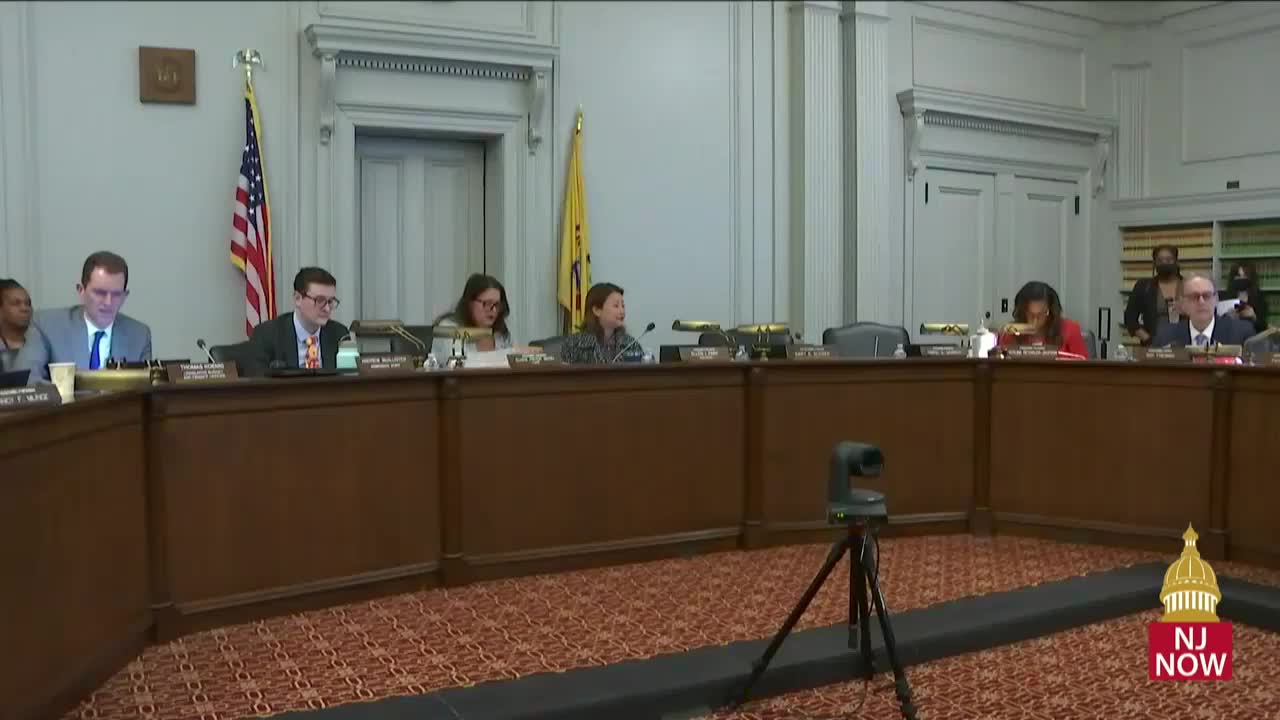
Commissioner LaTourette, commissioner of the Department of Environmental Protection, told the Assembly Budget Committee the department’s fiscal year 2026 budget request is aimed at protecting public health, water supplies and state environmental infrastructure amid “unparalleled upheaval and uncertainty at the federal level.”
LaTourette said the DEP implements most federal environmental laws in New Jersey and that federal grants underwrite a significant portion of those programs. “Approximately 10% of DEP's personnel budget is federally sourced as a function of that cooperative federalism in practice,” LaTourette said, adding that because the state has assumed primacy to implement federal programs it must carry out the work even if federal funding is reduced.
The commissioner warned that reductions at the U.S. Environmental Protection Agency, Department of Interior, FEMA and other federal agencies would force New Jersey to either increase state appropriations or raise regulatory fees. LaTourette said DEP is working with the attorney general and national state-environment counterparts to preserve federal funding but urged the legislature to anticipate gaps.
Why it matters: DEP manages drinking-water protection, wastewater funding and the state’s largest public-lands portfolio, including 53 state parks and nearly 1 million acres. LaTourette told lawmakers that the state faces “growing need for more than $32,000,000,000 over the next 20 years in water infrastructure investment,” and that federal capital grants are leveraged through state revolving funds to turn tens of millions of federal dollars into roughly a billion dollars of local investment in a typical recent year.
Key program pressures and costs
- PFAS and emerging contaminants: LaTourette told the committee that PFAS contamination will affect roughly 300 drinking-water systems statewide and that remediation costs will likely exceed $1 billion. “We estimate around 300 drinking water systems will have to address PFAS contamination in the coming years,” she said.
- Lead service lines: The commissioner said that, as of December 2024, water systems have identified more than 35,000 lead service lines and roughly 870,000 service lines of unknown material that require further investigation. Based on current inventories DEP estimates the total cost to remove statewide lead service lines could range “between $3 billion and $9 billion.”
- Combined sewer overflows and other projects: LaTourette estimated another roughly $3 billion over the next decade would be required to address combined sewer overflows, and restated the broader $32 billion, 20‑year water-infrastructure figure.
- State parks and public lands backlog: The department described approximately $1.4 billion in needed improvements across state parks and historic sites.
- Wildfire response: LaTourette said the DEP Forest Fire Service has been stretched by recent dry conditions and that the governor’s FY26 proposal includes an additional $1 million for preparedness and fire suppression. She said the service responded to “nearly 800 wildfires in just four months” during an abnormally dry fall, and to 535 wildfires in the first three months of this year.
Budget and contingency options
LaTourette told the committee the state can respond to federal funding terminations in only two practical ways: increase state appropriations or raise fees on regulated entities. Faced with diminishing federal support for capitalization grants to the state revolving funds and Army Corps shore‑protection projects, she said the state and municipalities could otherwise face significantly higher costs or rate increases for drinking water, wastewater and beach nourishment.
Regulatory, permitting and resiliency concerns
Committee members pressed the commissioner on the anticipated impact of DEP’s proposed resilience and land‑use rule changes (the “NJ PACT” package) on development, affordable housing and property values. LaTourette said the rules are designed to reduce flood risk and protect residents and infrastructure; she repeatedly emphasized that the rules target new construction and that in many places the coastal and inundation risk areas are largely built out. “This is not about going around raising every building in the coastal zone,” she said, adding that DEP would work with municipalities to coordinate permitting and to improve project navigation and online permitting services.
On flood mapping and insurance, LaTourette said DEP cannot change FEMA flood‑insurance maps but that state jurisdictional boundaries for flood‑hazard regulation extend slightly beyond FEMA maps. She told legislators mortgage lenders and insurance companies rely on FEMA maps, not DEP maps, for mandatory flood‑insurance determinations.
Trenton Water Works and operational oversight
Committee members raised Trenton Water Works’ operational and management problems. LaTourette confirmed DEP oversight and a proposed FY26 line item of $3 million to provide operational support—retaining engineering and technical services and, in some cases, purchasing services on behalf of the utility. She said capital improvements remain funded through New Jersey’s water‑bank and separate capital programs.
Implementation risks, staffing and process
Lawmakers asked about staffing levels, permitting backlogs and how DEP would manage any increase in regulatory workload under new rules. LaTourette said DEP has added some staff for implementation but that the 1.5% expansion of regulated area tied to the NJ PACT rule is modest and that the department already processes the relevant permit types. She reiterated that technology investments and additional appropriations improve permitting speed and encouraged legislators to support funding to avoid bottlenecks.
What’s next
LaTourette said the department will continue to press federal partners for funding, work with the Attorney General’s office to defend access to federal grants, and seek legislative support in the FY26 budget to preserve current programs and advance water‑infrastructure, PFAS remediation, lead‑service‑line replacement and coastal resilience initiatives.
Ending note: The commissioner closed by returning to the core mission: “The primary job is to improve and to protect the public health” and thanked the committee for the opportunity to discuss the FY26 request.
Speakers quoted or referenced in this article are listed in the speakers field below. Quotations are attributed only to those persons or roles appearing in the committee transcript.