Get Full Government Meeting Transcripts, Videos, & Alerts Forever!
Get email alerts on the District Attorney Audit topic
No spam. Unsubscribe anytime.
Audit finds tax-treatment and documentation issues in district attorney office salary supplements
Summary
An audit of the District Attorney’s Office found local salary supplements intended to keep assistant prosecutors competitive have not been re-evaluated since 2017, and that some supplements were improperly paid as vendor 1099s rather than through payroll for state-paid staff.
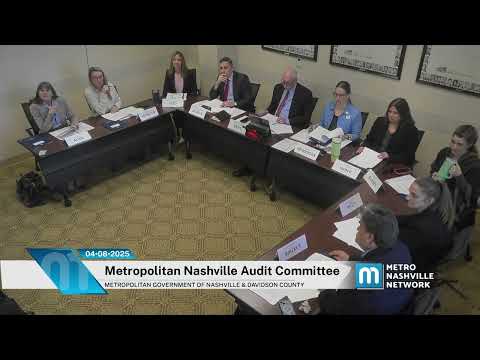
Metro auditors presented an audit of the District Attorney’s Office that reviewed controls over revenues, expenditures and assets and issued 11 recommendations, all of which the office accepted.
The audit flagged the local salary supplements that began after 2017 to help retain assistant district attorneys. Auditors found the supplements — described in testimony as $10,000 for assistant district attorneys and $20,000 for supervising assistant district attorneys when established — have not been re-evaluated and are not documented consistently in employment records. Auditors recommended documenting the supplements and adopting an annual methodology to assess whether the supplement continues to meet its recruitment and retention goals.
A second, higher-risk item involved tax treatment for state-paid prosecutors who received the Metro supplement as vendor payments and 1099s. Auditors told the committee that because the supplemental payments were part of employees’ regular duties, treating them as vendor income was incorrect under federal tax rules; the audit recommended working with Metro Finance and HR to change the tax treatment and route supplemental pay through payroll for affected employees.
Other findings included contract-management and inventory controls, improvements to how the office documents reimbursements from state sources, and better record-keeping for purchases and travel reimbursements. The audit found instances where temporary-services contracts lacked hourly rates and should have been processed through procurement. Auditors also identified discrepancies in computer-inventory records between the office, ITS and JIS and recommended reconciling those records to ensure accurate asset tracking.
The committee discussed policy constraints. Auditors and the DA’s office noted the salary scale for prosecutors is set by Tennessee statute, and the Metro supplement has been used as a local adjustment; however, statutory treatment limits how the supplement can be applied to state-paid positions and complicated the payroll mechanics. Committee members pressed for corrective action on tax treatment and documentation and requested follow-up on implementation steps.