Get Full Government Meeting Transcripts, Videos, & Alerts Forever!
Get email alerts on the Education Finance And Policy topic
No spam. Unsubscribe anytime.
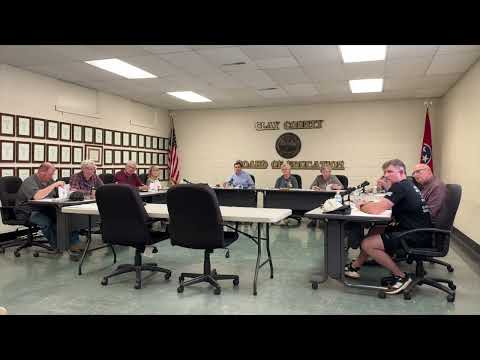
Clay County board approves K–8 science texts, five-door security contract, two one-time bonuses and budget amendment
Summary
At its April 10 meeting the Clay County Board of Education approved a K–8 science textbook adoption, a $COPS-funded contract to install access-control hardware on five doors, two one-time employee bonus resolutions (one funded by the state Education Freedom Act), and a general fund budget amendment.
The Clay County Board of Education on April 10 approved a set of routine and personnel actions, including a K–8 science textbook adoption, a contract to add access control hardware at five school doors, two one‑time bonus measures for employees and an amendment to the 2024–25 general purpose budget.
Board members said the actions respond to state funding and to local safety and staffing concerns. The measures passed by voice vote or roll call during the regular meeting and will move to the next administrative steps required to implement them.
The board approved a textbook adoption for K–8 science after the district adoption committee recommended Savas Elevate for kindergarten through eighth grade. The board noted high‑school materials were handled differently by the committee but did not provide specific titles for grades 9–12. The adoption was approved by motion; the board did not record further details about the high‑school selection at the meeting.
The board approved a purchase and contract with Central Technologies to install access‑control equipment, licenses and related hardware on five additional doors. District staff said the work covers preschool and early‑grade sites and is financed with Safe Schools funds tied to a COPS grant the district completed this year on a reimbursement basis. Board members identified the planned installs as two doors at Hermitage Springs, two at a K–8 site named in the packet, and one at Clayton Heights.
The board passed a resolution authorizing the district to accept state funds created by the Education Freedom Act of 2025 (the voucher bill) to provide a one‑time $2,000 payment to eligible classroom teachers and certain certified staff. District staff estimated the state payment to the district at about $184,000 and said the resolution is needed so the district can receive the funds; the board used a TSBA (Tennessee School Boards Association) resolution template provided in the meeting packet. Board members noted the district previously passed a resolution opposing the voucher bill as a whole but that accepting this discrete payment requires a formal acceptance resolution. Several board members asked whether any conditions attach to the funds; staff said the bonus is a one‑time payment and that final guidance was expected from the state after an April 15 meeting.
Separately, the board approved a one‑time $2,000 bonus for employees excluded from the Education Freedom Act — positions the district identified as noncertified staff such as aides, bus drivers and cooks (principals and assistant principals were listed as excluded under the state law). The board approved the excluded‑employee bonus to be prorated by an employee’s 2024–25 FTE (full‑time equivalent). District staff provided an estimate that implementing the excluded‑employee bonus as proposed would require about $221,000 from the district; the board discussed using one‑time fund balance revenues to cover the cost and noted the payment would not be sustainable as an annual obligation.
The board also approved a general purpose budget amendment for 2024–25 that reallocates and records new revenues and expenditures the district expects this year. Staff said the amendment pulls together multiple items: reimbursement revenue from the recently completed COPS grant, summer learning grants split between state and federal accounts, paid parental leave, the two one‑time bonuses, and adjustments to insurance and retirement lines. For the district’s Career and Technical Education (CTE) building the presenter said about $100,000 was included from undesignated fund balance to cover outstanding commitments; staff described some reporting changes required by the state for travel and career‑ladder allocations and moved those line items to conform to state audit preferences.
Votes at a glance
- Textbook adoption (K–8 Savas Elevate; high‑school materials: not specified): Motion passed (voice vote).
- Access control contract (Central Technologies; five doors): Motion passed (voice vote); funded from Safe Schools/COPS grant reimbursements (administrative packet language).
- Resolution to accept Education Freedom Act teacher bonus (one‑time $2,000 per eligible classroom teacher, Section 4 of Education Freedom Act of 2025): Motion by Mr. Ashlock, seconded by Ms. Weir; roll call recorded ayes from named members and motion passed. District estimate: about $184,000 in state funds to be received.
- One‑time $2,000 bonus for employees excluded from the Education Freedom Act (prorated by 2024–25 FTE): Motion by Mr. Ashlock, seconded by Mr. Melton; motion passed. District estimate: about $221,000 (to be funded from district resources/fund balance as presented).
- 2024–25 general purpose budget amendment (records COPS reimbursements, summer learning, paid parental leave, bonuses, and other adjustments): Motion by Mr. Ashlock, seconded by Mr. Mayes; roll call recorded ayes from named members and motion passed.
Discussion and next steps
Board members asked whether the state bonus carries ongoing obligations or reporting requirements; staff said the teacher bonus in the Education Freedom Act is a one‑time payment and that the district expects additional state guidance. The excluded‑employee bonus will be prorated for part‑time employees based on FTE and administered as a one‑time payment; staff said some of the administration details (including exact eligibility lists and prorating calculations) will be finalized by district payroll and human resources staff before payment.
At the end of the meeting principals delivered routine school reports: staff highlighted attendance incentives and test preparation for upcoming TCAP/EOC exams, spring sports and community events (including a planned STEM night with a TTU‑donated planetarium), and recognized a student with a reported perfect ACT score.
The resolutions accepting state funds will be submitted as required to the state education agency; the budget amendment takes effect as recorded in the district’s fiscal documents and staff will return with the administrative details needed to implement the two one‑time payments.