Get Full Government Meeting Transcripts, Videos, & Alerts Forever!
Get email alerts on the Municipal Technical Assistance topic
No spam. Unsubscribe anytime.
Senate committee highlights housing and municipal technical assistance as top budget priorities
Summary
Members of the Senate Committee on Economic Development, Housing & General Affairs prioritized housing-related investments — including municipal technical assistance grants and Brownfields funding — and asked the Joint Fiscal Office for a side-by-side budget comparison before final decisions.
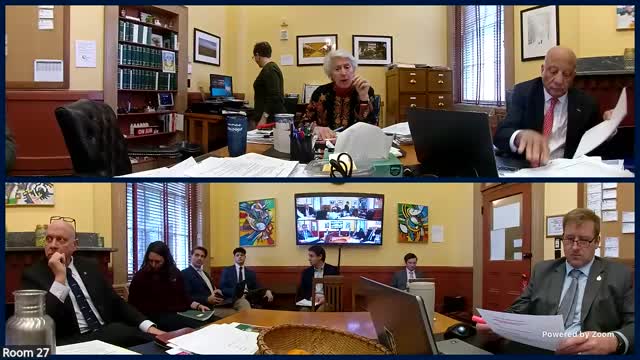
The Committee on Economic Development, Housing & General Affairs spent a substantial portion of its meeting identifying funding priorities for post-crossover work, with members repeatedly elevating housing-related items and municipal technical assistance grants as top concerns.
The committee chair opened the budget-priorities segment by saying the committee needed to “begin this conversation of setting our priorities” and described a set of “orphans” — program requests that had not yet been heard in the committee’s timeline. The chair said the list should include municipal technical assistance grants, Advance Vermont, the Serve, Learn, Earn Act, the First Degree Promise Act, Freedom and Unity, HVAC workforce funding, and Associated General Contractors items that had not been discussed in the committee.
Committee members and witnesses argued municipal technical assistance fills a persistent capacity gap for towns pursuing federal and other grants. Ben Doyle of the Preservation Trust of Vermont said small towns with limited staffing “have the hardest time either pulling down or utilizing federal funding,” and described the municipal technical assistance funding as “the missing middle” that converts early planning work into shovel-ready projects.
Committee testimony and discussion included several explicit dollar figures cited by advocates and committee members: a municipal technical assistance request of $3,000,000; Brownfields funding for $4,000,000; and a $9.1 million anchor for a housing infrastructure fund referenced from the House bill. Members also discussed other housing funding lines (manufactured home park improvement, rental housing revolving loan fund, and homeownership education centers) though not every item had a specific dollar figure in committee testimony.
Senators pressing the issue said the municipal technical assistance grants help small towns access larger funding sources such as Northern Borders Regional Commission and FEMA recovery funds. Witnesses noted the work is coordinated among multiple providers, including the Preservation Trust of Vermont, the Vermont League of Cities and Towns, the Vermont Council on Rural Development, the Vermont Housing and Conservation Board and the regional planning commissions; the chair said a grant from the Leahy Center for Rural Studies had supported a network-building effort.
At one point the chair asked for a working list of priorities and the committee chair summarized a tentative ranking: VHHP (housing program) first, Brownfields second and municipal technical assistance grants third. The chair said the committee would request that the Joint Fiscal Office prepare a side-by-side table showing what was in the governor’s recommendation, what the House included, and what the committee members were now asking for so lawmakers could make more informed judgments. The chair noted an accelerated timeline: “they're hoping to get the budget out next Friday,” and said that compressed schedule meant the committee needed quick, comparative materials to guide decisions.
Committee members emphasized the connection between housing investment and economic development. One member said that the housing asks “have a higher priority for me than… the things in economic development because I feel like so much of our economic development issues are the fact that housing's too expensive.”
The committee ended the meeting without formal votes on priorities, directing staff to prepare comparative fiscal materials and scheduling follow-up discussion soon in the committee’s post-crossover calendar.