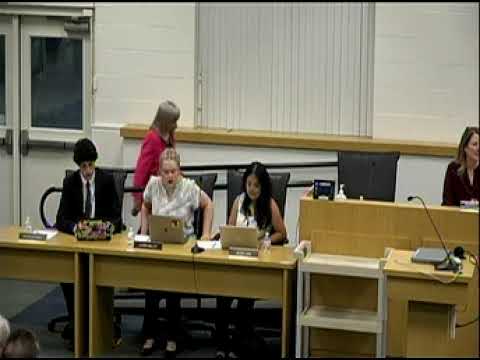
Southington board hears strategic-plan draft after yearlong community outreach
Loading...
Summary
Consultant Richard Lemons presented a draft strategic plan framework after a year of interviews, focus groups and a 3,000‑person survey; the plan centers on five priorities including curriculum, student well‑being and facilities.
The Southington Board of Education received an update on a draft strategic plan Tuesday after more than a year of community input and a survey that drew more than 3,000 responses.
Consultant Dr. Richard Lemons told the board the steering committee collected weeks of interviews, focus groups and an in‑depth survey and has developed a framework of core values and five strategic priorities to guide the district.
"We had over 3,000 people spend time on this survey," Dr. Lemons said, describing detailed multiple‑choice and open‑ended responses that informed the plan. "The title that emerged from the steering committee is care, engage, inspire, and prepare."
Why it matters: The plan will be the district's road map for investments and annual decisions. Board members and the consultant said the document is intended to move beyond a one‑year checklist and provide measurable goals, timelines and responsibilities so the district and community can track progress.
Dr. Lemons outlined the five emerging strategic priorities: ensuring access to high‑quality curriculum and instruction; emotional and social‑emotional learning and student well‑being; talent management and workforce sustainability; communications and community engagement; and facilities planning and upkeep. He said the steering committee is now drafting specific actions, accountabilities and a small set of measures for each priority.
"This is a work in progress," Dr. Lemons said. He described the next steps as identifying the priority actions that should happen in the coming school years, assigning responsible units or people, and selecting metrics that will show whether the district is making progress.
Board members pressed for concreteness. Board member Brown suggested an easy memory device for the four words proposed by the steering group; others urged tying the plan to the town's fiscal reality and to an ongoing public reporting schedule. Finance committee chair Sean Carson asked for a breakdown of the survey respondents; Dr. Lemons later provided the distribution numbers to the meeting: 581 employees, 1,340 parents, about 800 current students, roughly 200 town residents, 20 civic or community leaders and 75 former students, with 3,003 total responses recorded at that point.
Several board members said the process itself — the wide engagement and the number of participants — is a key accomplishment and urged the administration to produce a web‑friendly, printable plan that can be used repeatedly in outreach and budgeting conversations.
Dr. Lemons and the steering committee outlined timing: finalize action lists and measures in April, prepare cleaned visuals and formatting, bring a full first read to the board later this spring, gather feedback, and then present a version the board could adopt and use to shape district priorities and annual work.
The board did not vote on the plan Tuesday; Dr. Lemons said the steering committee will return with a more fully developed draft for review and feedback.
Ending: Board members and the consultant agreed the next phase will concentrate on making the draft operational — assigning responsibilities, tying actions to timelines and defining a short list of measures to report progress to the public.