Get Full Government Meeting Transcripts, Videos, & Alerts Forever!
Get email alerts on the Search And Seizure Protective Sweep topic
No spam. Unsubscribe anytime.
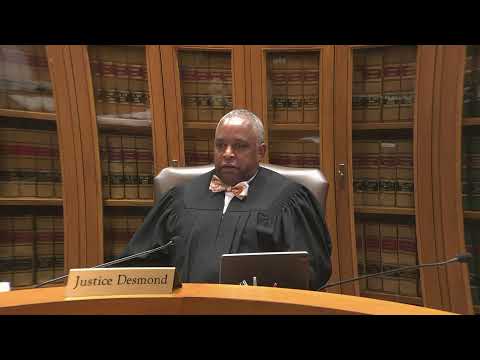
Appeals court hears challenge to protective sweep and later consent in Oliver suppression motion
Summary
The Massachusetts Appeals Court heard argument in Commonwealth v. Jason Oliver (24P0688) about whether a protective sweep and a later consent to search were lawful after officers executed a fugitive arrest warrant.
The Massachusetts Appeals Court heard argument in Commonwealth v. Jason Oliver (24P0688) on whether a protective sweep and a later consent search were lawful. Defense counsel Amy Coddignone urged the panel to focus on what officers knew at the moment they conducted the sweep, saying the record lacked the “specific and articulable facts” required to justify a protective sweep when the defendant already was secured in handcuffs.
Coddignone told the court officers executed a fugitive warrant based on information from Rhode Island and encountered multiple people in the house; she said the only information linking the residence to firearms was an email from a neighboring law-enforcement agency and argued the state police needed to verify the underlying factual basis before relying on it. She said officers knocked at about 6 a.m.; after forced entry and what defense counsel described as one trip upstairs the officers located a firearm and thereafter sought the occupant’s consent to search. The consent form, Coddignone said, was signed at 7:45 a.m. after the occupant initially refused and after more than an hour during which the prosecution had completed its sweep.
Coddignone argued the protective sweep was unjustified because the officers lacked objective facts that anyone remaining in the house would pose a danger, and she told the panel that evidence discovered during an unlawful sweep should be suppressed as fruit of the poisonous tree. She also argued the later written consent was insufficiently attenuated from the sweep to cure the taint; she asked the court to consider the totality of circumstances, including the number of armed officers present, the presence of children, and the length of time occupants remained in the home.
The Commonwealth, through counsel Steven Nato, told the panel the sweep was justified. The Commonwealth said there was corroborating documentation from Rhode Island and a coordinated multi-jurisdictional investigation identifying several subjects and the defendant as a priority; the prosecution argued the out-of-state email and related records, buttressed by officers’ on-scene observations (no response to repeated knock-and-announces and movement inside), gave rise to reasonable concern for officer safety and justified a quick sweep for guns before officers left the premises.
The judges pressed both sides on precise timing and what the officers saw when they entered the house. They asked whether a single trip upstairs or multiple entries mattered, whether the directing officer needed to verify the source agency’s factual basis for saying guns were likely present, and whether a later consent given after an initial refusal was sufficiently attenuated from an alleged unlawful sweep. The defense emphasized Massachusetts precedent requiring examination of the directing officer’s actual knowledge; the Commonwealth cited federal and state precedents it said allow reasonable reliance on another agency’s bulletin or teletype when supported by corroborating records.
The court took the matter under submission after argument. Counsel and the panel repeatedly described the dispute as fact-intensive: resolving it will depend on which versions of the on-scene testimony the court credits and on how appellate precedent about cross-jurisdictional information and the collective-knowledge doctrine apply to these facts.