Get Full Government Meeting Transcripts, Videos, & Alerts Forever!
Get email alerts on the Criminal Appeals Closing Argument topic
No spam. Unsubscribe anytime.
Appeals court hears argument that prosecutor’s closing improperly vouched for witness in Collins case
Summary
The Massachusetts Appeals Court heard argument in Commonwealth v. Michael Collins (23P1028) over whether a prosecutor’s closing argument improperly vouched for a witness and prejudiced the defendant’s conviction.
The Massachusetts Appeals Court heard argument in Commonwealth v. Michael Collins (23P1028) over whether a prosecutor’s closing argument improperly vouched for a witness and prejudiced the defendant’s conviction. Defense attorney Robert O’Mara told the three-judge panel that the prosecutor’s remarks “greatly prejudiced the defendant” and that the trial judge refused a defense-requested curative instruction, leaving the error uncorrected.
The issue matters because Massachusetts case law uses a multi-factor test to assess closing-argument errors. O’Mara told the panel the relevant factors from Commonwealth v. Kozak include whether a timely objection was made (he said defense counsel did object), whether the prosecutor’s remarks went to the heart of the case (O’Mara said they did), whether a curative instruction was given (he said the trial judge declined the defense’s proposed instruction), and whether the error possibly affected the jury’s verdict (O’Mara said yes).
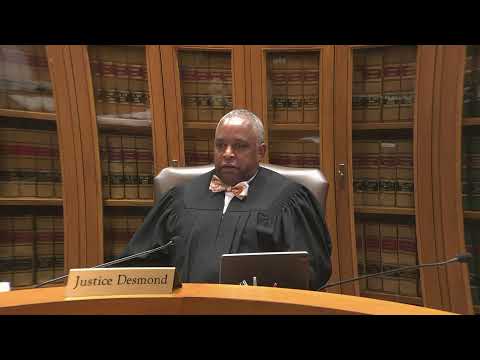
Justice Desmond and other justices pressed O’Mara on specifics. Justice Desmond asked whether the contested comment targeted “the credibility of the victim,” and O’Mara pointed to testimony from a co-defendant, Angela Davis, who had pending child-abuse charges and whose testimony the defense argued was confusing. O’Mara said the prosecutor’s remarks were intended to “divert the attention away from Angela Davis” by assuring the jury that Davis would face her own proceedings, a statement O’Mara characterized as vouching and as based on facts not in evidence.
The Commonwealth responded through its attorney, who argued the prosecutor’s remarks were a permissible response to defense counsel’s attack on the mother’s credibility. The Commonwealth’s lawyer told the panel the defense had suggested the mother had motive to lie to obtain a benefit in her own pending case and that the Commonwealth’s reply—that the mother might later assert a so-called battered-person defense in her own proceedings—was grounded in the trial record and appropriate rebuttal. The prosecutor’s counsel noted testimony that the witness had seven indictments pending and that portions of her testimony admitted to abusive conduct, grounding the Commonwealth’s attempt to explain the witness’s incentives.
Justices repeatedly queried the parties about what was and was not in the record. The court asked whether the prosecutor’s remarks recited facts outside the record or expressed personal opinion—a classic test for vouching—and whether the jury had evidentiary bases to conclude the witness would in fact be tried. O’Mara emphasized post-trial developments (pleas and probation for the co-defendant) to argue the prosecutor’s assurances were inaccurate and prejudicial; the Commonwealth countered that the jury only heard that the co-defendant faced indictments and that the prosecutor’s reply was limited to rebutting defense argument.
After questioning both sides, the court submitted the matter. The panel did not issue a ruling from the bench at argument; the case will be decided on the briefs and the record.
The argument focused narrowly on appellate standards for closing-argument errors, the availability and scope of curative instructions, and whether the remark at issue amounted to improper vouching rather than permissible rebuttal.