Get Full Government Meeting Transcripts, Videos, & Alerts Forever!
Get email alerts on the Alcohol Regulation topic
No spam. Unsubscribe anytime.
Nebraska lawmakers pass changes to liquor law amid worries about dormant commerce clause
Summary
The Legislature passed LB 113, changing allowances for microdistilleries and craft breweries to self-distribute; opponents cited a likely constitutional challenge under the dormant Commerce Clause and warned the changes could hamper legal defenses.
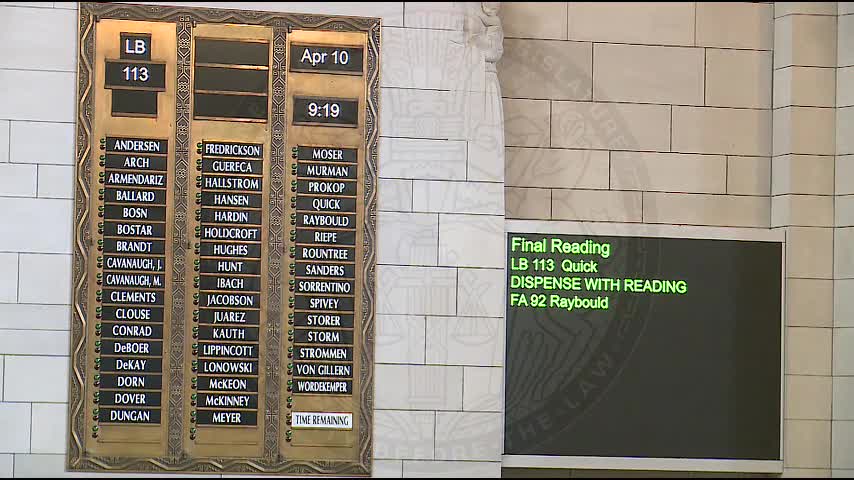
Lawmakers in the Nebraska Legislature passed LB 113 on final reading Wednesday, approving changes to the Nebraska Liquor Control Act that expand allowances for in‑state microdistilleries and craft breweries to sell and self‑distribute product directly to retail and entertainment district outlets.
Supporters said the bill removes barriers for small, in‑state producers to grow; opponents and counsel warned the expansion risks violating the dormant Commerce Clause and could invite litigation that would undercut the law’s defenses.
The bill’s key provisions increase the number of licensed premises and gallonage limits for microdistillers and craft brewers and add severability language. Sponsors said compromises were made between the introduced and final forms. Senator Raybould, speaking in opposition, repeatedly cited the attorney general’s written opinion and warned of likely legal challenges. “The changes wrought by LB 113 would increase the likelihood of a constitutional challenge and hamper the state’s ability to effectively defend against such a challenge,” Raybould said while reading from the opinion.
Proponents argued the measure supports Nebraska small businesses. “These are small Nebraska businesses who are trying to grow their business,” Senator Quick said in floor debate, urging colleagues to support the bill. Supporters also noted the Liquor Control Commission and the attorney general have mechanisms to respond to litigation and that the bill includes a severability clause intended to preserve unaffected portions of the law if one piece is struck down.
Debate revisited recurring themes from committee hearings: whether the bill amounts to protectionism favoring in‑state producers over out‑of‑state distributors; whether a regional distributor could sue; and whether the state would be able—or willing—to defend the statute. Several senators said they had spoken with the attorney general’s office, and some expressed doubt that the AG would defend every enacted statute if the office determined the law lacked a legitimate claim under governing ethical rules.
On final passage the Legislature recorded 33 ayes, 13 nays, and 3 excused/not voting; the bill passed. Earlier in the day the clerk reported a motion to return the bill to select file for a specific amendment was offered and then withdrawn on the floor.
Why it matters: LB 113 alters how the state regulates alcohol distribution for small producers, potentially allowing more direct sales by microdistilleries and craft breweries. Opponents say the bill raises constitutional questions that could force courts to remove the new privileges or require the state to find outside counsel if the attorney general declines to defend the law.
What comes next: With final passage the bill goes to the governor for signature. If litigation is brought, the outcome could alter whether in‑state producers retain the new privileges or must comply with the three‑tier distribution system.
Votes at a glance: LB 113 final passage vote — 33 ayes, 13 nays, 3 excused/not voting.