Get Full Government Meeting Transcripts, Videos, & Alerts Forever!
Get email alerts on the Wildfire Preparedness topic
No spam. Unsubscribe anytime.
Carbondale reviews wildfire response plan, evacuation zones and new emergency alerts
Summary
Town officials and Carbondale Fire District leaders held a training-style briefing on wildfire response, discussed evacuation-zone maps and agreed to a coordinated ReachWell alert channel and a May tabletop exercise with department heads.
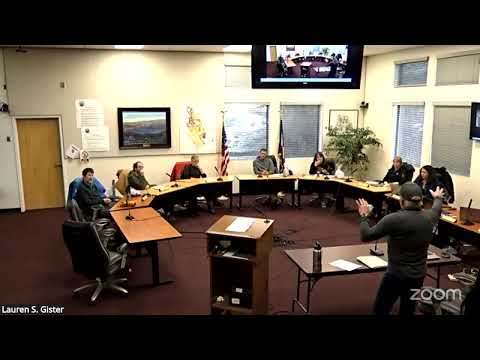
Carbondale town officials and leaders from the Carbondale Fire District met for a wildfire preparedness briefing focused on executive roles in incident command, evacuation planning and coordinated public alerts.
The session centered on how local leaders fit into the incident command system, whose purpose is to create one set of objectives and a single, coordinated message during a major wildfire. Chief Rob Goodwin of the Carbondale Fire District said, "1 day, it will be our turn. It's just the way it is," stressing the inevitability of a local wildfire and the need for joint planning.
The meeting reviewed operational and organizational expectations for a large incident. Goodwin described how an incident management team scales up — from local ad-hoc command to complex incident teams of roughly 56 to 60 managers — and the logistics and finance functions that follow. He noted past local fires, including Lake Christine and Storm King, as reminders that large responses can last for days and require sustained coordination and resources.
Staff and board members discussed specific preparedness work already under way. Town staff and fire district leaders said they are developing evacuation-zone maps and scripted messages for dispatch to use in pre-evacuation and evacuation alerts. The teams described plans to send coordinated messages through multiple platforms, including the ReachWell channel the town and fire district are building together, Garfield County alerts (Everbridge), the town's Facebook page and local media outlets. Staff said the ReachWell channel is expected to be available in April so residents can subscribe.
Officials emphasized that alerting systems and message discipline are critical during high-consequence incidents. Chief Goodwin warned that mixed messaging can endanger people and urged that elected officials and town staff coordinate with the fire district's public information officer so all public statements match incident objectives. Town staff also noted the need to prioritize bilingual communications, and said pre-scripted messages will be issued in Spanish and English.
Participants reviewed evacuation logistics and limitations. Staff and fire leaders said evacuation routes are useful planning tools but that incident conditions determine the safest routes on any given day. They discussed reverse-911 and polygon-based alerting for cell phones and landlines, and urged residents to register for alert services so messages can be targeted by neighborhood. Fire leaders also warned of resource constraints during an urban conflagration: heavy house-to-house fire spread can overwhelm local water systems and staffing during initial response.
The board and staff agreed on next steps: the fire district will continue executive-level ICS briefings; department heads will receive ICS training in a separate session; and a tabletop exercise with department heads is planned for May to test coordination and evacuation messaging. Staff committed to rolling out the joint ReachWell channel by April and to schedule a follow-up public meeting and targeted mitigation planning sessions involving the Rolling Fork Valley Wildfire Collaborative.
Board members raised mitigation and community preparedness items for further work, including targeted property-mitigation guidance (for example, reducing combustible material next to homes and trimming fence connections to houses), refining spring cleanup collection to accept landscaping debris that increases fire risk, and exploring whether building-code updates should incorporate fire-resilient materials. Staff suggested partnering with local wildfire-collaborative organizations to identify priority zones for mitigation funding and outreach.
Officials urged continued public outreach, bilingual messaging and community sign-ups for alert services ahead of the fire season. The session closed with the board and staff agreeing the work is ongoing and that tabletop exercises, public outreach and coordinated alert testing will be the immediate priorities.