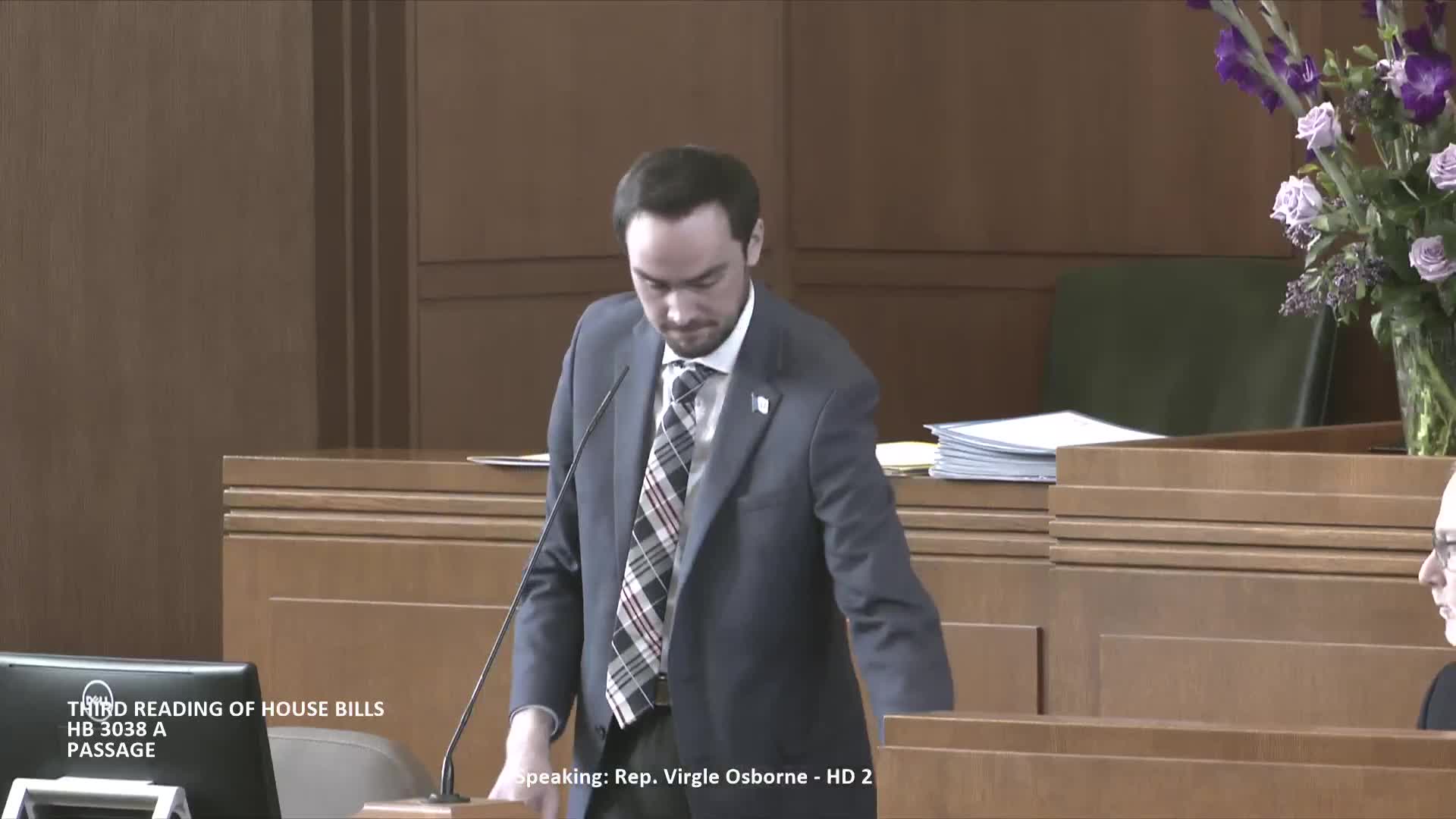
House passes omnibus education bill; some lawmakers oppose language on demographic diversity
Loading...
Summary
House Bill 30 38, an omnibus education measure covering STEM hubs, charter recovery schools, emergency plans and drills, and other technical changes, passed the House. Several members publicly opposed the bill, citing language referencing demographic diversity and concerns the wording could jeopardize federal funding or appear discriminatory.
The House approved House Bill 30 38 on April 10, 2025, an omnibus education bill that updates multiple statutes affecting STEM grants, career and technical education funding, recovery school chartering, school emergency plans and drill language, and related technical clarifications.
Sponsor Representative Wright (Representative) said the package is designed to create clarity for districts and the Oregon Department of Education: it updates how STEM investment grants are distributed and clarifies eligible applicants for STEM hub funds; allows recovery schools that operate as public charters to function as intended; consolidates emergency-plan references; and aligns emergency-drill language with common response protocols.
Concerns and opposition: Several representatives announced no votes on the floor because of statutory language requiring the STEM investment council to weigh "demographic diversity." Representative Harbeck and Representative Deal argued the statutory phrasing risks discriminatory interpretation and could put federal funds at risk under Title VI and the Constitution. Representative Deal noted that current Oregon statutory language defines "diverse" in a way he said excludes some groups and urged statutory review to avoid putting federal funds at risk.
Supporters: Representative Wright said the bill is an omnibus technical package to remove confusion and help districts implement programs, and the measure was approved by the House education committee with bipartisan support. The sponsor emphasized the bill does not itself appropriate funds and called it an effort to clarify existing programs.
Outcome: House Bill 30 38 passed the House, though several members recorded opposition. The bill was described on the floor as clarifying and housekeeping in nature but drew objections tied to policy language in statute.
Ending: Sponsors and opponents urged follow-up work to review statutory language for unintended effects on federal funding and to ensure equitable program implementation.