House passes bill allowing DEQ to permit mixing zones for bacteria in seafood-processor wastewater with safeguards
Loading...
Summary
House Bill 38 14 allows the Department of Environmental Quality to authorize limited mixing zones for bacteria in wastewater permits for seafood processors if DEQ determines public health will not be harmed and best-management practices are implemented. The measure aims to keep coastal seafood processing plants operating where conventional
The Oregon House approved House Bill 38 14 on April 10, 2025, providing a permitting pathway for seafood processors to obtain limited mixing zones for bacteria criteria in wastewater discharge permits when site-specific science shows public health will not be endangered.
Sponsor Representative Gomberg (Representative) described the bill as a technical, science-based fix. He said seafood processors produce wastewater containing naturally occurring biological material that differs from human-sourced bacteria targeted by current standards, and that without a permitting path for mixing zones some processors could be unable to obtain workable permits. "House bill 38 14 aims to address a current and unattended gap in Oregon law regarding this processed byproduct," Gomberg said.
Key provisions: the bill authorizes DEQ, "notwithstanding any other provision," to allow a portion of the receiving waterbody to serve as a mixing zone to meet bacteria criteria if DEQ determines that public health would not be adversely affected. Permittees must implement best-management practices targeted by site-specific investigations, and DEQ's decision must be based on documentation that demonstrates no adverse public-health impact. The bill preserves other Clean Water Act and DEQ monitoring requirements.
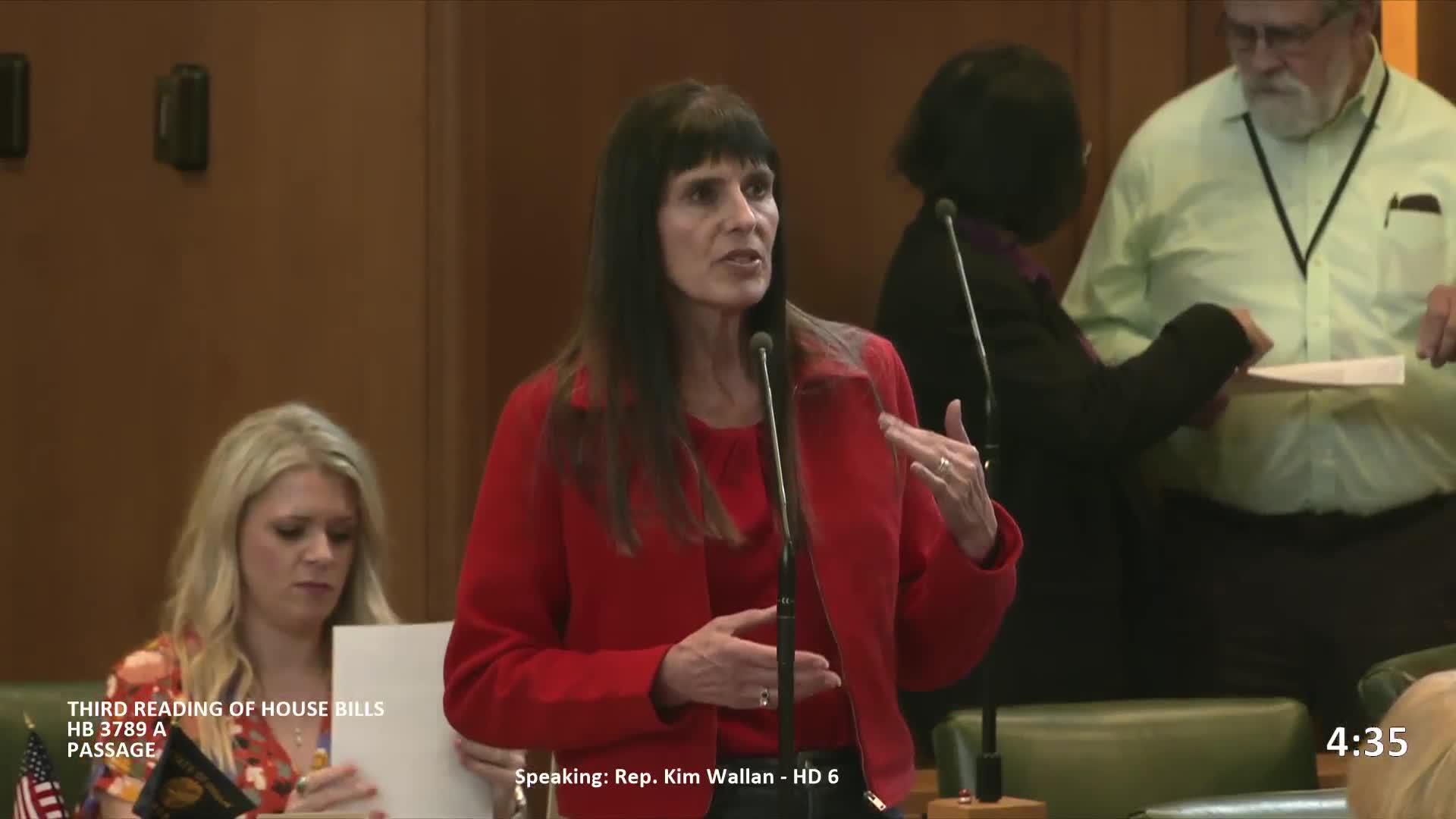
Supporters' rationale: Representative Bobby Levy and other backers said coastal communities depend on seafood processors for jobs and that many of the processors already implement mitigation and monitoring. Levy said without flexibility the plants risk closure and the loss of family-wage jobs in coastal counties.
Opposition and safeguards: Supporters noted the measure was negotiated with environmental groups and DEQ; the sponsor thanked the Surfrider Foundation and DEQ for compromise language. The bill requires quantitative analysis and monitoring and allows DEQ to require strict conditions.
Outcome: The House passed HB 38 14; the clerk declared the bill passed. Proponents described the bill as narrowly drawn and science-based to preserve industry operations while protecting public health.
Ending: The measure moves to the Senate. Backers said the bill balances environmental protections with the economic reality of rural coastal processors.