House passes bill requiring utilities to evaluate grid-enhancing technologies in transmission plans
Loading...
Summary
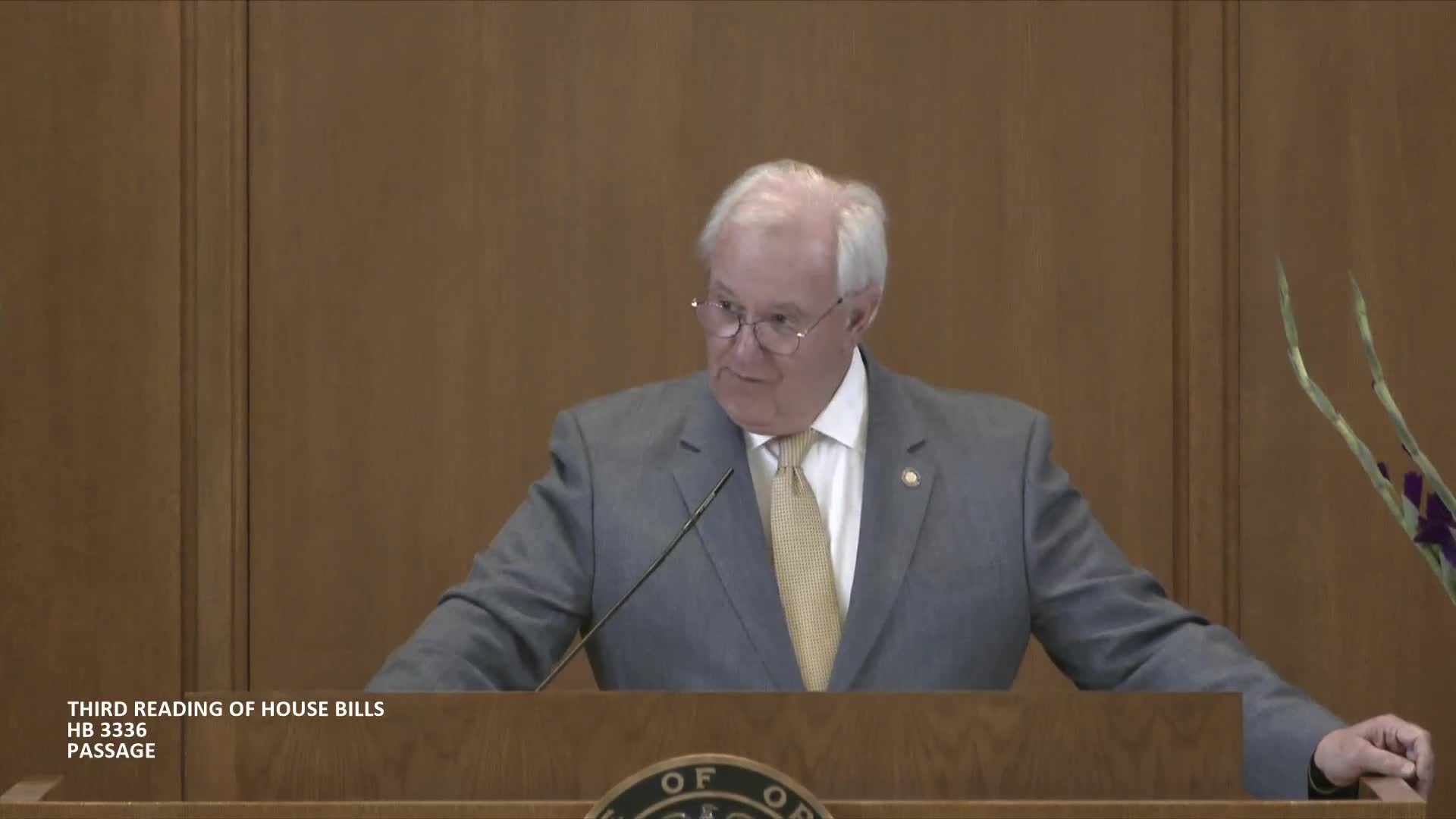
The Oregon House approved House Bill 33 36, which requires utilities regulated by the Public Utility Commission to analyze and plan for grid-enhancing technologies as part of their resource and transmission filings.
The Oregon House passed House Bill 33 36 on April 10, 2025, directing electric companies regulated by the Public Utility Commission to include analysis, strategic planning and periodic updates for grid-enhancing technologies (GETs) in their transmission and clean-energy filings.
Sponsor Representative J. Gamba (Representative) said the state faces growing electricity demand and a backlog of clean energy projects awaiting transmission capacity. "These are low-cost, low-impact measures that can increase capacity and reliability and can be deployed far faster than building new lines," Gamba said.
What the bill does: HB 33 36 requires a cost-effectiveness analysis of GETs when utilities file resource or grid investment plans, mandates a strategic plan for GET deployment as part of each utility's integrated resource plan and clean energy plan, and requires public updates every two years. The bill directs the Public Utility Commission to define "cost effective" and set criteria for GET deployment. A target execution deadline in the bill requires implementation no later than January 1, 2030, for plans first filed after the act's effective date.
Supporters' arguments: Representatives said GETs' dynamic line rating, advanced power-flow controls, topology optimization and other hardware/software approaches' offer faster, smaller-footprint ways to increase transmission capacity and reduce curtailment of renewable resources. Representative Edwards described missed economic opportunities when developers were told required transmission upgrades would take years.
Opponents and concerns: Some members warned about potential cost impacts on ratepayers and the utilities' incentive structure. Representative Sosa and others said regulatory rules that tie utility revenue to capital investment can disincentivize low-capital GETs. Representative Bossard Davis said the bill also references the state's clean-energy targets; she objected to affirming statewide emission goals embedded in statute and voted against the measure for that reason.
Outcome: The House approved HB 33 36; the clerk declared it passed. Sponsors described the bill as the first of several measures to tackle transmission constraints.
Ending: Backers framed the bill as a pragmatic, interim tool to squeeze more transmission efficiency from existing lines while longer-term transmission projects move through permitting and construction.