Get Full Government Meeting Transcripts, Videos, & Alerts Forever!
Get email alerts on the Snap Lifetime Ban topic
No spam. Unsubscribe anytime.
Senate advances bill to restore SNAP eligibility for people with certain drug-felony convictions
Summary
The Nebraska Legislature advanced LB 3 19, which would end the state's remaining lifetime ban on SNAP benefits for people convicted of some drug-related felonies. Supporters said the change would help reentry and reduce recidivism; opponents raised fiscal and accountability questions.
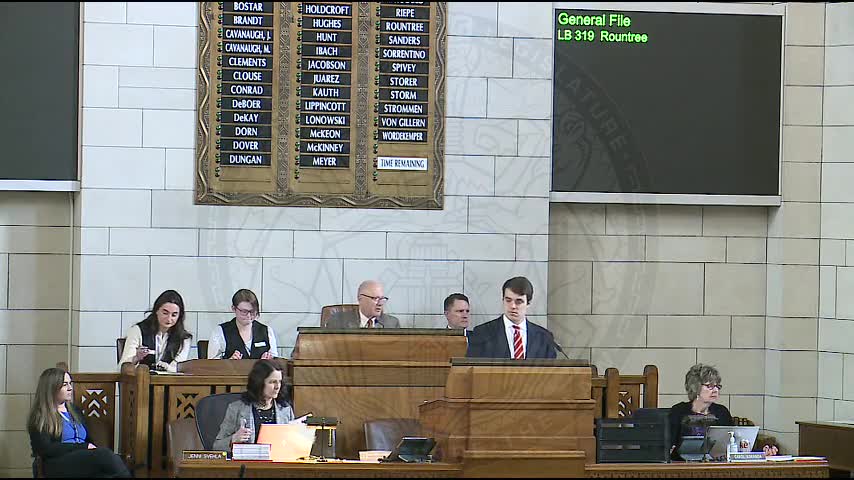
Senator Rountree introduced LB 3 19 and the Legislature voted 32-5 to advance the bill to E & R (enrollment and review) initial, sending it toward select file. The measure would eliminate Nebraska’s lifetime ban on Supplemental Nutrition Assistance Program (SNAP) benefits for people convicted of certain drug-related felonies and, as written, would restore eligibility once a person has completed required sentence and supervision conditions.
The bill’s sponsor, Senator Rountree, said Nebraska’s current law includes a limited exception for people with two or fewer possession/use felonies who complete an accredited substance-abuse program, but otherwise leaves a lifetime ban in place for distribution convictions. She told senators the change would align Nebraska with about 26 other states and estimated LB 3 19 would affect roughly 1,000 families in Nebraska. Rountree read committee testimony from Tommy Newcomb, a Norfolk resident who said losing access to SNAP during periods of recovery kept him in survival mode and impeded reintegration.
Supporters emphasized reentry and public-safety arguments. Senator Raybould said public comment on the bill heavily favored change — he cited 220 emails in support and 12 opposed — and cited food-insecurity data from the Food Bank of Lincoln and local pantries. Senator Hardin, chairing the Health and Human Services Committee, said neighboring conservative states such as Iowa, Wyoming and South Dakota have already moved away from the lifetime ban and pointed to committee evidence that access to food reduced recidivism.
Opponents pressed fiscal and programmatic questions. Senator Anderson said she was concerned by what she saw as a mismatch between LB 3 19’s fiscal note (which she said shows no fiscal cost) and fiscal estimates for a separate SNAP-related proposal she filed earlier. Anderson also pressed whether the bill removes current treatment and work requirements; Rountree replied that the bill does not eliminate work requirements and that HHS expects to absorb any administrative workload and that federal funding primarily covers program costs. Senator Jacobson said he was sympathetic but wanted post-release limits and thought the bill’s unlimited allowance for multiple convictions might need amendment on select file.
Senator Hughes, Senator Raybould and others argued that restoring SNAP eligibility is part of a larger reentry strategy and would help people remain stable and employed. Rountree said the measure had a unanimous committee vote out of Health and Human Services (6-0, one not voting), and that local law-enforcement groups including the Lincoln Police Department and the Omaha Police Officers Association supported it.
The formal action recorded on the floor was advancement of LB 3 19 to E & R initial. The clerk recorded the tally as 32 ayes and 5 nays; no individual vote names were recorded in the transcript. The bill will proceed through the Legislature’s regular committee and floor steps toward select file.