Get Full Government Meeting Transcripts, Videos, & Alerts Forever!
Get email alerts on the Municipal Planning Economic Development topic
No spam. Unsubscribe anytime.
House passes bill tied to Axon development after weeks of debate over local control, housing and jobs
Summary
The House approved Senate Bill 15-43, a measure affecting municipal planning tied to a proposed Axon development in Scottsdale. Floor debate centered on local control, private property rights and jobs; the bill passed 40-19 with multiple members explaining their votes.
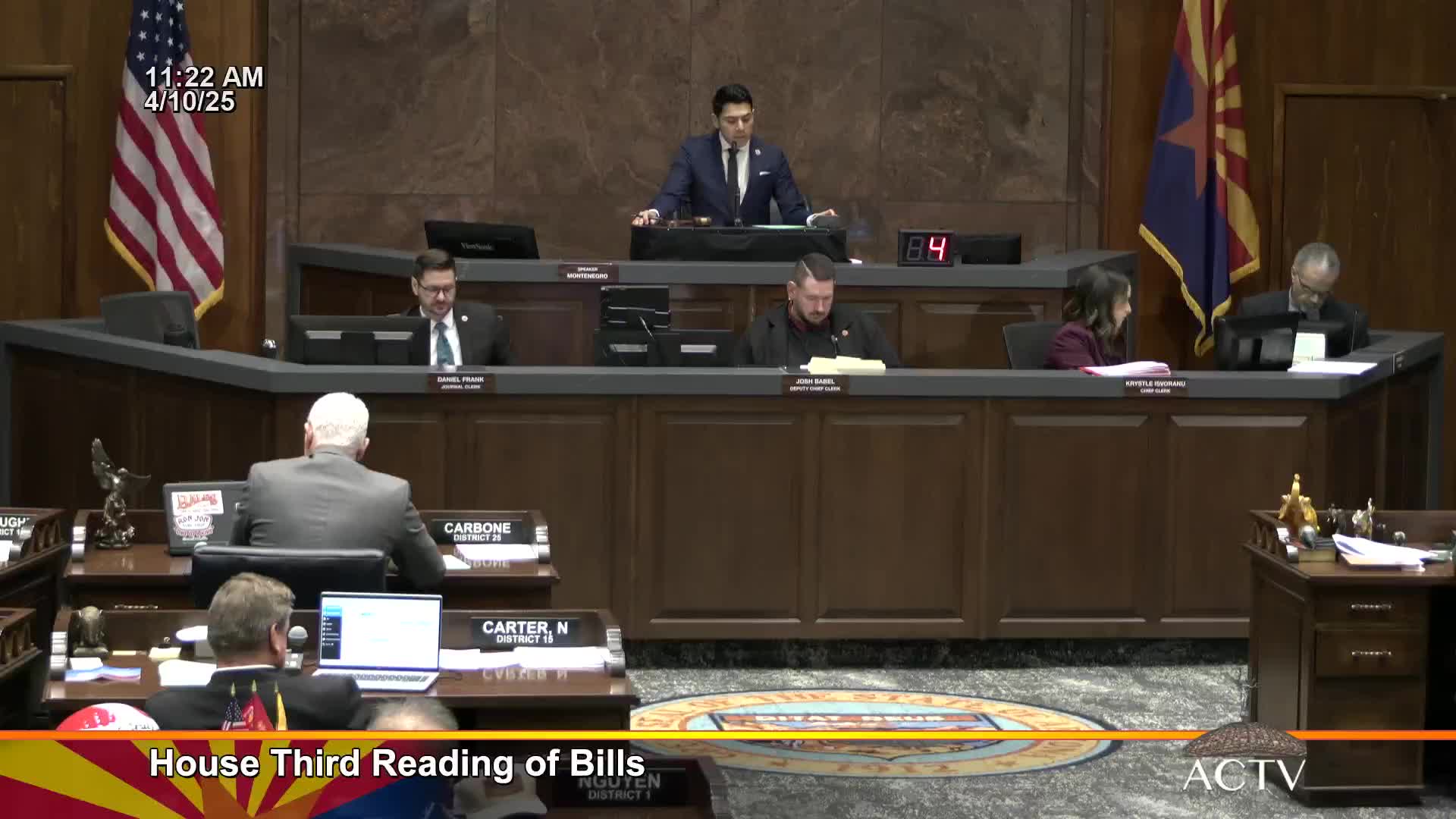
The Arizona House on April 10 approved Senate Bill 15-43, a bill described on the floor as addressing municipal planning rules relevant to a proposed Axon development in Scottsdale. Members spent substantial time debating local control, private-property rights, economic development and whether the state should intervene in a local election process.
Proponents framed the measure as a jobs and economic-development bill. Representative Rivera, who supported the bill, told colleagues the project represents significant investment and employment: "My goal in carrying this legislation is to do everything I could to keep this company here. There's a lot at stake. We're talking about economic development, thousands of employees, billions of dollars being pumped..." he said, and recorded his vote "yes."
Opponents argued the bill improperly overrides local decision making and cancels a process initiated by Scottsdale voters via a petition for an election. Representative Powell said canceling a municipal election was "the stuff of Banana Republics" and that the Arizona Supreme Court had previously limited state interference in local municipal elections. Representative Chaplick, Representative Kuppur and others said the issue should remain at the city level and objected to special-interest influence. Several members voiced concerns about the bill favoring a single company and the precedent set when the Legislature alters local processes.
Representative Kuppur (name appears in transcript as Representative Kuppur) explained a personal position: she framed the bill as "a private property rights bill," but objected to the population thresholds in the draft and said she would have supported a different population threshold.
Floor debate included appeals to due process and local autonomy as well as warnings about the economic consequences of losing a major employer. Representative Gillette and others argued the state must act to preserve jobs and to show Arizona remains open to business. Representative Liguori and several colleagues said the broader vision for the ``101 tech corridor'' supports keeping large employers in-state.
The House recorded 40 ayes, 19 nays and 1 not voting on final passage; the clerk recorded that SB 15-43 "has passed" and instructed the clerk to convey the bill to the Senate. Members who asked for explanations of vote provided a mix of policy, constitutional and economic rationales.
Why it matters: The debate illustrates tension between municipal authority and state-level intervention when an economic-development project intersects local planning, petitions for election and private development. The bill's passage signals that, in at least this case, a majority of the House prioritized the project’s potential economic impact over objections about local control.
Votes at a glance: The clerk recorded final passage of SB 15-43 with 40 ayes, 19 nays, 1 not voting. The House instructed the clerk to record the action and convey the measure to the Senate.
Provenance: The bill first appeared on the calendar as: "Senate Bill 15 43, meaning Title 9, Chapter 4, Article 6, IRS, by section 946.19 relating to municipal planning." The final recorded vote appears later in the transcript: "Members, by your votes of 40 ayes, 19 nays, 1 not voting. You have passed Senate Bill 15 43, signed in open session."