Get Full Government Meeting Transcripts, Videos, & Alerts Forever!
Get email alerts on the Ems topic
No spam. Unsubscribe anytime.
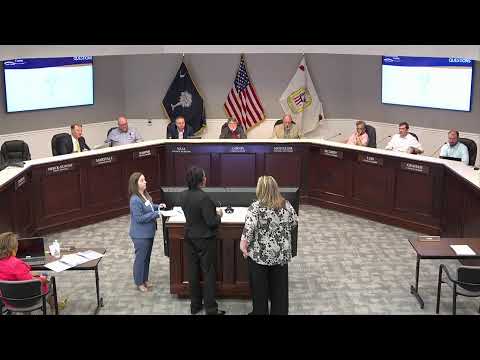
Lancaster EMS proposes QRV program with Indian Land Fire to free ambulances for emergencies
Summary
Lancaster EMS proposed a quick‑response, nonemergency unit (QRV) staffed jointly with Indian Land Fire to handle lift assists, minor calls and non‑emergent transports; EMS also requested additional medic positions, equipment staff and upgrades to station facilities.
Lancaster County EMS presented a proposal to pair nonemergency quick‑response vehicles (QRVs) staffed by a combined crew (three EMS and three Indian Land Fire personnel) to handle non‑emergency calls such as lift assists, routine transports and other low‑acuity requests.
EMS director Clayton Cato said roughly 17% of calls are true life‑threatening emergencies and most of the remainder are lower‑acuity calls that tie up a 9‑1‑1 ambulance for long periods. A QRV would respond to non‑emergent scenes, assess and stabilize low‑acuity patients and reduce the number of full ambulances tied up on noncritical calls. Cato said the idea has shown cost‑saving potential in pilot work and that Indian Land Fire would provide the vehicle while EMS would staff medics.
EMS also asked for (1) three additional EMS medics to staff a QRV team in Indian Land, (2) an accreditation officer or an equipment officer (staff dedicated to maintenance of cardiac monitors, stretchers, AEDs and other inventory), and (3) two quick‑response vehicles to replace high‑mile units. Cato noted county‑wide response time metrics have crept above national recommendations — he reported an average response time of about 10 minutes, 25 seconds — and that Indian Land is the busiest response area in the system.
Council and staff discussed capital‑sales tax stations (Van Wacke/EMS 10 and Heath Springs) and whether to accelerate station projects and staffing, and council requested clearer station schedules tied to hiring plans. Councilors expressed broad support for the QRV concept as a way to conserve full ambulances for true emergencies.
Next steps: EMS and fire staff will return with a joint implementation plan, cost allocations, and a staffing/phasing proposal for the QRV pilot and for equipment and facility requests.