Get Full Government Meeting Transcripts, Videos, & Alerts Forever!
Get email alerts on the Corrections topic
No spam. Unsubscribe anytime.
Yakima City officials cite staffing shortages, mental-health strains at city jail
Summary
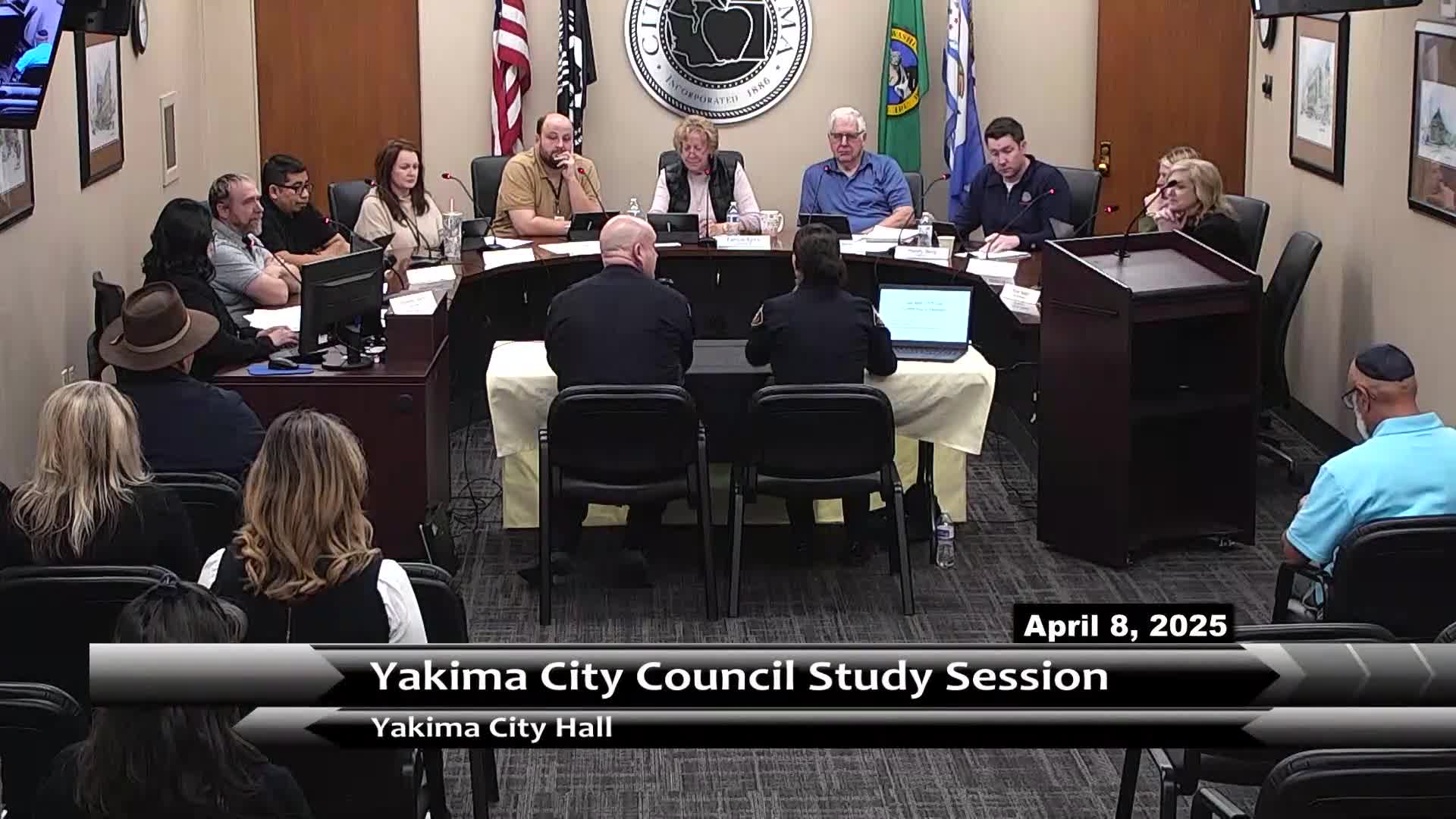
City correction officials told the Yakima City Council study session in April 2025 the 72-bed Yakima City Jail is operating at roughly half staffing, relies on a county bed block and faces rising medical and mental-health service needs that drive transfers and costs.
Commander Maritza Davis, who oversees the Yakima City Jail, told the City Council at a study session in April 2025 that the 72-bed, male-only facility is operating with roughly half its corrections staff and depends on a contracted block of county beds for some people arrested by Yakima Police Department.
Davis said the jail’s design limits what it can house, that average daily population has been about 40 inmates this year, and that average length of stay has risen to about eight days. “We are working with 50% staff,” she said, noting the department is relying on overtime and help from police officers to keep the facility open.
The shortage has financial and operational consequences. Davis told council members the city pays a fixed block rate to the Yakima County Jail under a contract for additional beds and related medical costs; the city pays for a block of beds whether the beds are filled and pays a per-inmate rate for any beds beyond the block. The city manager and corrections staff described past contract terms that have varied (the transcript records a per-bed figure of $136.48), and said the block arrangements have changed over several contract cycles.
Why it matters: municipal jails are a hub for local criminal processing and court operations. Judge Aaron Masters told council members, “The jail and the court work very closely together,” and described how the city jail’s proximity and security simplify transporting in-custody defendants to arraignment dockets and status hearings. Masters and Commander Davis both said remote (Zoom) appearances that became common during COVID have largely given way to in-person appearances in the municipal courtroom because of case law and the need for private attorney-client conferences; Masters said, “Zoom can have a way of dehumanizing someone.”
Operational details and limits - Facility: 72 beds (about 68 for general population), male-only; four general-population pods plus segregated cells and an 8-bed inmate-worker unit used for kitchen and cleaning duties. - Average population: roughly 40 inmates this year; average length of stay: about eight days (up from seven the prior year). - Hours and court duties: staff and management said the jail is staffed 24/7 and provides court security and inmate transport for the municipal court’s morning and afternoon dockets. - Health services: the jail operates under a part-time medical contract (one doctor and registered nurses on-site part time and on call 24/7). Staff reported a rise in medical and behavioral-health needs: the jail averaged 53 inmates on suicide watch in 2024, up from 40 the year before. The jail has a medication-for-opioid-use-disorder (MOUD) protocol and supplies Narcan.
County housing, special management and costs Davis and chief-level staff described how the county jail houses people who require higher-level medical or mental-health care — so-called intensive management inmates (IMI) — and how past per-day distinctions between IMI and general-population rates made billing and auditing difficult. The command staff said the city now pays a flat block rate that includes special-housing cases to reduce the complexity of fractionalized charges among multiple agencies.
Programming and recruitment City officials said the short average stays and high turnover make in-jail programming difficult, and that staffing shortages — a statewide phenomenon — have driven the department to recruit aggressively and to offer hiring incentives. Officials described training requirements, a 10-week corrections academy and a field-training period that makes officers deployable in several months. Commander Davis described ongoing recruitment steps (incentives, elimination of some hurdles for lateral hires) but said retention remains a challenge.
Council context and next steps Council members and staff discussed long-term options including a prior architect study that examined expansion. Davis said an expansion to house females and provide more local capacity has been studied in the past and would require construction and additional female correctional staff. The commander also said achieving voluntary accreditation through the Washington association (WASBIC, referenced in her presentation) remains a department goal.
Ending Officials asked council to consider staffing, funding and space options and to weigh the trade-offs of sending more inmates to the county versus expanding local capacity. The chief and commander said they would follow up with additional details on costs and timelines as requested by the council.