Get Full Government Meeting Transcripts, Videos, & Alerts Forever!
Get email alerts on the Annexation topic
No spam. Unsubscribe anytime.
Centralia council authorizes manager to negotiate phased annexations covering multiple UGA neighborhoods
Summary
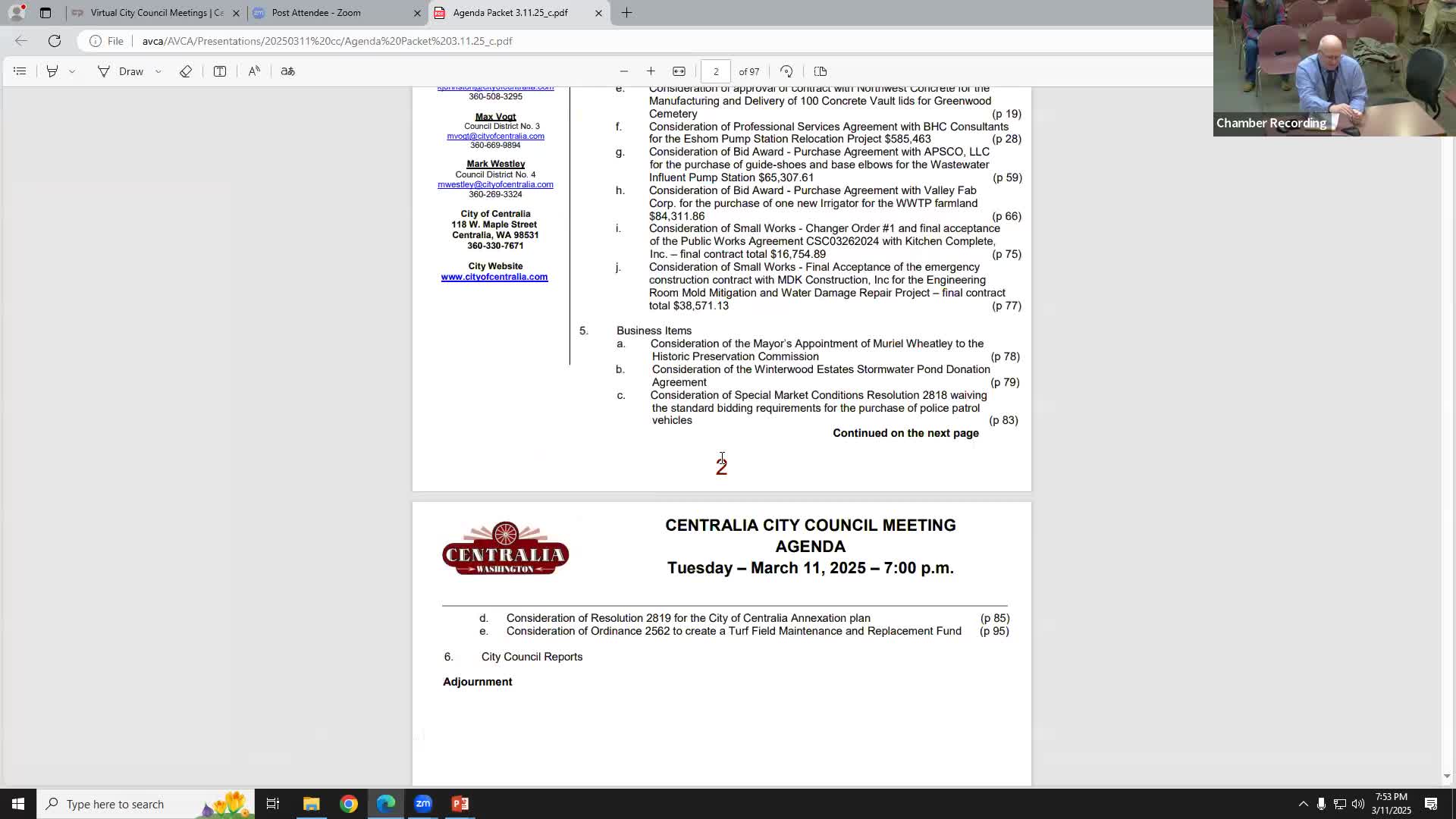
The Centralia City Council on Tuesday authorized the city manager to open interlocal negotiations with Lewis County for phased annexations covering multiple urban growth area neighborhoods.
The Centralia City Council on Tuesday authorized the city manager to begin negotiations with Lewis County to pursue phased annexations of multiple neighborhoods inside the city’s urban growth area.
Councilors voted, by separate motions, to include a series of subareas in an initial negotiation package and then gave a single authorization for staff to open talks with the county. Councilors approved the package and the final authorization 7–0.
What the council approved: During a lengthy review of a staff-prepared table, councilors approved the manager’s recommendation to initiate negotiations on multiple subareas including (summary): - Fords Prairie (Russell Road / Salishan area) — included in the motion for phase‑1 consideration. - Nick Road area. - South Street subareas. - South Sumner area. - North Skookumchuck / Roanoke corridor (trail-connected parcels). - North Davis Hill subarea A. - An option to include additional Fords Prairie parcels was also adopted as staff suggested.
A later, separate motion reconsidered and added a primarily industrial/port‑area parcel along North Harrison (described in staff materials as Area 11 option b). After discussion the council voted to include that specific North Harrison parcel in the negotiation package. The council then passed a motion authorizing the city manager to enter interlocal negotiations on all approved areas; the final authorization passed 7–0.
Why it matters: Annexation brings areas of the urban growth area into city jurisdiction and can change utility responsibilities, development review and property-tax receipts. City staff said annexations are meant both to implement the Growth Management Act’s expectation that urban services support urban development and to protect the city’s critical aquifer by improving sewer connections for areas that remain on septic.
Key discussion points and constraints raised by council and staff: - Sewer connection rules and timing: City code requires property owners to connect to sewer within 60 days after administrative notification when the sewer is within 200 feet; county rules cited in staff discussion appeared to allow a longer timeline. Councilors worried that a short timeline could impose significant immediate costs on homeowners and asked staff to examine options such as payment plans, local improvement districts or extended timelines to ease the transition. - Enforcement and equity: Staff and council noted that Lewis County codes already include requirements in aquifer protection areas, but enforcement has been limited; councilors asked staff to explore funding or program options to support low-income property owners who may face high hookup costs. - Service levels and roads: Councilors noted annexation can create new responsibilities for police, fire and road maintenance; staff said some parcels are already on city utilities and would see utility bill reductions, while other properties (especially in later phases) may remain on septic until sewer extension occurs. - Timeline: Staff estimated the phase‑1 negotiation and approval process could conclude by October if the interlocal and public‑hearing sequence proceeds without delay, but added that sewer construction and property‑level hook ups would be subject to project timing and funding.
Public input included a virtual comment from a county commissioner who asked how many properties in phase‑1 already have sewer and whether the high school area would be included (staff answered that most properties in certain subareas already are connected; the high school area would likely be in a later phase because of geography and floodplain constraints).
Next steps: Staff will open interlocal negotiations with Lewis County and, if talks proceed, schedule joint public hearings with county commissioners before any annexations are finalized. Council asked staff to return with implementation options that address connection timelines, potential financial assistance and code adjustments to reduce disproportionate burdens on low-income residents.
Actions recorded (motions and votes): Council took a sequence of votes authorizing staff to pursue annexation negotiations for specific subareas and approved the city manager’s authority to negotiate the final package with Lewis County; each motion recorded during the meeting carried with council voice votes and the final authorization passed 7–0.
Who spoke for staff and council on this item: Emil (City staff) presented the staff analysis and recommendations; Veil and John (city staff) displayed maps and tables; Public Works and finance staff answered technical questions on hook-up costs and connections; Mayor Smith Johnston and all seven councilors participated in deliberations and votes.
Why the item was contentious in discussion: Councilors repeatedly returned to two practical tradeoffs: protecting the aquifer and public health by encouraging sewer connections, and limiting near-term financial impacts on homeowners in annexed areas. The council directed staff to bring back clarifications on notification timelines, available payment mechanisms or grant options and to consider whether the city’s 60‑day connection rule should be revisited to allow staged implementation or consistency with county practices.