Get Full Government Meeting Transcripts, Videos, & Alerts Forever!
Get email alerts on the Housing Redevelopment 657a topic
No spam. Unsubscribe anytime.
City staff outline pilot program using Iowa Code 657A to redevelop abandoned houses and sell city lots
Summary
City Administrator Matt Martinson asked the council to consider a pilot program under Iowa Code section 657A to address dilapidated and abandoned houses and to offer city-owned vacant lots under development agreements that require construction within a set period. Council members voiced support and asked staff to return with a scope and potential
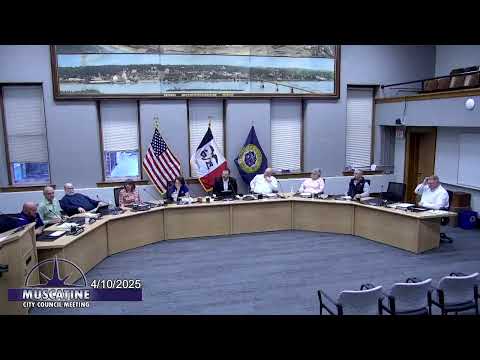
Muscatine City officials presented a plan April 10 to use Iowa Code section 657A procedures and developer agreements to accelerate redevelopment of abandoned houses and to sell city-owned vacant lots under conditions that require timely rebuilding.
City Administrator Matt Martinson described a multi-step process used in prior cities to declare a property abandoned, document code violations, pursue legal remedies, and then solicit developers through requests for proposals (RFPs) to demo and rebuild. Martinson said the city’s approach emphasizes thorough documentation and reinspection before court filings and uses developer agreements that can require a minimum-assessed value and a build-by deadline. “We start by notifying the property owner with a personal letter with photos of the property and the issues,” Martinson said during the presentation, adding that staff had used police services to deliver notices and then followed with re-inspections and, where necessary, the abandonment checklist and legal action.
Martinson showed three past examples from his experience to demonstrate outcomes and payback to the city: 402 West Washington Street (demolished and rebuilt; taxes rose from $640 annually to $2,400 in 2018, producing multi-year tax gains), 613 Oak Street (fire-damaged house removed and replaced; faster return on city investment) and 314 West Marion Street (lengthy legal work but eventual duplex development and much larger tax base). Martinson said those projects typically yielded multi-year returns to the city despite upfront legal and demolition costs.
Under the proposed pilot, staff would identify a small number of city lots or abandoned structures and release an RFP inviting contractors or nonprofits to demo and rebuild. Contracts could include requirements such as owner-occupancy preference, a 12-month build deadline (Martinson said he had used 12 months in later examples), and a minimum assessed-value agreement to reduce developer uncertainty. Martinson noted the program could be granted to developers who perform demolition and rebuilding (sweat-equity) rather than the city paying for demolition up front.
Councilmembers generally supported pursuing a pilot. Councilmember Lewis and others said vacant lots are a drag on city resources and expressed enthusiasm for an active disposal and redevelopment program. Councilmember Osborne and others emphasized the value of minimum-assessment agreements and short build deadlines to ensure lots return to the tax base. Several councilmembers asked staff to check enforceability of owner-occupied requirements; Martinson said he would consult legal staff. Councilmember Gordon asked staff to preserve a yearly allotment for Habitat for Humanity where feasible.
No formal action was taken; council asked staff to evaluate the number of candidate lots, refine the RFP and development-agreement templates, and return with a proposed pilot and scope.
Clarifying details recorded in the presentation included the sample case addresses (402 West Washington Street; 613 Oak Street; 314 West Marion Street), sample legal and demolition cost ranges cited from prior work (single-case legal and demo costs described in the presentation ranged up to roughly $10,000 in notable cases), and that the guideline used in the presenter’s prior work included a build deadline (12–18 months depending on the case) and a minimum-assessed-value requirement tied to neighborhood averages.
Ending: Staff will identify a small set of candidate city lots and abandoned properties, consult the city attorney on owner-occupancy conditions, and return to council with RFP templates and an estimated scope and timeline for a pilot program.