Get Full Government Meeting Transcripts, Videos, & Alerts Forever!
Interim Laredo utilities chief details $43 million lead-service request, new grants and stepped-up enforcement
Summary
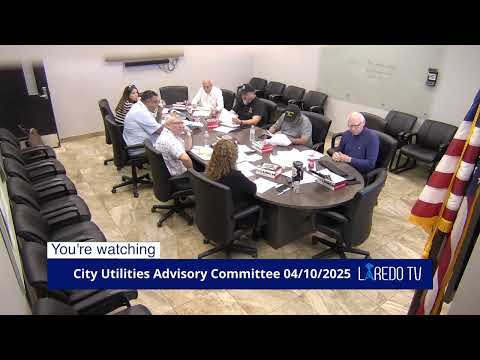
The interim utilities director told a district advisory meeting that Laredo has applied for multiple grants — including a $20 million Army Corps cost-share and a $43 million lead-service replacement program — and is ramping up meter replacements, main-line work and backflow enforcement while resuming collection actions.
Walt, the interim utilities director, told a Laredo advisory meeting that the department has applied for a series of grants and loans to finance water-system improvements, including a $20 million Army Corps of Engineers cost-share (paired with $6 million local funding) and what he described as a $43,000,000 request for lead- and copper-related work that could fund replacement of customer-side service lines.
The request is part of a broader push that also includes a meter replacement program, an application for testing and planning to address PFOS contamination, and a planned annual main-replacement program. Walt said the city submitted a required inventory under the lead-and-copper reporting rule and has 37,000 service-line entries listed as “unknown,” which the city hopes to refine before deciding replacement priorities.
Why it matters: Lead-service lines and emerging contaminants carry direct public-health implications; replacing only the utility-owned portion of a service line may leave contamination risks in place, so funding that helps homeowners replace the customer-owned portion could materially change the scope and cost of remediation and affect rate and budget decisions for the utility.
“The exciting part of this is this money can also be used to replace the service line on the customer's property,” Walt said. “When you start replacing lead and copper ... if you replace half of it, that's really not solving the issue.” He added that the city chose a compliant methodology for the inventory that treated any construction after 1989 as presumed non-lead and pre-1989 connections as unknown, producing the large unknown cohort the utility plans to…
Already have an account? Log in
Subscribe to keep reading
Unlock the rest of this article — and every article on Citizen Portal.
- Unlimited articles
- AI-powered breakdowns of topics, speakers, decisions, and budgets
- Instant alerts when your location has a new meeting
- Follow topics and more locations
- 1,000 AI Insights / month, plus AI Chat