Get Full Government Meeting Transcripts, Videos, & Alerts Forever!
Get email alerts on the Comprehensive Plan topic
No spam. Unsubscribe anytime.
Public divides over low‑rise residential rules as Ann Arbor staff moves to release draft comprehensive plan
Summary
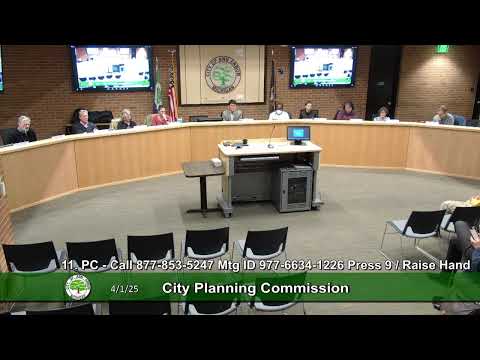
On April 1 planning staff said a draft of the consolidated comprehensive plan would be released publicly after a brief internal review. The meeting turned into a multi‑hour public debate over whether the plan should allow taller, denser housing in formerly single‑family neighborhoods, and over whether the public engagement process has been clear.
Planning staff told the commission on April 1 that a draft consolidated comprehensive plan would be made public after a brief staff check for factual accuracy and would be posted on the city's new EngageA2 site in the second week of April. The announcement set off an extended public discussion and dozens of public comments that ranged from strong support for upzoning to demands for more process and neighborhood protections.
Staff timeline and next steps
Planning staff member Mr. Leonard said the city received a draft from consultants on March 31 and would perform a short factual review before sharing it with the planning commission, council and the public. "I am gatekeeping that from you, from the city council and the public for about a week," he said, and asked commissioners to expect a public posting and engagement to follow. Staff also described the statutory 63‑day review period that will occur later in the process and said additional public hearings and a city‑council vote will follow.
Supporters: build more housing, meet climate and equity goals
Many speakers urged the commission to adopt a plan that allows more housing broadly across the city. Jim Pike, introduced himself as a Fifth Ward resident and urged the commission to "actively support policies and plans, including a new comprehensive plan that will enable more housing to be created within the city, within the city limits, as widely and as flexibly as possible." Student and renter speakers told commissioners they have been priced out of Ann Arbor and said more housing will ease rents. Jonathan Levine, a resident who also cited carbon‑reduction goals, argued that higher‑accessibility housing reduces transportation costs and emissions.
Nonprofit and workforce housing advocates also spoke. Sarah Lorenz, introduced herself as "executive director of the new Ann Arbor Community Land Trust," and described pending projects with target price points of $125,000, $225,000 and $325,000 for small homeownership units; she asked the commission and council for support to build those homes. Several teachers, library workers and other city employees described making modest wages while struggling to find housing in town.
Concerns about process, scale and neighborhood character
A large group of speakers pressed the commission for more outreach and clearer, less technical outreach materials. Kim Winnick, a resident who opposed the draft as presented, told commissioners: "The draft proposal of the comprehensive plan is flawed for many reasons… Nearly $800,000 has been spent by us, the taxpayers, to develop a rather scary and ridiculous plan that could have been developed over a long weekend." Several commenters argued that the engagement materials had not been explicit about the implications for single‑family zoning and expressed alarm that the public was not given a clear, consistent presentation.
Other speakers raised technical concerns. Tom Rhodes of the Old West Side asked how the plan would affect historic districts and called for clarity about the desired density targets in people per square mile and transportation plans to support added residents. Multiple commenters asked whether the city's infrastructure — sewer, stormwater, gas and electric systems — has been assessed for the higher densities the plan would allow.
Commissioner and council responses
Commissioners debated how to structure their own review. Several members asked that the entire commission, not just the earlier subcommittee, review the draft once released and that the commission hold a sequence of public meetings focused on particular plan sections so the public can give targeted comments. Council Member Disch — who represents the council in liaison remarks — said the draft must be understandable to residents and acknowledged that some engagement materials had been perceived as inconsistent with later subcommittee direction.
No formal vote was taken on policy changes at the April 1 meeting. Commissioners agreed to additional, scheduled review sessions, and staff said they would post the draft and supporting materials on EngageA2 and advance an initial round of community engagement before sending a first set of edits to the consultant team. The statutory 63‑day review period and public hearings will follow later this summer and fall.
Ending
The meeting made clear the two central tensions the plan must reconcile: residents' anxiety about neighborhood change and the advocates' argument that allowing more housing across the city is necessary to improve affordability, equity and sustainability. The commission directed staff to post the draft and begin a structured, public review process that will give commissioners and residents a clear set of opportunities to comment before the plan advances to council for the formal review period.