Get Full Government Meeting Transcripts, Videos, & Alerts Forever!
Get email alerts on the Land Use Process topic
No spam. Unsubscribe anytime.
Planning commission recommends removing public hearings for many site‑plan reviews, drawing public concern
Summary
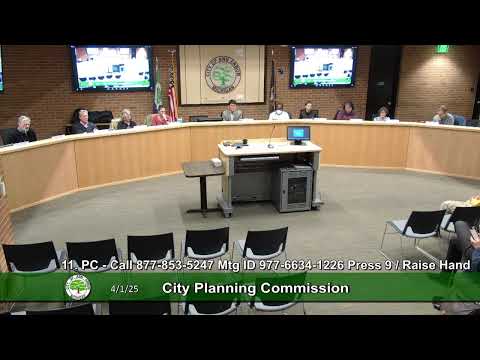
The Ann Arbor Planning Commission voted 7–1 on April 1 to recommend that city council approve changes to the Unified Development Code to remove formal public hearings for a number of administrative reviews, including many site‑plan and wetland permit actions.
The Ann Arbor Planning Commission voted 7–1 on April 1 to recommend that mayor and city council approve amendments to the city's Unified Development Code to remove formal public‑hearing requirements for certain site‑plan and related reviews.
Planning staff said the change is intended to speed up administrative approvals that now require extra notice and scheduling steps. Planning staff member Mr. Leonard said the current process often forces an applicant to wait about "3 and a half weeks a month" before a decision can be scheduled and that removing the extra public‑hearing step for by‑right site plans would reduce time, cost and uncertainty for development projects.
Supporters and staff: efficiency and predictability
Mr. Leonard, identified in the meeting as planning staff, told commissioners the code changes follow a council directive to look for ways to "improve efficiency and alleviate burdens in the land development process." He said site plans that comply with code are an administrative function and that the amendments would not remove public hearings for legislative actions such as rezonings, planned unit developments (PUDs) or special exception uses. "Site plans are approved in numerous ways," he said. "In all of those cases...the same diligence and evaluation by multiple departments and areas of expertise" would continue.
Opponents: notice, study time and public scrutiny
Several speakers at the meeting told commissioners they opposed removing formal hearings because it would shorten the public's time to review complex plans and make it harder to raise technical concerns. Longtime commenter Ken Garber, who addressed the commission during the item, said the proposed change would cut the public's time to study large projects and singled out the Arbor South proposal as an example that needs more review time: "I need more than 4 days notice to study this one…starting with watching the November 13 city council work session on this subject," Garber said. He urged commissioners to require at least four days' advance notice in bylaws if the amendments pass.
Resident Stacy Harr told the commission, "Residents, voters, taxpayers need to be able to address city officials in a public forum on large development projects," adding that public hearings are a basic way for neighbors to ask questions and seek clarification. Deborah Hour, a remote caller, said she supported Garber's remarks and urged commissioners to turn down the amendments.
Commission discussion and vote
Commissioners debated how public notice and site postings would be handled if hearings were removed. Staff said the city already posts site plans online and that the commission could require petitioner‑posted signage or add a notice requirement in a separate community‑participation ordinance. Commissioner Mills said she would vote against the recommendation unless the notice gap for site postings is filled promptly because the current language removes the explicit city posting requirement.
On a roll call the commission recorded the following votes: Commissioner Adams — yes; Commissioner Weatherbee — yes; Commissioner Mills — no; Council Member Disch — yes; Commissioner Abrams — yes; Commissioner Hammerschmidt — yes; Commissioner Weiss — yes; Commissioner Lee — yes. The motion carried, and the recommendation will now go to mayor and city council for consideration.
What happens next
If the council adopts the ordinance as recommended, public hearings would remain in place for legislative actions (rezonings, PUDs and special exceptions), but many administrative site‑plan reviews and wetland permits would be processed without a formal commission hearing. Staff told the commission it will bring proposed community‑notice language back to the commission (for example in the city bylaws or the community‑participation ordinance) to ensure neighbors receive timely notice when projects affecting their block are submitted.
Ending
Commissioners and staff emphasized the change is meant to streamline approvals for projects that meet existing code. Opponents said the loss of a formal public‑hearing forum risks shortening the time community members have to evaluate complex proposals. The council will hold the next review of the proposed UDC amendments.