Get Full Government Meeting Transcripts, Videos, & Alerts Forever!
Get email alerts on the Dockless Vehicles topic
No spam. Unsubscribe anytime.
Cheyenne committee backs ordinance to select single dockless vehicle provider; one councilor objects
Summary
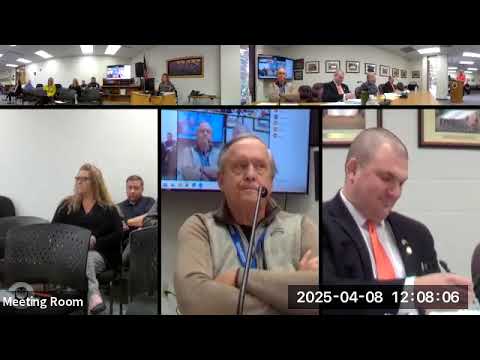
The Finance Committee of the City of Cheyenne on April 8 recommended approval on second reading of an ordinance amending Chapter 10.82 to let the city select a single dockless vehicle provider via procurement.
The Finance Committee of the City of Cheyenne on April 8 recommended approval on second reading of an ordinance amending Chapter 10.82 (motor-assisted scooters, electric bicycles and GPS-equipped bicycles) to authorize the city to use its procurement process to select a single dockless vehicle provider.
Planning and Development Director Charles Bloom said the ordinance was started in fall 2024 and would allow the city to issue a formal request (RFQ) and set response times, service rules and other contract terms to prevent dockless vehicles from blocking sidewalks, ADA ramps and greenways. Bloom said the city has seen “about 3 to 4” different providers over the years and that managing multiple vendors had become “very cumbersome.”
The ordinance would remove the current open application process and create a procurement-based selection. Bloom said the ordinance as written would take effect on approval and publication, but staff was exploring an alternative effective date to avoid a lapse in service and to ensure a seamless transition to a contracted provider ahead of the summer season. “We are gonna explore that effective date,” he said.
Bloom said the RFQ would allow the city to evaluate safety and rider-education proposals, possible reduced-rate programs for lower-income residents and additional requirements determined by the mayor or the mayor’s designee. On rider education, Bloom said respondents could propose measures such as stickers encouraging helmet use, social-media campaigns or other outreach. On reduced rates he said some companies offer discounted access for people below 80% of area median income (AMI) as a way to support first/last-mile transit access.
Councilman Moody asked what “rider education” meant and who would pay for it; Bloom said it would be up to respondents to describe how they would deliver and fund education and safety programs. Moody also pressed on a catchall provision allowing “any other requirement deemed appropriate by the mayor or his or her designee,” saying the language was open-ended and could be interpreted inconsistently by different attorneys.
Moody said he would oppose the ordinance as written because selecting a single provider amounts to “government picking winners and losers.” “If we're picking one company, that's government picking winners and losers. I did not run on that,” he said, adding he planned to bring amendments to city council to loosen requirements and allow broader participation by new or small operators.
Committee members also asked about safety and incident data. Bloom responded, “No. We do not have that data,” and said the RFQ could require vendors to provide usage and incident reports going forward.
Motion and committee action Moved by Councilman Esquivel and seconded by Council Member Roybal, the committee voted to recommend approval of the ordinance on second reading to the full City Council. During the committee vote, Councilman Moody voiced opposition; other committee members answered “aye” and the item advanced as the committee’s recommendation for the April 14 (Monday) City Council meeting.
Why it matters The requested change shifts authority from an open licensing approach to a competitive procurement. Supporters say a single-contractor model improves enforcement and service coordination; critics say it could disadvantage small or new firms and amount to the city favoring one vendor.
What happens next Staff said a procurement document (RFQ) will be drafted and released after the ordinance process moves forward to ensure continuity of service for the summer season. The ordinance was placed on the City Council agenda as the committee’s recommendation for second reading.