Edmonds residents flood council with comments after tree removal and amid talk of rezoning parks
Loading...
Summary
Dozens of residents urged the City Council not to sell neighborhood parks or the Frances Anderson Center and protested the removal of a century-old coastal redwood. Speakers said parks are irreplaceable, cited environmental and access concerns, and suggested alternative revenue options.
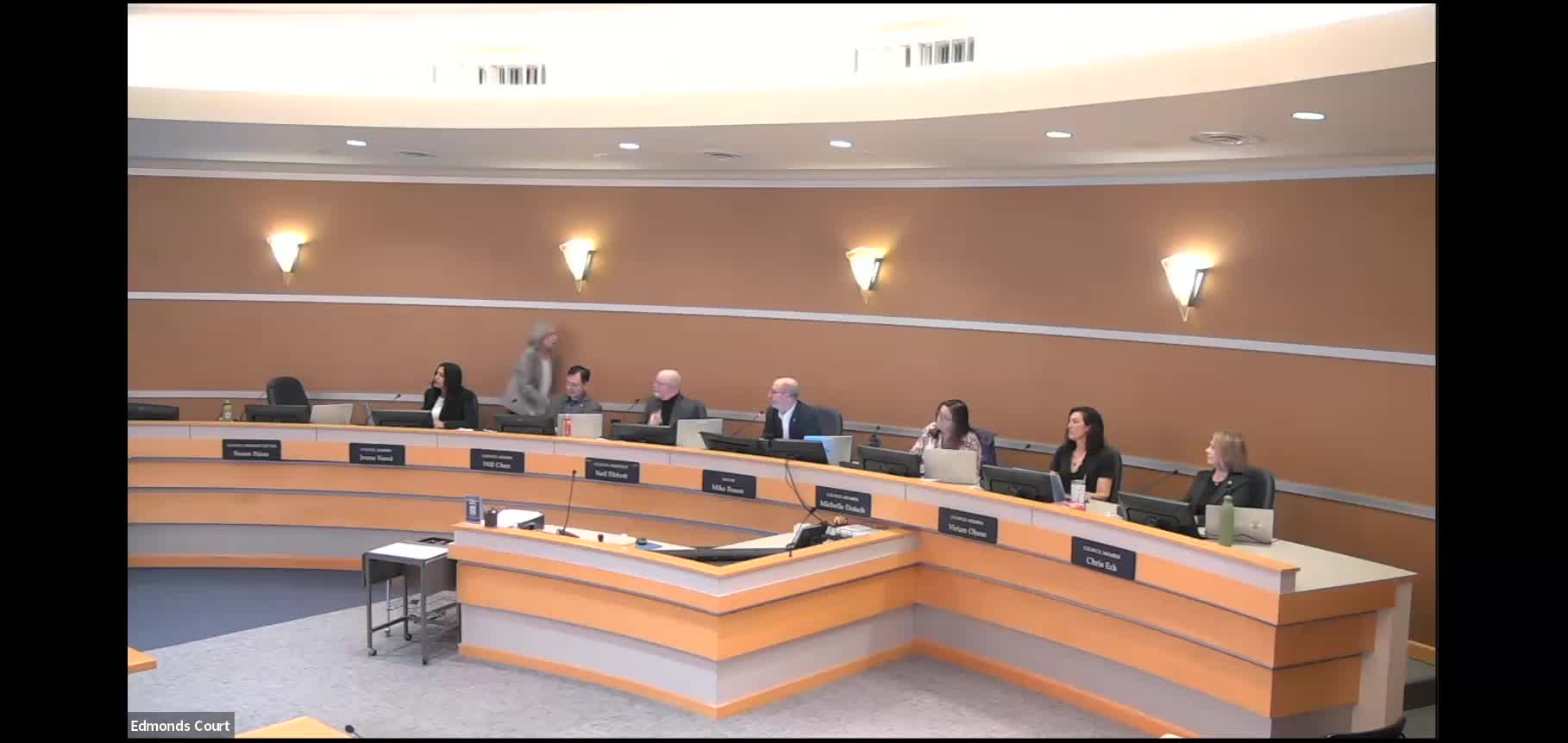
Dozens of residents and multiple council members addressed plans and proposals that could affect neighborhood parks and the Francis Anderson Center during public comment at the Edmonds City Council meeting on April 1.
The meeting drew a large turnout for audience comments after public notice that Hummingbird Hill Park and the Francis Anderson Center might be discussed during the comprehensive-plan amendments process. Council staff said 29 people had signed up to speak in advance; later in the meeting council member Chen said there were 62 spoken comments and more than 700 emails on the subject.
Why it matters: Residents and city leaders warned that selling small neighborhood parks or the Francis Anderson Center would be irreversible and would conflict with the city’s comprehensive plan goals for open space and community gathering places. Several speakers tied the controversy to a recent, contested removal of a 102-year-old coastal redwood (referred to in public comments as “Big Red”).
Public commenters described a range of impacts. Tim Greiner, who said he lives near Hummingbird Hill, argued the park is accessible for grandparents and others who cannot travel to lower-bowl parks. "Maintaining an accessible Hummingbird Park is needed and very important for the Mid Bowl residents of Edmonds," he said.
Neighbor Donald Wayne, who lives next to the park, described recurring summer activity, recurring flooding and drainage problems in the park and said the site can act like a temporary pond during heavy rains. Jordan Rudd, who said he was born in Edmonds, told the council, "These parks bind generations together. When you sell one park like this, it does not come back." Chelsea Rudd urged council member Nand to reconsider an announced intention to abstain from a vote, saying, "We love our parks. We're not going away. We're going to save our parks."
Other commenters highlighted environmental and wildlife values: Kathy Stahl, who lives across from Hummingbird Hill, said the park provides bird habitat, including owls and hawks, and warned that development would harm that habitat. Several speakers cited specific comprehensive-plan policies—identified in public comment by their LU policy numbers—and asked the council to align decisions with those objectives.
Community service and childcare were also raised. Brian Webster and Angie Baum described Main Street Kids, a daycare operating at the Francis Anderson Center, and said a sale or closure could displace families and employees. "We provide quality care. We provide that. We've been providing that for a very long time," Baum said, noting a wait list for care and the center's role in serving Edmonds families.
Speakers suggested alternatives to selling public land. Ideas included adopting a city B&O tax, paid parking, short-term rental taxes, increased property taxes, pursuing grants, public–private partnerships and stronger ordinance enforcement. Resident Bob Ledford urged the council to present a clear recovery plan and asked volunteers to help craft long-term revenue solutions.
Separately, several speakers criticized the handling of the removal of a large coastal redwood (public commenters referred to it as "Big Red"). Multiple residents said the permit and its supporting arborist report contained errors and asked for a stronger tree ordinance, better permitting review and a moratorium on cutting legacy trees while stronger protections are written.
Council response and process notes: Council members frequently emphasized process and the limits of the council’s authority. Council member Nand characterized the comprehensive-plan amendment procedure as the wrong mechanism to dispose of city property and said staff time would be better spent on a long-delayed tree-code update; she later said she would abstain from votes about comp-plan priorities to press for tree-code work. Director of Planning Hope told the council that comprehensive-plan amendments require substantial staff time and that approximately 50 staff hours is a reasonable estimate for a study item, with complex items requiring more.
The council did not vote to sell any park or the Frances Anderson Center at the meeting. Instead, council members moved to study selected comprehensive-plan items (see separate coverage of council business) and repeatedly asked staff to return with options and analyses. Several council members asked for more creative and recurring revenue options before proceeding with any sale of public land.
The meeting’s public comment period concluded after more than an hour and many individual remarks; several speakers asked the council to prioritize parks, open space, childcare facilities and a stronger tree code in future planning work.