Get Full Government Meeting Transcripts, Videos, & Alerts Forever!
Get email alerts on the Land Use Procedure topic
No spam. Unsubscribe anytime.
Edmonds hearing examiner urges procedural rules, longer decision window in annual report
Summary
Hearing Examiner Russ Albrecht told the City Council he adjudicated nine land-use matters in the past year and recommended allowing the examiner to adopt rules of procedure and extending decision deadlines from the city's current one‑day requirement in some enforcement appeals to 10 days.
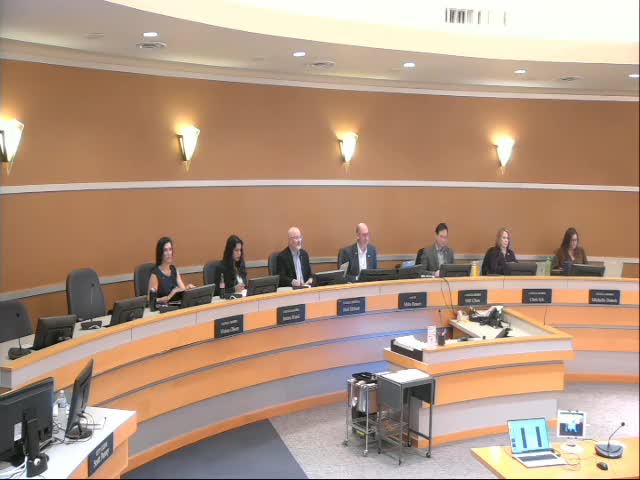
Hearing Examiner Russ Albrecht told the Edmonds City Council on March 11 that he heard nine land-use matters in the past reporting period and urged two procedural changes: authority to adopt rules of procedure and longer time to issue certain decisions.
Albrecht said he has been adjudicating a multi‑day hearing and that recent matters included a seven‑lot preliminary plat, conditional‑use reviews for a daycare and a garden-and-stone store, several setback and variance requests, and an approximately 900‑foot boardwalk replacement by the Port of Edmonds. He said typical public concerns involved traffic, parking and water pressure near new developments.
Albrecht said Edmonds does not routinely require developers to consult school districts on safe‑walking conditions or produce safe‑walk analyses tied to bus stops; he said he has been adding such conditions on preliminary plats under existing criteria. He described one notice‑of‑violation appeal involving a longtime tire store whose outdoor tire storage raised International Fire Code safety concerns and said the city must enforce hazardous conditions to avoid liability.
On code and process changes, Albrecht recommended two revisions. First, he asked the council to authorize the hearing examiner to adopt rules of procedure that would allow the examiner to set prehearing rules and to handle limited rights of intervention for third parties who show direct injury. "If you just throw something into the code that allows a hearing examiner to adopt rules of procedure, I can set up a procedure for that as well as other procedural issues," Albrecht said.
Second, he urged extending the examiner's decision deadline in certain code‑enforcement appeals from the city's current 24‑hour requirement for some notices of violation to a 10‑business‑day standard common elsewhere. Albrecht said that under state law he generally has 10 working days to issue decisions but that Edmonds' local code forces a rushed 24‑hour turnaround in some cases and even shorter timeframes for reconsideration requests. He said lengthy hearings with thousands of pages of exhibits and multi‑day testimony make the 24‑hour limit untenable and risk flawed rulings.
Council members asked clarifying questions about timelines and the handling of applicants' reconsideration filings; Albrecht said the state recently adjusted overall permit timelines and added penalties for missed deadlines, and recommended some administrative changes (for example, making minor tenant‑space conditional uses administrative) to shorten staff processing time without compromising review quality.
Albrecht also summarized several recent rulings and appeals: approval of a conditional use for a new garden-and-stone store with noise conditions covered by the city's noise ordinance; a setback variance approved where stairs had been replaced without permit; partial variance relief for very old, undocumented improvements; a denial of a lakeside setback variance because of adverse view impacts to a neighbor; and the Port of Edmonds' shoreline boardwalk replacement, which he said proceeded smoothly.
He closed by urging staff and council to consider the two procedural changes and said he would follow up with proposed code language and examples from other jurisdictions.