Get Full Government Meeting Transcripts, Videos, & Alerts Forever!
Get email alerts on the Subdivisions topic
No spam. Unsubscribe anytime.
Planners weigh easing short‑plat limits as unit‑lot subdivisions gain interest
Summary
Staff briefed the commission on unit‑lot subdivisions, the difference between short and long plats, fees and timelines; commissioners asked whether the short‑plat threshold should rise from four lots and discussed condominium vs. unit‑lot ownership models.
Planning staff reviewed Burien’s subdivision processes and how a unit‑lot subdivision option would interact with proposed zoning changes that increase allowed units per lot.
Planner Chaney Scottson explained the distinction between short subdivisions (four lots or fewer) and long subdivisions (five or more) and outlined the different decision paths, timelines and fees. She said short subdivisions are approved through staff completeness review and preliminary approvals and typically take about 70 days of staff review; long subdivisions go to the hearing examiner and City Council, take longer and cost more under the 2025 fee schedule.
Scottson warned that if the city keeps a four‑lot short‑plat threshold while reducing minimum lot sizes and allowing more units per lot, more developments could trigger the long‑subdivision process, increasing time and cost for applicants. Staff noted that adjusting the short‑plat threshold to permit up to nine lots under the short‑plat process would align Burien more closely with neighboring jurisdictions and be less costly for applicants.
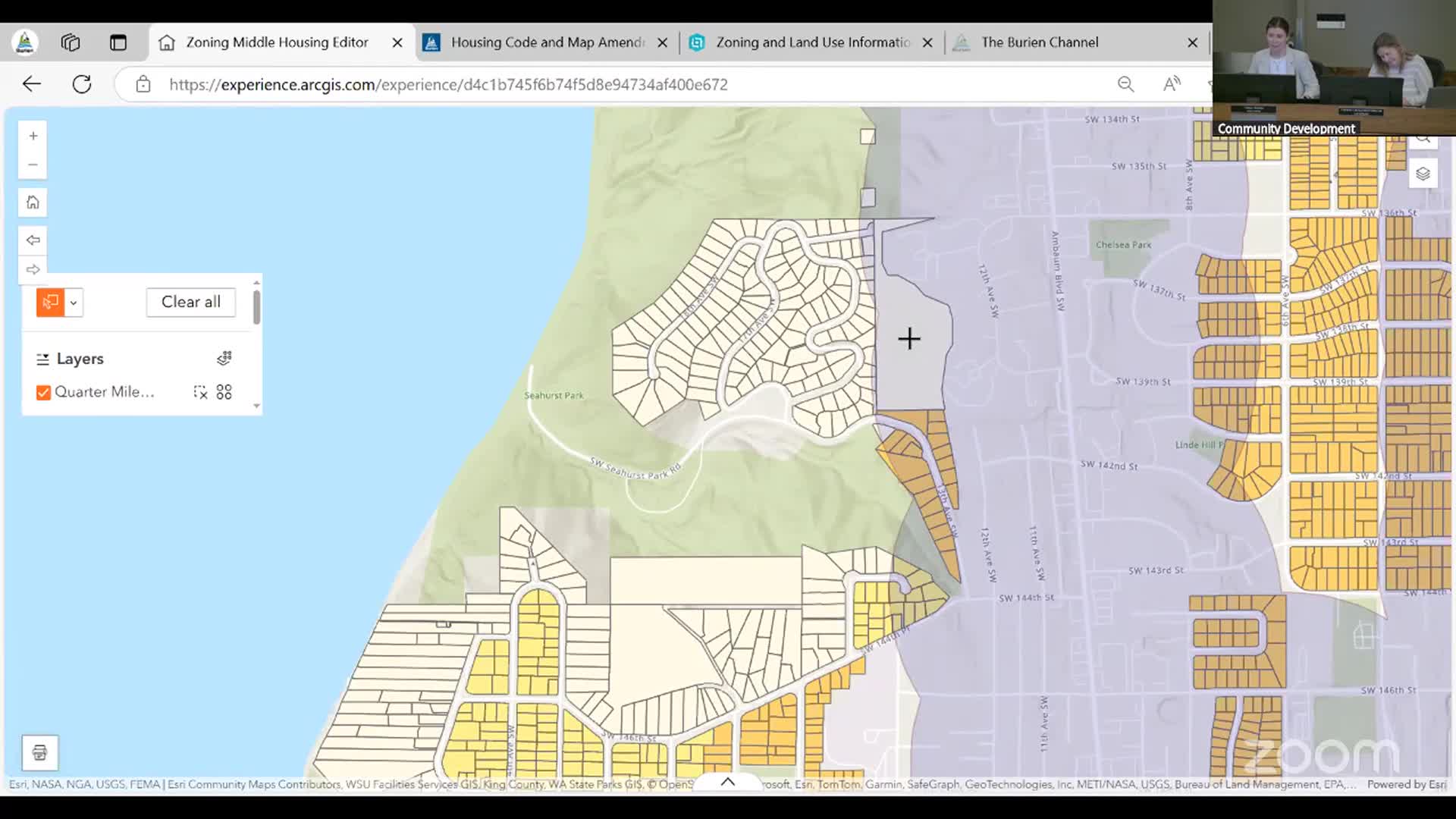
Commissioners asked for examples and for staff to estimate how many existing parcels could yield larger subdivided counts under the proposed lot sizes. Scottson said she did not have a parcel‑level total in the meeting but that GIS could produce a summary and that some parcels are already large enough to support many lots under the proposed 3,000‑square‑foot minimum.
Commissioner Sam Ostrander asked whether the city could limit short plats by maximum lot size; staff advised that applying the short‑plat process differently by lot size (rather than by number of lots created) would raise legal questions and would require specialized land‑use counsel. The commission declined to pursue a maximum‑lot‑size restriction at this time and instead asked staff to return with data and visual examples.
The unit‑lot subdivision example shown by staff illustrated how townhouse lots could be sold as individual fee parcels while sharing common open areas under a homeowners association (HOA), avoiding condominium conversion costs. Scottson said state law requires an HOA or similar shared ownership arrangement when unit‑lot subdivisions create private lots that share common elements.
Why it matters: allowing unit‑lot subdivisions and raising the short‑plat threshold could reduce development costs for small developers and create additional homeownership options (townhouses sold as lots rather than condos). Commissioners balanced that potential with concerns about tree canopy, stormwater management and neighborhood character and asked staff for feasibility modeling, massing examples and comparisons to nearby cities.
Staff will return with parcel summaries, visual massing examples for typical lot sizes and a recommendation on whether to raise the short‑plat threshold.