Get Full Government Meeting Transcripts, Videos, & Alerts Forever!
Get email alerts on the Child Welfare Workforce Screening Placements topic
No spam. Unsubscribe anytime.
Citizen Review Panel and OCS present workforce, screening and placement concerns to Senate committee
Summary
The Citizen Review Panel presented its 2023–24 findings and a two‑phase workplan emphasizing workforce retention, mandatory reporting and out‑of‑home placements; Office of Children's Services Director Kim Guay and Commissioner Kim Veil outlined recruitment and retention efforts and described high turnover, vacancy and caseload pressures.
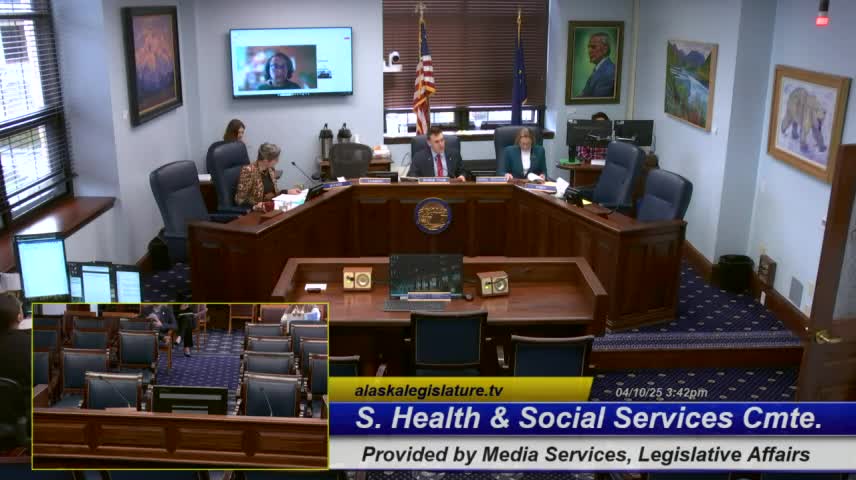
Dr. Rachanda George Bettisworth, chair of the Citizen Review Panel (CRP), presented the panel's 2023–24 annual findings to the Senate Health and Social Services Committee on April 10 and described a new two‑phase, two‑year workplan addressing system‑level issues including workforce retention, mandatory reporting and out‑of‑home placements.
Bettisworth told the committee the CRP — a federally mandated citizen oversight body created under the Child Abuse Prevention and Treatment Act (CAPTA) — focuses on system‑level patterns rather than individual cases, conducts public outreach and issues annual recommendations to the Office of Children's Services (OCS). The CRP's 2023–24 recommendations included changes to recruitment and flexible state employee policies to better fit OCS's scheduling and operational needs, and recommendations to improve connections to prevention services for screened‑out families.
OCS Director Kim Guay responded with an overview of the department's talent acquisition and retention efforts and the operational pressures that prompted them. Guay said OCS receives about 21,000 protective‑services reports per year; roughly 31 percent are screened in for further investigation and 69 percent are screened out. She told the committee the agency's frontline turnover peaked at 51 percent during the pandemic and is currently about 37 percent, and that the Anchorage vacancy rate for case‑carrying staff is about 45 percent while statewide case‑carrying vacancies are about 33 percent. Guay said some experienced workers in Anchorage are carrying about 33 cases each, while the national recommended average is about 12–13 cases per worker.
Guay described several responses: a centralized talent acquisition team intended to speed hiring, competency‑based hiring (no longer requiring a bachelor's degree for entry), paid internships and child‑welfare certificate support in partnership with the University of Alaska Anchorage, and newly created centralized units (for placement search and placement support) to remove non‑casework tasks from caseworkers. She also said the department has adopted a workplace framework intended to support staff wellbeing, instituted regular debriefings after critical incidents, and is running staff surveys that show some increases in workers reporting they feel valued.
Committee members raised concerns about child advocacy centers (CACs) and uncertain federal funding. Senator Giesel asked whether the CRP works with CACs; Bettisworth said the panel does not directly interact with CACs unless it requests a presentation but acknowledged CACs are ‘‘central to the work of keeping kids safe’’ and that closures or reduced CAC capacity would be a major setback. Commissioner Kim Veil said the department is exploring alternative federal funding streams and examining what other states are doing to sustain CACs and is actively pursuing options.
On screening‑out procedures, the CRP reported it is studying what happens after a report is screened out and recommended more collaborative connections with community organizations so families that do not meet thresholds for investigation can be referred to prevention supports. The CRP said it will continue to develop data reports on screened‑out cases and collaborate with OCS on potential improvements.
The CRP's second focus area, Bettisworth said, is out‑of‑home placements. The panel plans to analyze placement stability, timeliness and long‑term outcomes, with attention to kinship care, therapeutic homes, licensed foster homes and residential services, and to prioritize cultural and community connections in placement decisions.
No formal votes were taken. Committee members thanked the presenters and asked for further information; both the CRP and OCS offered to provide follow‑up data and contact information for committee members to request parts of the annual report or the CRP's slide materials.