Get Full Government Meeting Transcripts, Videos, & Alerts Forever!
Get email alerts on the Juvenile Behavioral Health topic
No spam. Unsubscribe anytime.
SB 44 would require parent contact, unannounced inspections and reporting on seclusion/restraint for minors in psychiatric facilities
Summary
Senate Bill 44 would require weekly parent or guardian contact, semiannual unannounced inspections with youth interviews, 24‑hour reporting of seclusion or restraint, and an annual public report about minors in psychiatric hospitals.
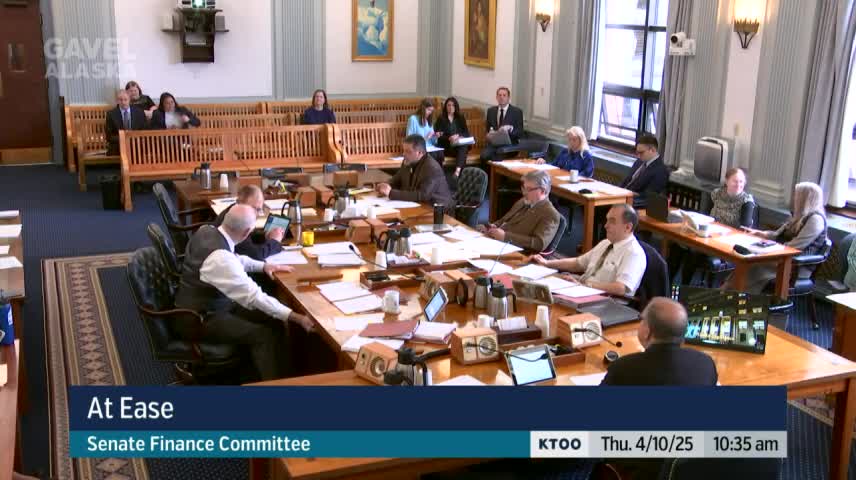
Senate Bill 44, introduced by Sen. Matt Clayman, would require enhanced transparency and parental contact for minors receiving psychiatric hospital care. The committee held a first hearing on April 10.
"Senate Bill 44 has four main objectives," Clayman told the committee. He listed them: at least one hour per week of communication between youth patients and their parent or guardian; twice-yearly unannounced inspections in which 50% of youth patients are interviewed; 24-hour reporting to the Department of Health and to a parent or guardian whenever seclusion or restraint is used; and an annual public report on minors in psychiatric hospitals.
Invited testimony included Ben Malat (identified in transcript as representing the Alaska Federation of Natives), who said tribal communities support the bill because many rural families lack easy access to behavioral health services and long distances can compound trauma when youth are placed far from home. A graduate of an institutional placement, Mateo Jamie described being admitted to a psychiatric facility because no foster homes were available, reported limited therapeutic contact, and said the experience caused lasting trauma.
Committee staff supplied three fiscal notes: Healthcare Facilities Licensing and Certification estimated a FY26 cost of $212,100 in unrestricted general funds and one full-time position; DFCS Probation Services and Juvenile Justice submitted a $0 fiscal note; and DFCS Children's Services Management submitted a $0 fiscal note.
Clayman said the bill builds on the Department of Health's Behavioral Health Roadmap for Alaska youth and the 2022 U.S. Department of Justice findings about overreliance on institutionalization for minors with behavioral health disabilities. The bill was set aside after testimony and fiscal review.
The transcript does not record a committee vote on the bill; committee members did not offer amendments during the hearing and asked for further review.