Get Full Government Meeting Transcripts, Videos, & Alerts Forever!
Get email alerts on the Zoning Conservation topic
No spam. Unsubscribe anytime.
Nature Conservancy urges Manchester to keep Cedar Swamp in conservation zoning, seeks 200‑foot buffer for innovation district
Summary
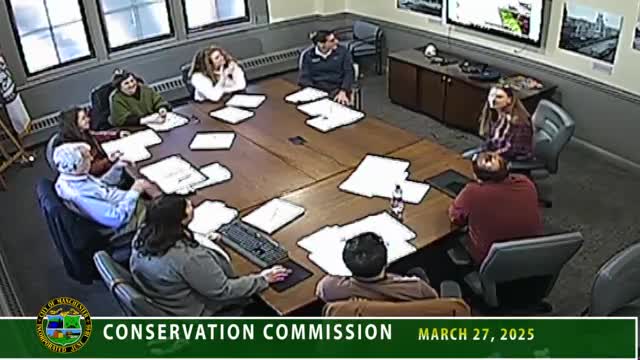
The Nature Conservancy urged the Manchester Conservation Commission to oppose rezoning of the Cedar Swamp Preserve to a residential district and to support a 200‑foot limited‑use buffer between the preserve and a proposed Innovation District, and the commission voted to back restoring conservation zoning and to recommend the 200‑foot buffer.
Representatives of The Nature Conservancy told the Manchester Conservation Commission on March 27 that proposed revisions to the city’s land-use code could undercut long-standing protections for the Manchester Cedar Swamp Preserve and asked the commission to support two steps: retain a conservation zoning district for the preserve and adopt a 200-foot limited‑use buffer along the edge of the proposed Innovation District.
Jim O’Brien, deputy state director for The Nature Conservancy in New Hampshire, Joanne Glove, Southern New Hampshire Stewards ecologist, and Ally Snell, community and partnerships manager, described the 640‑acre Manchester Cedar Swamp Preserve as the largest conserved parcel in the city and an ecological hotspot for Atlantic white cedar and giant rhododendron. The conservancy said the preserve was acquired and transferred under a settlement involving the U.S. Environmental Protection Agency and NHDES in 1999 as a Supplemental Environmental Project (SEP) tied to Clean Water Act enforcement; as plaintiff settlement terms, the city had obligations related to the preserve’s long‑term protection.
The Nature Conservancy raised three central concerns about the draft land‑use changes: a proposed rezoning that would place the preserve into a low‑density residential (RS) district, proposed buffer and setback language that the conservancy considers too weak, and how the adjacent Innovation District could be designed around — but not up to — the preserve. O’Brien said the conservancy opposes changing the preserve’s zoning to RS because the preserve’s acquisition and the city’s consent under the SEP were intended to secure the land for conservation. He told the commission that converting the parcel to a residential district would send a confusing message to residents and could weaken the long‑term intent of the SEP protections.
On buffers, the conservancy requested a “limited‑use” 200‑foot buffer measured from the preserve boundary where city‑owned Innovation District parcels meet the preserve. Joanne Glove summarized stewardship problems the conservancy has seen where development abuts the preserve — including cleared backyards, lawn extension into the tree line, dumped yard waste and repeated incursions that create stewardship burdens and damage trees. The conservancy said a 200‑foot buffer is an evidence‑informed compromise: New Hampshire wildlife guidance shows measurable impacts to wildlife within several hundred feet of trails or intense human uses, and the conservancy said 200 feet would absorb much of the pressure while still allowing the city to develop adjacent parcels.
Commissioners and city planning staff discussed the request in detail. Planning staff explained that an early draft of the land‑use code had removed a separate conservation zoning district citywide and that later drafts were expected; planning staff said they were likely to restore conservation zoning to some parcels and were hearing public comments calling for clearer demarcation of conserved lands. The planning liaison noted tradeoffs between encouraging development in an Innovation District and protecting high‑priority wetlands, vernal pools and steep slopes within the city‑owned parcels.
The Conservation Commission voted to support two items: (1) a motion recommending that the city restore a conservation zoning district (citywide) to clearly mark conserved lands and (2) a motion recommending that the Innovation District include a 200‑foot limited‑use buffer along the edge where it adjoins the Cedar Swamp Preserve. Both votes were taken by voice; the meeting record shows the motions passed but does not supply an exact roll‑call tally. Commissioners also asked that the conservancy and city continue dialogue with planning staff and noted the commission could provide a formal letter to the zoning steering committee and Board of Mayor and Aldermen.
The Nature Conservancy also described community outreach tied to the preserve: a Riverwoods neighborhood meeting in early April to discuss stewardship and the commission’s participation in the City Nature Challenge and a river/park cleanup and public iNaturalist “Bioblitz” event. Conservancy presenters offered to help map sensitive wetlands and vernal pools and to escort city staff on field visits to confirm features before final code language is adopted.