Get Full Government Meeting Transcripts, Videos, & Alerts Forever!
Get email alerts on the County Budget topic
No spam. Unsubscribe anytime.
Finance committee flags possible staff cuts, EMS and fire funding gaps as state revenue outlook changes
Summary
County finance committee members reported potential reductions to Health First Indiana funding, concerns about countywide EMS funding levels and discussion of volunteer fire department allocations as state revenue forecasts and legislative changes proceed.
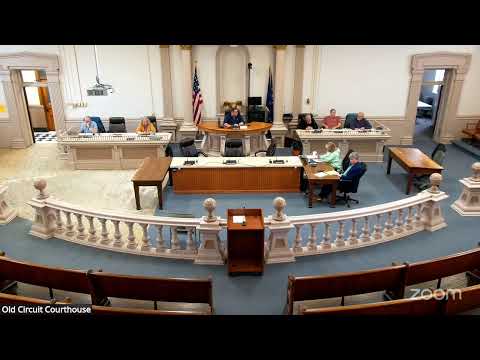
Members of the Henry County finance committee and council gave an update April 9 on departmental budget pressures, projected reductions to Health First Indiana funds and questions about EMS and volunteer fire department funding for 2026.
Shannon (council member) said the finance committee reviewed highway issues including three road closures with culverts on order, state changes to gas tax and potential reductions or uncertainty in Community Crossings funding. On public health, Shannon said proposed reductions to the Health First Indiana fund could cut the program by about one-third and that the health department must prepare its 2026 budget assuming roughly half the 2025 revenue; Angela (health department) had warned that grant-funded positions could be lost and staffing would have to be reduced if revenues fall.
The committee discussed countywide emergency medical services funding. Shannon said New Castle’s request for 2026 was estimated at $915,000 but had been discussed at about $650,000; council members asked what the county is legally required to provide (countywide BLS 9-1-1 response) and whether that baseline is adequate for residents. Kennan (council member) said legislators’ revenue forecasts and bills under consideration could reduce the county’s bonding capacity and complicate funding for EMS and other services.
Council members also discussed volunteer fire department allocations. Jeff Beal located ordinances from nearby counties that distribute public-safety Local Income Tax (LIT) funds evenly to departments; attendees at a meeting with volunteer departments and township trustees expressed support for an even distribution rather than the prior allocation method. Debbie (auditor) said the Department of Local Government Finance (DLGF) had called and indicated the county’s reallocation request is likely to be approved and that she expected an adjustment in May; she said DLGF did not identify volunteer departments as overpaid for the year.
Financial balances discussed: the council’s reclassification fund balance was reported at $97,621.59; the rainy day fund held approximately $295,000 as of March 27; and the general fund unappropriated balance was reported at $7,292,596.38. Shannon emphasized that those savings cannot be used for recurring payroll long-term and noted the county has little unappropriated funding available for large new ongoing expenditures.
Why it matters: proposed reductions to state grant funds and changes in state tax policy could force cuts in personnel and services at the local level and complicate county planning for EMS, health, highways and fire department support.
Ending: Council staff said they will continue budget hearings, run updated revenue and bond analyses (Baker Tilly was mentioned) and prepare ordinance language if the council pursues an even distribution of LIT funds to volunteer fire departments for 2026.