Get Full Government Meeting Transcripts, Videos, & Alerts Forever!
Get email alerts on the Downtown Development Park Venue topic
No spam. Unsubscribe anytime.
Temple Terrace council weighs park/venue on CRA parcels to boost downtown activity
Summary
Councilmembers discussed using part of two vacant CRA parcels (8901 and 8447 N. 50th Street) for a small event park or plaza to activate nearby businesses, and directed staff to return to the CRA with revised marketing guidance that would allow some speculative development and consider a public component.
Councilmember Fernandez on Thursday asked the City of Temple Terrace to explore creating a small park or event venue on vacant redevelopment-area parcels as a way to activate downtown and make the remaining property more attractive to developers.
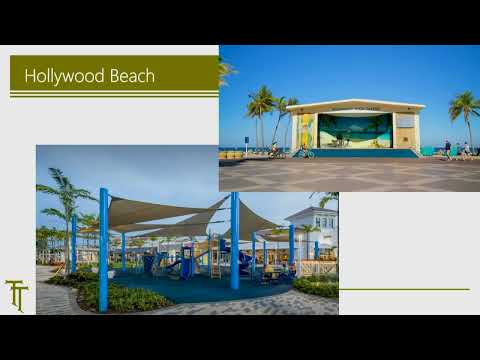
Fernandez said he has seen examples where a modest stage, playground and open turf between restaurants and shops draws families and supports adjacent businesses: "I would like to suggest that we look into the process of putting a park area in the open space in the downtown area."
The proposal focused on two city-held parcels in the southeast quadrant of the CRA: 8901 North 50th Street (about 1.75 acres) and 8447 North 50th Street (about 1.74 acres). Greg Pauley, the city’s community development director, showed aerials and described frontage and neighborhood context for both sites.
Why it matters: Councilmembers framed the idea as a tool to increase pedestrian traffic and developer interest in a corridor that has struggled to attract offers. Several members said a modest, well-located public amenity could raise the value of adjacent retail or restaurant space; others cautioned about upfront costs and longer-term fiscal impacts if the city retains property instead of selling it.
Developers and staff weighed options. John Lochner of Florida ROI Commercial Property Brokerage told the council "we do believe that potentially this could help the sale of 8901 as it would reduce the size and make it more attractive to developers," and recommended 8447 as the parcel "better suited for a park." Leisure services director Carl Langfield warned that even temporary activation would require infrastructure: "We’re still looking at significant dollars up front to make that type of even temporary activation happen."
Council discussion centered on four practical issues: how to market the parcels (allowing speculative or "spec" development versus requiring an identified end user), how to preserve some public/open space while maintaining saleability, parking and access, and the CRA's existing restrictions and state legislation affecting CRAs.
Several councilmembers and staff proposed a middle path: allow more flexibility in marketing (including some spec development) while negotiating deed restrictions or development conditions that would reserve a public or quasi-public gathering space as part of any sale or development. The city manager recommended that the broker open the site to spec proposals and that the city pursue developer negotiations that could deliver an activated public component without the city having to design and build the facility itself.
Parking and access were flagged repeatedly as constraints. Councilmembers noted limited nearby public parking and that many proposed events would occur when on-street and existing lot use might already be high; one councilmember suggested converting a portion of 8447 to parking if necessary. Planning staff said the parcels are platted in narrow east–west slices, making some subdivisions straightforward but other lot reconfigurations likely to require replatting.
Legal and programmatic limits also were raised. Staff reminded the council that the CRA’s reciprocal easement and operating agreements and the CRA development plan already include restrictions, and that recent state legislation affecting CRAs (including limits on new CRA projects and on adding debt) could affect any city-led construction; staff said they would check legislative dates and implications.
Action and next steps: Council agreed to schedule a CRA meeting to give the CRA board and staff specific guidance before returning to full council. The guidance requested by the council included revising marketing instructions to the broker to allow some spec development, compiling a recommended list of uses to disallow, clarifying which existing CRA restrictions already apply, and researching parking and infrastructure costs and funding implications.
The discussion produced no ordinance or binding sale action; instead the council directed staff and the broker to return with options and to present the topic to the CRA board for a focused review. The council did not set a dollar figure or adopt a financing plan at the meeting.
Ending: Staff said they will prepare background materials for the CRA meeting, including a list of existing CRA restrictions, sample use restrictions from comparable projects, parking-demand estimates, and possible negotiation approaches to secure an on-site public component while preserving market interest in the parcels.