Get Full Government Meeting Transcripts, Videos, & Alerts Forever!
Get email alerts on the Public Safety Parking topic
No spam. Unsubscribe anytime.
Whiteland council pauses plan to enforce 2–5 a.m. parking rule after months-long dispute between mayoral office and police chief
Summary
A contentious meeting over enforcement of 72.02 (no parking 2—1 a.m.) and a written directive to Police Chief Rick Shipp prompted the Whiteland Town Council to ask staff to rewrite the ordinance and to defer any immediate repeal or disciplinary actions.
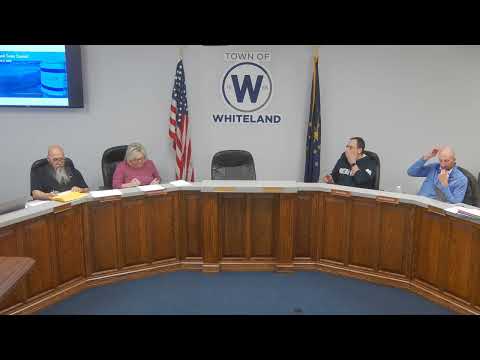
A heated discussion over enforcement of the town's no-parking ordinance and a written directive from the council president to the police chief dominated public business at the Whiteland Town Council meeting.
Council President Richard Hill introduced the item as "Enforcement of 72.02, parking on the town streets and rights of way," and the discussion quickly turned to whether a council member had improperly given directives or threatened discipline to the police chief outside an open meeting. Council member Joe Sailor said he believed the summary of that meeting amounted to an open-door violation and a prohibited attempt by an individual member to direct town employees.
The dispute focused on Ordinance 72.02, which currently bans parking on some streets at certain times (the council identified the 2 a.m. to 5 a.m. window in the discussion). Sailor said council rules and state law prohibit individual members from directing employees and described the written summary he received about the alleged meeting as unacceptable. He said: "No single member tells any police officer, much less the marshal, what to do. That's illegal. It's illegal both in my state law and it's illegal under the open door law, and it's illegal under our ordinance." (Council member Joe Sailor)
Police Chief Rick Shipp disputed the implication his force was not patrolling neighborhoods. Shipp described heavy call volume (more than 1,000 calls year-to-date) and said officers prioritize life-safety calls, patrols and response to commercial and warehouse areas. He told the council enforcement of the 2–5 a.m. restriction can hinder community trust when officers prioritize parking enforcement over proactive patrols and investigations. "Do I want to be responsible for parking, or do you want a safe community? Do you want no crime in the community, or do you want parking?" he said. (Police Chief Rick Shipp)
Council discussion moved between legal concerns about an alleged closed-door directive and policy choices about how strictly to enforce a largely time-based parking rule. Council President Hill said he had thought the written follow-up would simply confirm talking points after an informal conversation and apologized to anyone who felt startled by his approach.
Rather than immediately repealing 72.02 or ordering enforcement changes, the council directed staff to draft a revised ordinance. Town legal counsel (Steven) and Director of Administration and Operations Carmen Ortiz were asked to prepare a redraft that: (a) removes the townwide two-to-five a.m. prohibition language where unnecessary; (b) preserves no-parking prohibitions on identified arterial streets (Main Street/Whiteland Road, North Front Street, Pulliamia Boulevard, South Sawmill Road and any additional streets Carmen recommends); and (c) clarifies exceptions for snow removal and other emergency operations. Council members agreed to postpone formal action to the next meeting to allow review of a revised draft.
The council president and Chief Shipp both urged calmer, face-to-face communication going forward. Council President Hill said he would continue to accept resident complaints but agreed the proper channel for operational direction is the full council acting in public. Chief Shipp asked for clearer guidance and a review of enforcement priorities that balances public-safety response, community relations and parking enforcement.
Why it matters: The episode illustrates friction that can arise when elected officials, staff and first responders disagree about enforcement priorities. The council took the procedural step of asking staff and legal counsel to rewrite the ordinance rather than making an immediate policy change or taking disciplinary steps.
What happens next: Administration will present a revised ordinance at the next council meeting; the council said it would include a list of arterial streets to remain restricted and clarifying language on snow removal and emergency access.