Get Full Government Meeting Transcripts, Videos, & Alerts Forever!
Get email alerts on the Language Access Interpreters topic
No spam. Unsubscribe anytime.
Appeals court considers interpreter and procedural claims in Reynoso v. Rathore
Summary
Reynoso appealed a civil judgment raising claims that the trial court should have offered a Spanish interpreter and that jury selection and instructions contained errors; appellees argued the record shows the plaintiff proceeded in English and waived objections. The panel heard extended argument and took the case under submission.
The Appeals Court heard April 10 argument in Reynoso v. Rathore, a civil appeal in which the appellant contends trial procedures deprived him of a fair proceeding because the trial judge did not provide a Spanish-language interpreter and the jury voir dire and instructions were improper.
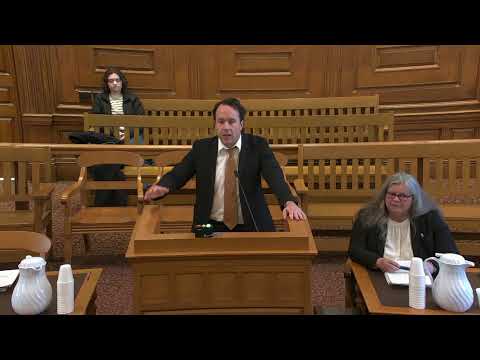
Elizabeth Clegg, for the plaintiff-appellant, argued the trial record shows the appellant struggled with English and that Massachusetts law requires courts to offer interpreter services where a party “has difficulty in speaking or understanding the English language.” She pointed to multiple places in the record and an affidavit asserting the appellant’s difficulty with written and spoken English; she argued the trial judge’s alleged failure to offer an interpreter, coupled with contested jury instructions and peremptory-challenge conduct, deprived the appellant of a fair trial.
Mark Hamer, counsel for the Rathores, told the court the trial judge was in the best position to evaluate comprehension and that the record shows the appellant participated in pretrial conferences, used English in depositions (the transcript appendix includes a deposition), handled filings and affirmed understanding of procedural instructions. Hamer said the appellees also testified in heavy accents and that no timely objections were raised at trial to jury strikes or instructions, which typically must be preserved for appeal.
The panel pressed both sides on where, specifically in the trial record, the appellant told the judge he could not understand English, and whether counsel for appellees had arranged for an interpreter at deposition. The court also asked about waiver and the limited record on appeal: Hamer noted a deposition transcript was included in the supplemental appendix; Clegg pointed to record cites and witness notations she says show the appellant had trouble following proceedings.
After extended questioning the panel took the case under submission; no decision was announced at the hearing.