Get Full Government Meeting Transcripts, Videos, & Alerts Forever!
Get email alerts on the Evidence Authentication Firearms topic
No spam. Unsubscribe anytime.
Appeals court hears sufficiency and authentication challenges in Commonwealth v. Sanchez gun case
Summary
At the April 10 sitting the Appeals Court heard dueling arguments over whether surveillance video, a CJIS inquiry, shell casings and a magazine in a safe provided sufficient and properly authenticated evidence to support gun-related convictions in Commonwealth v. Jeremy N. Sanchez.
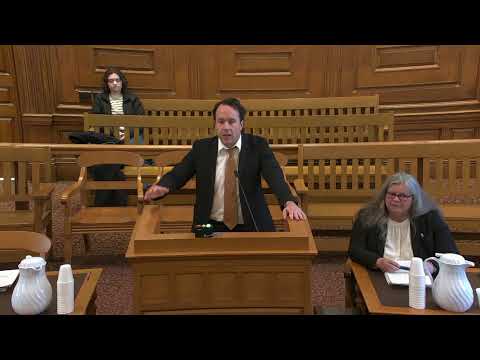
The Appeals Court heard April 10 argument in Commonwealth v. Jeremy N. Sanchez about whether the Commonwealth introduced sufficient evidence to support convictions tied to a shooting and whether certain investigative steps were properly authenticated.
Appellate counsel Joseph Assone argued for Sanchez that identification and evidentiary links were insufficient: the weapon was never recovered, the blurry surveillance “blob” seen in the initial video was not clearly a handgun rather than a rifle, shell casings at the scene could have been chambered in different firearms, and a magazine with similar cartridges found in a safe in another apartment did not prove Sanchez’s access or possession of the gun. Assone also raised a Confrontation/ hearsay concern about a CJIS (criminal justice information) inquiry and whether a non-testifying employee’s report had been improperly used.
Deputy District Attorney Matthew Petalano and other Commonwealth counsel defended the evidence as reasonable inferences the jury could make: they stressed that subsequent camera angles showed the same vehicle and that unique identifiers and timing tied the defendant’s vehicle and passenger to the scene; they said the CJIS inquiry actually produced an identical spelling and date-of-birth result and that the fingerprint and magazine evidence supported a chain of connection sufficient for the jury.
Judges questioned the parties about timing gaps in video feeds, the limits of slow-motion analysis, and whether the lapse between camera views allowed a stop and transfer of an item. Petalano acknowledged the video was a close call but argued jurors could compare object size to nearby, visible reference points and that seconds later the object was no longer visible, supporting an inference it was small and concealable. Defense counsel countered that the record contained only circumstantial evidence and that the missing weapon prevented a definitive forensic link between cartridges and magazine.
After extended questioning the panel took the case under submission; the court did not issue a decision at the argument session.