Get Full Government Meeting Transcripts, Videos, & Alerts Forever!
Get email alerts on the Energy Efficiency topic
No spam. Unsubscribe anytime.
Honeywell outlines $5.5 million ESIP for Vernon schools, projects $316,000 annual energy savings
Summary
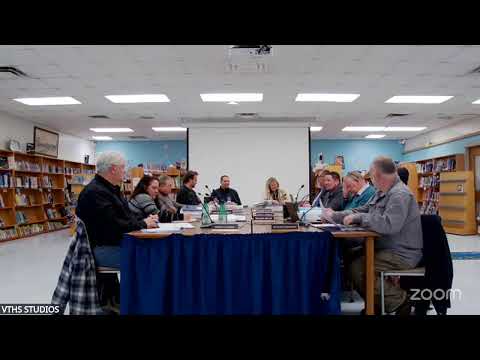
Honeywell representatives told the Vernon Township Board of Education on April 10 that an Energy Savings Improvement Program, or ESIP, could pay for roughly $5.5 million in energy and building-system upgrades across district schools while producing an estimated $316,000 in annual utility savings.
Honeywell representatives told the Vernon Township Board of Education on April 10 that an Energy Savings Improvement Program, or ESIP, could pay for roughly $5.5 million in energy and building-system upgrades across district schools while producing an estimated $316,000 in annual utility savings.
The ESIP presentation focused on how the Energy Savings Improvement Program authorized by the New Jersey Board of Public Utilities allows school districts to finance upgrades with the savings those upgrades produce. Honeywell project lead John Bonavist said the district’s audited utility spend totaled about $1.1 million for calendar year 2024 and that the proposed measures would reduce that budget by roughly 28.5 percent.
Why it matters: The ESIP framework can make large mechanical, lighting and solar projects “budget neutral” by covering debt service with energy savings, officials said. If the district proceeds, the work could modernize heating, ventilation and controls while locking in predictable energy costs and adding solar generation at the high school.
Honeywell said the district’s investment-grade audit and the BPU-required local-audit step are complete and that the team is finalizing selected energy conservation measures. The firm described typical measures as LED lighting, building-management controls, envelope work, selective mechanical upgrades and solar. Bonavist told the board the rough-order-of-magnitude financing estimate put project size “down below 5 and a half million dollars” on a 20‑year repayment model.
Board members pressed Honeywell staff on rate and performance risk. Trustee Michael Krauss asked how exposed the district was to current interest‑rate volatility; Honeywell replied that the firm had included market turbulence in its assumptions and that final prices would be locked at contract execution (targeted for July). On the question of whether savings could fall short, Honeywell said it offers a separate, cancellable performance‑guarantee contract that includes measurement‑and‑verification and costs roughly $38,000 a year as quoted at the meeting. Bonavist said the guarantee pays an annual shortfall if verified savings fall below the guarantee; excess savings would flow to the district’s operating budget.
Board members also asked about the bidding and procurement process. Honeywell said the district would hire an independent engineer or architect to run the public-bid work under New Jersey bidding rules; Honeywell said it typically “steps to the side” and remains neutral while the district’s engineer runs the public bid. The firm emphasized that the contract offered at execution would be a firm‑fixed price for the agreed scope and that change orders would be required only for district‑requested scope changes.
Solar and site scope: Honeywell described a separate solar power‑purchase agreement (PPA) process already run by district staff for the high school. The company said the high school’s project — a parking‑lot canopy system — could produce the largest share of on‑site solar generation; other schools in the district face interconnection or roof‑condition constraints that make rooftop solar less viable today.
Next steps and schedule: Honeywell and district staff said they are coordinating with bond counsel and the district’s municipal financial adviser to finalize the financing structure and to present contract documents to the board. The presentation cited a target of July for finalizing contract terms and beginning construction after contract execution and summer mobilization.
What remained undecided: The board and Honeywell discussed the possibility of a later “phase 2” to pursue additional measures if external conditions change — for example, if new natural‑gas mains are routed near schools, making conversions from oil to gas feasible. Honeywell said that would require another procurement and, likely, a follow‑on audit and financing step.
Honeywell’s presentation and engineering work were informational; the board did not vote on contract award at the April 10 work session. Trustees said they wanted the firm and district staff to return with final contract and financing documents once bond counsel and the municipal advisor have completed their reviews.