Get Full Government Meeting Transcripts, Videos, & Alerts Forever!
Get email alerts on the Wiretap Evidence topic
No spam. Unsubscribe anytime.
Appeals court weighs wiretap statute and 'first complaint' hearsay in Commonwealth v. Barbosa
Summary
The court heard argument over whether a privately made three‑way phone recording required suppression under Massachusetts wiretap law and whether testimony repeated to family and police violated the first‑complaint rule in a sexual‑assault prosecution.
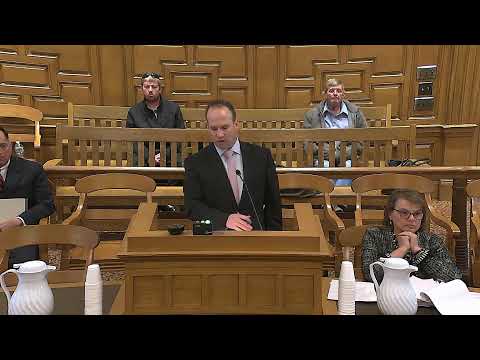
The Appeals Court on April 10 considered questions in Commonwealth v. Barbosa about suppression of a privately recorded telephone conversation and the admissibility of repeated complaints under the “first complaint” rule.
Attorney Carl Succhecki, representing defendant Barbosa, argued the recorded three‑way conversation — in which a complainant’s mother listened to and then recounted the call — constituted an unlawful interception under Massachusetts’s wiretap statute and thus should have been suppressed. Succhecki pressed the panel on controlling Supreme Judicial Court precedent (Santoro and subsequent decisions) that, he said, left room for suppression when private recordings violate the statute and the Commonwealth should not be allowed to rely on evidence a prosecutor “knew or should have known” was illegally obtained.
Assistant District Attorney Krista Elliott, arguing for the Commonwealth, said section 99P of the wiretap statute permits a defendant to move to suppress but does not require suppression in every case; where law enforcement is not involved the SJC has held suppression is not always an appropriate remedy. Elliott also told the court the Commonwealth limited its trial presentation and that several items of testimony were elicited without contemporaneous objection, which the Commonwealth says reduces any claim of prejudice.
Succhecki also argued repeated testimony by the complainant’s mother and by police about the complainant’s prior statements risked violating the first‑complaint doctrine, which allows only a single corroborating hearsay complaint in sexual‑assault prosecutions. The defendant’s counsel said the mother’s testimony went beyond a single permitted complaint and that other testimonial repetitions — including police testimony about what they were told — were cumulative and prejudicial.
The Commonwealth responded that the testimony at issue was largely brief or invited (defense counsel had earlier elicited or opened the door to some of the statements) and relied on appellate precedent — including Roby and Starkweather — holding that brief or cumulative first‑complaint testimony does not create a substantial risk of a miscarriage of justice.
The panel questioned whether Santoro and later decisions left the wiretap remedy discretionary when the interception is purely private, and whether the doctrine’s application changes where the Commonwealth later introduces background testimony referencing the intercepted material. Counsel for both sides acknowledged complexities in the interstate and evidentiary practice; the court took the case under advisement.