Get Full Government Meeting Transcripts, Videos, & Alerts Forever!
Get email alerts on the Criminal Procedure Surveillance topic
No spam. Unsubscribe anytime.
Appeals court hears challenge to pole‑camera evidence and confidential‑informant privilege in Commonwealth v. Mello
Summary
A three‑judge appeals panel heard arguments over whether police had probable cause to install a pole camera in late 2018 and whether the trial court properly denied disclosure of a confidential informant whose role helped trigger the surveillance.
A three‑judge panel of the Massachusetts Appeals Court on April 10 heard arguments in Commonwealth v. Mello over whether a pole camera installed outside a suspected drug location and the trial court’s handling of the confidential‑informant privilege require reversal.
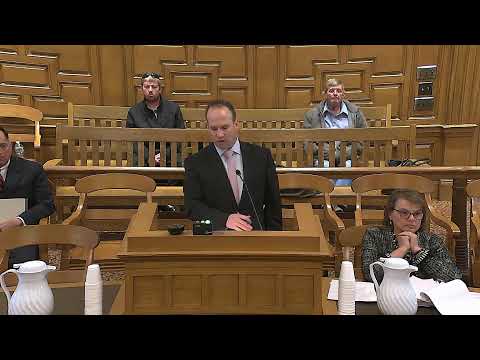
The panel — Judge Greg Massing presiding with Justice Englander and Justice DeAngelo — heard from defense counsel, who argued the pole‑camera affidavit contained “very little about the informant, his reliability, his veracity,” and that the trial court incorrectly denied a defense motion to disclose the informant’s identity and background. Assistant Attorney General Tara Johnston told the court the trial judge correctly found the informant was not a participant or recipient witness and that the Commonwealth had properly asserted an informant privilege; Johnston also argued the pole‑camera evidence was supported by controlled buys and other corroboration.
The crux of the camera dispute is whether police had probable cause in November 2018 to install a pole camera at 79 Holland Avenue and, if not, whether evidence obtained later from the camera should be suppressed. Defense counsel pressed the panel to treat the Trooper Massey pole camera affidavit as “very thin,” focusing on the affidavit’s limited description of the confidential informant and lack of documented past cooperation. The Commonwealth said the controlled buys and an undercover officer’s identification supplied independent corroboration of the informant’s veracity, and that the evidence admitted at trial came from periods when probable cause had been reestablished.
On the discovery dispute, the defense argued the informant was an “instrument” of the investigation and that disclosure of the informant’s name, dates of buys and prior track record could have helped challenge the Commonwealth’s use of prior controlled buys as background evidence. Johnston replied the motion judge reasonably exercised discretion, and that even if the judge erred on disclosure the error was harmless because the informant was not a participant or recipient witness to the charged transactions.
The panel asked detailed questions about the affidavit’s content, about case law that requires a showing of specific danger to the informant to sustain privilege (defense counsel cited McGrath), and about whether the Commonwealth’s representations to the motion judge about not introducing CI‑related evidence at trial were later altered. Johnston acknowledged the Commonwealth offered background testimony about controlled buys at trial but argued that did not change the legal conclusion reached by the motion judge.
The court also discussed timing and scope of the pole camera: the panel received that officers installed the pole camera on 11/30/2018, that two controlled buys had occurred before that installation, and that camera recordings continued and later captured incidents from July–August 2019 after probable‑cause facts were reestablished. The panel signaled skepticism about routine affidavits that simply note a “known CI” and rely on inferences; justices asked whether case law allows a near‑automatic inference that use of a confidential informant creates a risk sufficient to shield the CI’s identity.
The case was submitted after argument; the court did not render an immediate decision.