Get Full Government Meeting Transcripts, Videos, & Alerts Forever!
Get email alerts on the Broadband Infrastructure topic
No spam. Unsubscribe anytime.
Spectrum tells Clark County broadband build is ~40% activated, stalled by nearly 1,900 pole permits
Summary
Spectrum briefed the fiscal court on a major broadband build to about 5,000 homes in Clark County, saying nearly 2,000 homes are activated but roughly 1,882 pole-permit approvals from utilities remain before the project can be completed.
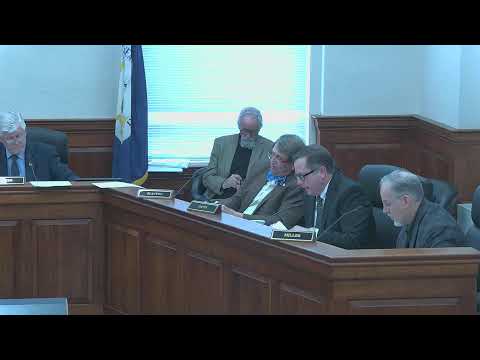
A Spectrum representative told Clark County Fiscal Court on April 8 that the company has activated service to nearly 2,000 of the roughly 5,000 homes covered by the county’s broadband build but remains blocked by pending pole permits needed from multiple utility owners.
The presenter said 1,975 homes have been activated — about 40% of the county deployment — and that the project is part of a broader Kentucky program to connect nearly 100,000 homes statewide. Spectrum said construction is largely complete in many places but the remaining work depends on what the presenter called “make-ready” work by pole owners (pole replacement, line relocations, other electrical work) before Spectrum crews can attach fiber.
The speaker estimated there are about 1,882 pole permits outstanding across Clark County: about 900 for the local electric cooperative, roughly 750 for KU (Kentucky Utilities), and nearly 200 for AT&T. Spectrum said it pays the cost of make-ready work and, once poles are ready, pays ongoing pole-attachment fees to the pole owners.
Court members asked whether Clark County, as an early participant in the program, was on a priority list for permit processing. The Spectrum representative said Clark County had been among the first to submit pole designs to owners and was toward the front of the queue, but acknowledged statewide volumes had created backlogs. He suggested the fiscal court and Spectrum could convene regular accountability calls with pole owners to speed approvals and offered to provide updated maps showing which neighborhoods and optical line terminal (OLT) boundaries are activated, waiting on permits, or still under construction.
Spectrum also told the court the county’s ARPA-funded portion of the work has a completion deadline in early 2026 and that delays in make-ready approvals could jeopardize meeting ARPA spending deadlines. The company said it had crews and fiber ready and that, if permits are returned quickly, remaining construction could be completed in months.
Court members asked for maps and timelines that county staff could share with constituents; Spectrum said it would provide updated OLT-boundary and activation maps and was open to county-coordinated accountability calls with pole owners to resolve invoicing and scheduling issues.
There was no formal court action on the presentation; the discussion focused on technical bottlenecks the company is working to resolve.