Get Full Government Meeting Transcripts, Videos, & Alerts Forever!
Get email alerts on the Canal Dredging topic
No spam. Unsubscribe anytime.
Fort Myers Beach task force urges council to study funding options to dredge clogged canals
Summary
The Marine and Environmental Resources Task Force recommended the town council research options — including taxing districts and other finance mechanisms — after staff briefed members on the extent and cost of post-storm canal sedimentation that is blocking navigation and stormwater conveyance.
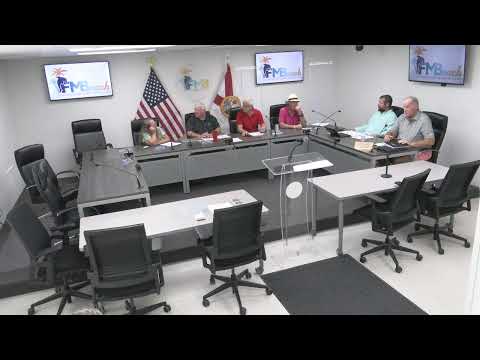
The Marine and Environmental Resources Task Force voted April 10 to recommend that the Town of Fort Myers Beach research and develop financing options to dredge canals clogged by storm and post-storm sediment.
The recommendation follows a staff presentation showing many of the town's 30 canals are shallow or filled, requiring an estimated 57,000 cubic yards of material removed to restore a maintenance depth of -5 mean low water in the most impacted canals. "If we wanted to get all the canals to negative 5 mean low water, around 57,000 cubic yards," Chad (town staff) said during the meeting, adding recent contractor estimates put dredging costs at about $70 to $100 per cubic yard.
The issue matters because the canals serve both navigation and stormwater conveyance. "The canals are part of the stormwater conveyance system," Chad said, and several outfalls are currently silted and not functioning. Committee members also emphasized economic implications: improving navigation could restore waterfront property value and help the local tax base as properties rebuild.
Task force members discussed funding routes that have been used in similar local projects, including taxing or benefiting districts. Chad described how a previous Laguna Channel effort used a taxing district that assigns costs to benefiting waterfront parcels, then places the assessment on the county tax bill. "You look at doing an island wide taxing district or a canal by canal taxing district or somewhere in between that makes sense for doing dredging projects and phases," Chad said. He also explained federal disaster funding through FEMA was unlikely in many cases because channels were already filled before Hurricane Ian, which limits eligibility.
During the discussion members raised alternatives, such as phasing projects by canal sections, pursuing grants, or using tax-increment finance-like mechanisms to capture future increases in property tax revenue generated by redevelopment. "If canal-front owners want things to be dredged, the question to them is do we want to pay for it, or do we want to just keep trying to go get funding from off islands," Chad said.
After debate the task force approved a motion advising the town council to research and develop prudent financing mechanisms to dredge canals. Bill Altough (committee member) moved the recommendation; a second was recorded during the meeting. The recorded vote showed a majority in favor and at least one opposing vote; the motion passed. The committee directed staff to return with more detailed numbers and options for council consideration.
Next steps discussed included refining canal-by-canal cost estimates, identifying benefiting property lists, confirming staging and spoil-handling logistics, and pursuing conversations with county appraisers and the town manager to evaluate longer-term financing structures.
Proposed dredging approaches mentioned by staff included mechanical (clamshell/trackhoe) and hydraulic cutter-head methods; staff said environmental permitting (state submerged lands, Army Corps) and testing for contaminants in dredged material would be part of project scoping.
The task force recommended the town pursue the financial analysis and report back to the council for policy direction and potential voter or county processes if a benefiting assessment or other taxation vehicle were chosen.