Get Full Government Meeting Transcripts, Videos, & Alerts Forever!
Get email alerts on the Public Safety topic
No spam. Unsubscribe anytime.
West Miami crime-watch: police present Jan–Mar statistics, urge alarm registration and vehicle security
Summary
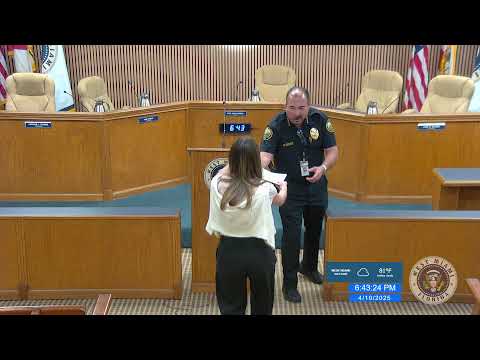
Chief Pete Delgado and Vice Mayor Natalie Milian Orbis held the City of West Miami's first crime-watch meeting of the year, reviewing January–March crime totals, describing common vehicle-entry tactics and urging residents to register alarms and use vacation watch services.
West Miami Police Chief Pete Delgado and Vice Mayor Natalie Milian Orbis hosted the City of West Miami’s first crime-watch meeting of the year, reviewing January–March crime statistics and offering residents practical steps to reduce vehicle burglaries, identity fraud and home break-ins.
Chief Delgado opened with monthly totals, saying January was “a pretty slow month” and listing specific counts: one burglary to a conveyance, several package thefts, a couple of frauds, criminal mischief, two assaults or batteries, seven traffic arrests, one warrant arrest, three misdemeanor arrests and three felony arrests. He reported February had one burglary to a conveyance, six thefts, three frauds, one stolen vehicle, three batteries, 58 traffic arrests, two warrant arrests, four misdemeanors and two felony arrests. For March he reported three vandalisms, seven thefts, three frauds, two stolen vehicles, 48 traffic arrests, one misdemeanor and no felonies for the month.
The chief emphasized that many vehicle burglaries are “crimes of opportunity,” telling residents that unlocked doors or visible valuables make cars easy targets. He described “door pullers” who test handles overnight and said criminals have become more technically capable, sometimes cloning or amplifying key fob signals. Delgado advised simple steps such as locking doors, removing valuables from view and using alarm systems and recommended Faraday-style key pouches (sold online) to block fob signals.
Vice Mayor Natalie Milian Orbis welcomed the return of the crime watch and framed the session as part of preserving West Miami’s “small town feel,” saying residents are “our eyes and ears in the community” and encouraging them to report what they see.
Delgado outlined the city’s four Ds of crime prevention—deny, delay, detect and deter—and offered specific, actionable recommendations: install sturdy exterior doors and deadbolts, trim shrubbery that can hide intruders, use motion-sensing lighting and cameras, and register alarm systems with the City of West Miami so the alarm company calls the city directly. He said registration shortens police response time (he estimated a reduction of about three to four minutes when alarms are registered with the city rather than routed through county dispatch).
On identity theft and cyber fraud, Delgado warned residents to be skeptical of unsolicited messages and calls, not to carry sensitive documents such as passports or Social Security cards while out, and to monitor credit reports (he cited CreditKarma.com as a free-check option). He described common scams—texts about unpaid tolls and calls claiming a relative is injured—and urged multi-factor authentication on accounts.
The meeting also reviewed nontechnical services the department offers: a free vacation watch (residents call the station and provide trip details so officers check the property during shifts) and an automatic watch when homes are tented for pest treatment (Delgado said unreported tenting previously led to burglaries). For emergencies the chief reiterated that residents should call 911; he also said the station maintains direct phone lines and that calling the station will get a police response, but that 911 remains the fastest way to summon multiple agencies.
Delgado said the department plans to hold future crime-watch briefings, possibly quarterly, to update residents on recent trends and prevention suggestions. The meeting closed with officers and city officials inviting residents to sign an attendance sheet to receive follow-up materials and a certificate of attendance.