Get Full Government Meeting Transcripts, Videos, & Alerts Forever!
Get email alerts on the School Finance topic
No spam. Unsubscribe anytime.
Lacey board rejects amended tentative budget that would have allowed tax-levy incentive application
Summary
The Lacey Township Board of Education voted 6–1 to reject an amended tentative budget that included authorization to apply to the state for permission to exceed the 2% tax levy cap and seek tax-levy incentive aid. District officials said the move was prompted by multi-year state aid cuts.
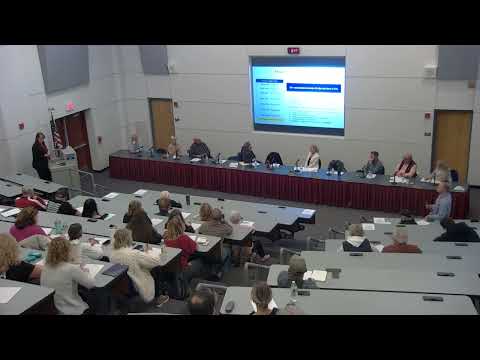
At an April meeting, the Lacey Township Board of Education voted 6–1 against adopting an amended tentative budget that included authority to apply to the state for permission to exceed the 2% tax levy cap and to seek a tax-levy incentive. Mrs. Claus cast the lone yes vote; six board members voted no, leaving the district without the requested application.
The board considered the amendment after district staff, citing a multiyear reduction in state aid under so-called S2 funding changes, said the district faces a structural shortfall. Sharon Ormsby, the district business administrator, told the board the gap was driven by steep aid reductions and rising costs and said the application would give the district the option — not the obligation — to increase the tax levy if the state approved it. "To balance our budget, we need 14.24%," Ormsby said, summarizing the size of the shortfall reflected in the amended tentative budget.
The nut of the debate was how to respond to an estimated funding gap and avoid immediate cuts that district staff warned would harm programs and services. The district presented figures showing a roughly $88 million operating budget for 2025–26, with roughly $50 million in salaries, large benefits increases, and a minimum gap of $6.6 million staff said would need to be filled to present a balanced tentative budget to the county and state. The district also reported a longer-term shortfall of roughly $17 million relative to the state’s adequacy target.
District and county staff described the application program as an incentive: Mr. Morgan, a district staff speaker, said the state would offer tax-levy incentive aid equal to "5% of the amount that the local community is willing to certify above the 2% cap." Morgan called the program "one of those moments ... the lesser of of several evils and there really is no good solution." The amended budget put $6.6 million in "other aid" pending state approval of the application; without that aid the district's proposed tax levy would show a smaller increase (about 3.15%) but still leave the district short.
Board members and public commenters sharply disagreed about the right course. Several board members argued a yes vote would effectively accept a broken state funding formula and lock in long-term tax increases. Board member (and former board speaker) said the board must push the state for accountability rather than raise local taxes; another board member called a tax increase "financial punishment" after last year’s 9.9% levy increase.
Public commenters urged both caution and action. Michael Ryan, president of the Lacey Township Education Association, urged investment in schools: "Education is not just an expense, but an investment," he said, warning cuts would reduce class supports and extracurriculars. Jen Bentley, a third-grade teacher and LTA vice president, urged the public not to conflate teachers with outsiders, saying, "I am Lacey, and we together, the LTI we are Lacey." In contrast, Richard Bidnick of Lacey Citizens for Responsible Government demanded concessions from the union and urged salary cuts, saying "the union should take a 10% cut in your salary for 1 year." Those comments reflected sharply different views among residents about where to find savings.
Board members also outlined specific fiscal figures and trade-offs during the discussion. The district said benefits costs were rising — Ormsby and other staff cited an 18% bump in benefits and estimated a move back to the state benefits plan as of July 1 after private-insurance quotes proved higher. Ormsby listed potential reductions the district had already adopted or proposed, including elimination of three certified positions, three full-time paraprofessionals, and a custodian, deferred technology purchases and supplies, and repurposing some duty aides into cafeteria funds. She also presented examples of efficiency measures the district said it had already used: health-insurance changes that had saved roughly $2.1 million over two years, redistricting that reduced staffing, and co-op athletic partnerships.
At roll call on the motion to adopt the amended tentative budget for the 2025–26 school year, the vote was recorded as follows: Mr. Armato — No; Mr. Peters — No; Mr. Bell — No; Mrs. Armato — No; Mrs. Walker — No; Mr. Connerty — No; Mrs. Claus — Yes. The motion therefore failed; the board chair said members would reconvene to try again and that a revised tentative budget must be in place for the state/county process. The board set May 7 as the public hearing date (moved from April 29) and May 15 as the final deadline for the budget process if the board pursues further action.
District staff and several board members warned of potential consequences if the board fails to adopt a balanced tentative budget before state deadlines. Staff estimated that without additional revenue the district could face cuts large enough to eliminate dozens of positions, increase class sizes dramatically, and curtail transportation, academy programs and extracurriculars; they also outlined the risk that the state could appoint a fiscal monitor to oversee district finances. However, several board members said they preferred to refuse the tax-levy application and press the state for funding or explore loan and other options rather than authorize a large local tax increase that would affect homeowners and renters.
The board closed the meeting without adopting the amended tentative budget; members said they would meet again — possibly in an emergency session — and invited community suggestions. The district continues to explore options, and staff said it will submit a revised tentative budget and any required application only if the board votes to do so.
Ending
The board must submit a tentative budget to the county office and meet state deadlines in May; if members again fail to adopt a balanced tentative budget, staff warned of possible state intervention or emergency measures. The board asked residents and stakeholders for ideas and said it would post notices if an emergency meeting is scheduled.