Get Full Government Meeting Transcripts, Videos, & Alerts Forever!
Get email alerts on the Community Services topic
No spam. Unsubscribe anytime.
Norwalk BET reviews Community Services budget as city considers absorbing pandemic-era assistance program
Summary
At a March 6 special meeting, Norwalk’s Board of Estimate and Tax reviewed the Community Services budget, including a request to absorb a pandemic-era community resource program into the city operating budget (three full‑time positions), revenue and staffing issues in environmental health, WIC grant timing, and the long‑running fair rent office.
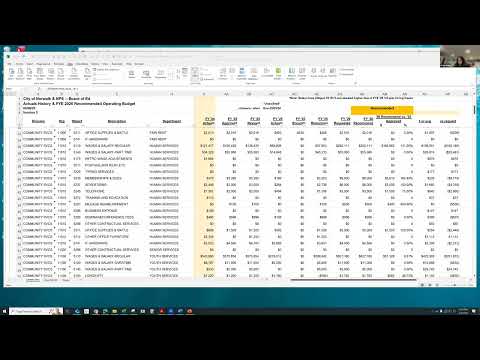
The Board of Estimate and Tax reviewed the Community Services portion of the fiscal 2026 proposed budget at a special meeting March 6, focusing on human services, public health and the library.
The most substantial item discussed was a proposal to make permanent a community resource program that began during the COVID‑19 pandemic. Lamont Daniels, chief of community services, said the program was created with philanthropic support and “we worked really hard to… adhere to, you know, where we are in our city, with our budget.” Anna Vivian Estrella, director of human services, explained private foundations funded the program for several years and that the city is being asked to absorb three full‑time positions next fiscal year. Estrella told the board 706 households have already used the service this year to connect with nonprofit providers for needs such as food, clothing and medical assistance.
Tom, the city finance staff member presenting the budget, told the board the salary lines rise about $165,000 year‑over‑year for the human services section; staff explained that increase reflects the three positions being added to the operating budget after foundation funding ends. Lamont Daniels and Estrella said the positions would be hired at conservative union grades (starting at grade 8 / roughly $50,000–$55,000 base, per staff comments) and noted that employee benefits are carried in a separate “employee benefits” section and are estimated at about a 40% gross‑up.
Board members asked whether outside funding could be sought to reduce the city’s cost. First Selectman (Mayor) Harry Rilling and several BET members encouraged Lamont Daniels to look for other grants or nonprofit partners; Miss Yang asked the department to report back in the coming weeks on possible funding alternatives. “I would ask that we have you look at that over the next several weeks and report back,” the BET chair said.
The meeting also featured a detailed explanation of the city’s fair rent office. Daniels said Norwalk had a fair rent office before state law required municipalities above a population threshold to maintain one. Anna Vivian Estrella summarized the office’s function: it informs tenants and landlords of rights and, when there is a complaint over a rent increase or inadequate maintenance, the office uses a 13‑category protocol that can lead to a legally binding hearing and, if appealed, court review.
Public health and environmental health budget items drew attention. Deanna D’Amour, director of health, said a combination of grant timing and program staffing has created a need to use operating funds to cover benefit costs for the Women, Infants and Children (WIC) program: WIC operates on a federal grant year (Oct. 1–Sept. 30) and the department has expended a larger share of benefits than expected, she said. D’Amour also described grant funding that has supported a full‑time public health nurse; with some grants ending and others reduced, the department asked the city to absorb the position to keep services such as childhood immunizations and latent TB follow‑up.
Environmental health staff described increased workload because of state changes in follow‑up for elevated blood lead levels, and requested a previously requested part‑time position remain part‑time given the tight budget. The board pressed whether additional inspection or code‑enforcement capacity could be “self‑funding” through increased permits and fines; D’Amour and other staff said some programs, such as food licenses, already generate substantial revenue (food licenses were cited as about $260,000 of the roughly $405,000 in licensing and permits revenue shown in the book), but that staffing vacancies have limited the department’s ability to meet all mandates.
Library staff also asked the board to reconsider a cut to part‑time wages. Cheryl Harris, director of Norwalk Public Library, said part‑time library shelvers have not had pay adjustments in years and requested reinstatement of $50,000 cut to part‑time wages to allow increases; BET members asked Harris to submit a specific cost estimate so the administration could consider it during final deliberations.
The BET left several items open for follow up: Lamont Daniels was asked to search for grant or nonprofit partners to offset the human services positions; Cheryl Harris will provide a cost estimate to restore part‑time wages; and Neil Rennie (facilities) will provide a building‑reallocation spreadsheet showing how utilities and janitorial costs were reallocated across city facilities.
The meeting moved on to Operations and Public Works after the Community Services review concluded.