Get Full Government Meeting Transcripts, Videos, & Alerts Forever!
Get email alerts on the Healthcare Access topic
No spam. Unsubscribe anytime.
Council advances gender‑affirming care and reproductive healthcare ordinance to first reading
Summary
Councilors voted to waive reading and advance a city ordinance intended to protect access to gender‑affirming care and reproductive health services; sponsors said the measure mirrors state definitions and aims to protect provider and patient information.
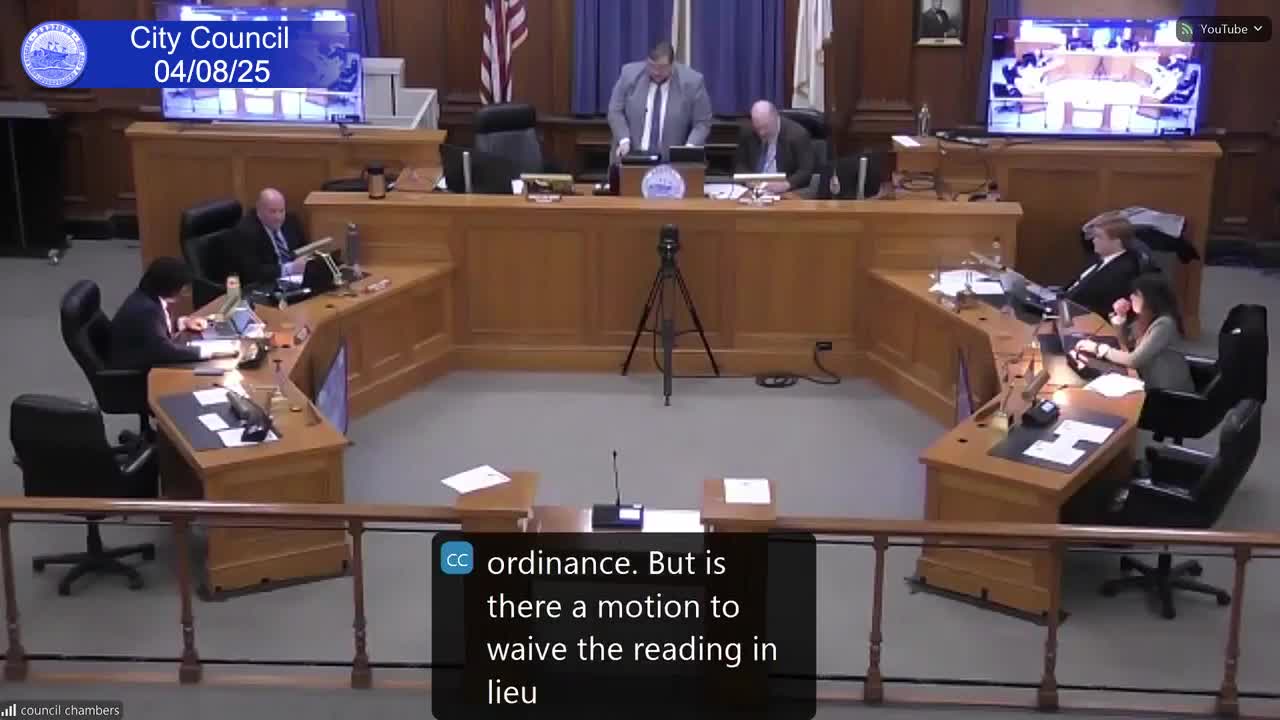
The Medford City Council on April 8 voted to waive full reading of and advance for first reading an ordinance intended to protect gender‑affirming care and reproductive health care for patients and providers.
Councilor Singh offered the ordinance (paper 25‑053) and Councilor Tsang asked the council to waive the lengthy ordinance reading and allow the petitioner to provide a summary; the council approved waiving the reading and advanced the item. Sponsors said the ordinance is designed to protect people seeking care and medical providers from out‑of‑state arrest warrants and from attempts to apply non‑Massachusetts law within Medford; it also protects medical records and affirms nondiscrimination housing and services based on gender identity and expression.
Councilors described consultations with stakeholders including medical providers, the city’s legal counsel (KP Law) and community groups. Councilors Collins and others voiced support and called the measure a local step to ensure access and protections even as state and federal dynamics change. After public comment the council voted to approve for first reading; the roll call recorded unanimous support.
Why this matters: supporters said the ordinance offers a local legal layer to protect residents and providers; council sponsors emphasized aligning definitions with state law and providing administrative support for accurate public information.
Next steps: the ordinance was advanced for first reading and will return for subsequent readings and public hearings required under local ordinance procedures.