Get Full Government Meeting Transcripts, Videos, & Alerts Forever!
Get email alerts on the Chapter 55 Demolition Delay Ordinance topic
No spam. Unsubscribe anytime.
Commission debates new ‘historic review committee’ in draft Chapter 55 demolition-delay rewrite
Summary
City staff presented proposed revisions to Norwalk’s Chapter 55 demolition-delay ordinance, including a separate Historic Review Committee to research significance and recommend alternatives; commissioners raised concerns about roles, authority and workflow and asked staff and legal to revise the draft.
Norwalk — City staff presented a revised draft of Chapter 55, Norwalk’s demolition-delay ordinance, proposing clearer definitions, a two-step review process and a separate Norwalk Historic Review Committee to research whether a building is historically significant and recommend alternatives to demolition.
Michelle, a city staff member, told the commission the rewrite “adds definitions, organized roles, leading to a more effective ordinance” and said the proposal was revised after consultation with corporation counsel and the ordinance chair. The draft retains a 120-day delay if an objection is filed and clarifies that partial exterior changes can trigger the ordinance.
Under the draft, the proposed Historic Review Committee would include five voting members (two designees from planning and zoning and three residents appointed by the mayor) plus two alternate members; members would be required to “possess knowledge of local history or historic preservation practices.” The committee would hold a public hearing within 21 days of an objection, determine whether the building is significant and, if so, issue recommendations on alternatives to demolition (preservation, restoration, relocation, reuse, recordation or finding a purchaser).
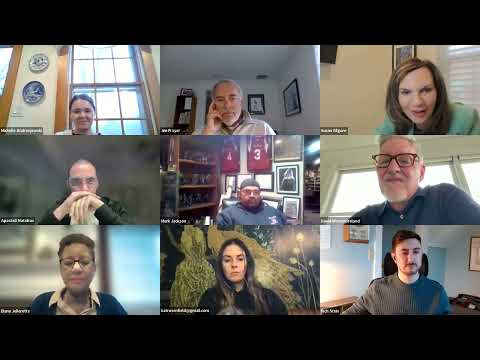
Several commission members raised process and authority concerns. Commission member Rich Stein — speaking from prior experience at the New York City Landmarks Preservation Commission — urged the new committee to act as a research body rather than a decision-making body. “The research department just presented the facts, and then when actions came up for a vote, they presented their research, and then allowed the commissioners then deliberate,” Stein said, arguing that a research-first model leaves final decisions with appointed commissioners.
Other commissioners sought clarity about whether the Historic Review Committee would be subordinate to the Historical Commission or operate independently, and whether the Historical Commission would retain the ultimate authority to place or lift a demolition delay. Several members asked staff to rework the draft so the committee’s role is explicitly advisory — providing research and recommendations — and to clarify workflow, quorum and appointment language.
Michelle told the commission she would return to corporation counsel and the ordinance chair to revise the draft. “I’ll sit down with Brian again and rework that process and see what he makes says that makes the most sense,” she said. Staff indicated a revised draft would be presented at a future meeting.
Commissioners discussed staffing and resourcing for the review function; options included a volunteer roster, on-call professionals, or relying on the Norwalk Historical Society and Norwalk Preservation Trust as expert resources. Commissioners suggested the draft be edited to clarify member qualifications, the relationship between the review body and the Historical Commission, and whether commissioners may themselves file objections.
The commission did not adopt the draft; staff will revise the proposal and return with updated language addressing the concerns raised.