Get Full Government Meeting Transcripts, Videos, & Alerts Forever!
Get email alerts on the Wetlands Stormwater Corrective Action topic
No spam. Unsubscribe anytime.
Norwalk commission keeps public hearing open on 284 New Canaan Ave.; requests third‑party wetlands review
Summary
The Conservation Commission and Inland Wetland Agency continued the public hearing on corrective-action and modification plans for 284 New Canaan Ave., asked the applicant for updated plans and reached consensus to seek a third‑party wetlands review before making a final decision. The hearing will remain open until the April 22 meeting.
The Conservation Commission and Inland Wetland Agency of the City of Norwalk kept the public hearing open March 25 on corrective‑action and modification plans for 284 New Canaan Avenue and asked for an independent wetlands review before closing the record.
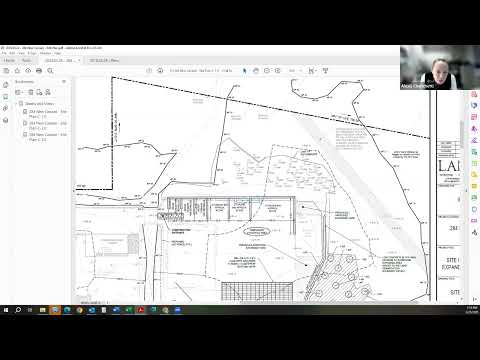
The hearing addressed a corrective‑action application tied to a special permit first approved in 2016 and modified in 2019 for a contractor yard at the former armory. Brian Carey, a wetlands scientist with LandTech representing AJ Penn and Company, presented updated plans showing plantings, a seeding mix and a revised stormwater design that would replace an above‑ground detention area with a subsurface gallery system and relocate material storage bins within the existing yard footprint. Carey said, “We did put the tree plantings in at the same density as the restoration plan.”
Commissioners and staff pressed for clarity about what was built under the 2016/2019 approvals, how the site has been used since, and whether the proposed changes would increase impacts to adjacent wetlands. Commissioner Catherine Knight said she was not satisfied with the available information: “I just don't feel like we have enough information to know whether or not this is sufficient.”
Why this matters: commissioners said the parcel borders sensitive wetlands and that material stockpiles and overflowing storage bins have been photographed on the site in prior inspections. The commission said a third‑party professional should assess three items: the environmental impact of the originally approved plan (2016/2019), impacts that have occurred because elements of that plan were not implemented, and the potential impacts of the currently proposed plan.
Key details from the applicant and staff - Carey said an above‑ground detention basin was constructed elsewhere on the site in September 2024 and that the applicant proposes a subterranean gallery to detain stormwater so the paved work area can be expanded back to previously approved limits. - Carey said the relocated bins will be planted around and that the applicant can provide a monitoring plan during construction and thereafter. - Alexis (City staff) described the application as a corrective‑action modification and said the applicant received an enforcement order; she explained that the applicant must either show how it will comply with permit conditions or propose modifications that address those conditions. Alexis also confirmed the 2016/2019 plan is posted on the city’s pending application webpage. - Staff has requested a third‑party review but said the applicant must pay the review fee and city procurement and contracting rules limit how quickly a reviewer can be retained; Alexis said two bids were solicited 01/29/2025 but no payment has been received to date.
Concerns raised by commissioners - Proximity of the storage bins to the wetland boundary and evidence of prior overflow from stockpiles. - Whether the area shown as planted buffer in the current plan matches what was approved in 2016/2019 and whether the buffer is adequate (Commissioner Knight and others noted the planted trees are small‑diameter and disturbance has occurred). - Longstanding compliance history: commissioners said elements required by the earlier permits were not fully constructed and that evidence of repeated site misuse increases the need for an independent technical review.
Commission direction and next steps - The commission reached consensus that a third‑party wetlands professional should evaluate (1) the permitted design from 2016/2019, (2) impacts that occurred when permit conditions were not implemented, and (3) the environmental impacts of the applicant’s proposed modification. Staff explained the third‑party review requires an applicant payment for the reviewer and city procurement steps before a contract can be executed. - The commission kept the public hearing open; staff and the chair recommended reconvening the hearing on April 22, 2025, at 7:00 p.m. Any materials submitted in the interim will become part of the public record and parties will have an opportunity to respond.
Quotes - Brian Carey, wetlands scientist, LandTech (representing AJ Penn and Company): “We did put the tree plantings in at the same density as the restoration plan.” - Catherine Knight, Commissioner, Conservation Commission and Inland Wetland Agency: “I just don't feel like we have enough information to know whether or not this is sufficient.” - Alexis (Senior environmental officer, City of Norwalk): “This is a corrective action application, and, they received an enforcement order… you need to file for a corrective action modification of that permit to either show how you're going to physically get in line with all the requirements of the permit or, propose additional modifications to that permit.”
Ending note: The applicant said it can provide revised drawings quickly, will work with staff on possible bin relocation and monitoring, and requested the opportunity to rebut any new materials placed into the record. The commission will revisit the item when it reconvenes the public hearing on April 22, 2025.