Get Full Government Meeting Transcripts, Videos, & Alerts Forever!
Get email alerts on the Public Safety Transportation topic
No spam. Unsubscribe anytime.
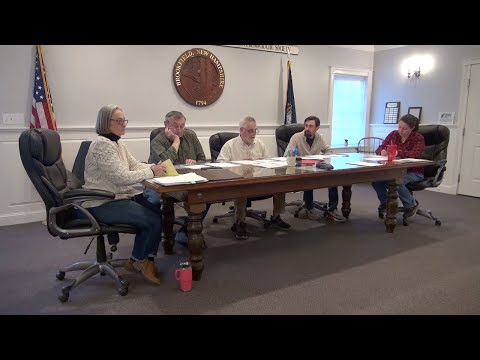
Selectmen discuss draft winter ‘no parking on town roads’ ordinance; public notice and signs flagged as enforcement priorities
Summary
Board members debated a draft ordinance to restrict parking on town roads during winter (proposed Dec. 1–March 31), focusing on safety, enforcement, signage and whether to limit prohibitions to problem locations.
Brookfield Selectmen discussed a draft winter maintenance restriction that would prohibit parking on town roads during the winter season, with members generally supporting a trial limited to December 1–March 31 but raising questions about enforcement and signage.
The proposed rule would bar parking on narrow town roads during winter months to ensure safe travel and clear turnarounds on dead-end streets. Several Selectmen and staff said the goal is safety: narrow pavements (about 18 feet in many places) and snowbanks make it difficult for vehicles to pass when cars block travel lanes or turnarounds. Members cited recurring trouble spots — Moose Mountain Road and Cedar Park areas and the rail-trail access on Clark Road — where parked vehicles impede emergency or service vehicles and block turnaround areas.
Board members discussed two enforcement approaches: (1) a townwide winter parking prohibition (Dec. 1–March 31) with signage or (2) targeted “no parking” signs posted only at known problem locations. Staff and Selectmen emphasized that enforcement requires clear notice to drivers; several members said simply enacting an ordinance without posting signs would be impractical and could invite complaints when officers attempt enforcement. One Selectman proposed tying restrictions to storms (e.g., 12 hours before/after a storm), but staff indicated that would be harder to draft and enforce.
Fines were discussed briefly; towing at the owner’s expense was offered as an enforcement mechanism rather than a fixed fine amount. The board agreed to post a draft and hold a public hearing before adopting a final ordinance and asked staff to consult the town attorney before public notice.
Why it matters: The draft targets recurring safety and access problems during winter but will require careful drafting, adequate public notice (signs and postings), and attorney review to ensure enforceability.
Next steps: Staff will prepare a draft ordinance for posting, include recommended signage locations, and schedule a public hearing to collect comments before the board acts.