Get Full Government Meeting Transcripts, Videos, & Alerts Forever!
Get email alerts on the Budget Fund Balance topic
No spam. Unsubscribe anytime.
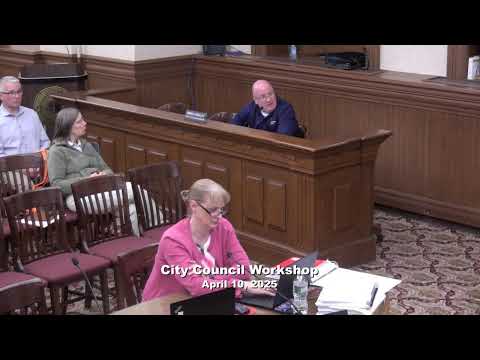
Lewiston council weighs fund‑balance projects, downtown wayfinding and tradeoffs with bonded LCIP
Summary
Councilors reviewed a list of fund‑balance projects — from downtown wayfinding and parking garage signs to Bates Mill reserve and public‑art funding — and debated using one‑time reserves versus bonding and the implications for tax rates and future budgets.
City officials presented a set of fund‑balance projects and councilors spent the second half of the meeting debating which one‑time items to fund now and which to defer, and whether to use reserves to blunt near‑term tax pressure.
Nate Libby, director of economic and community development, described a group of downtown priorities the department proposed for fund balance: a $250,000 economic development loan pool, $75,000 for a Bates Mill reserve, public‑art funding, and a package of wayfinding and parking‑garage sign upgrades to help direct visitors and communicate parking rules.
“The downtown business district has really been pummeled,” Libby said, arguing signs and better wayfinding would improve perception and make it easier for visitors to find free and low‑cost parking. He noted the city’s current parking signs are “too small to be of any use or function to drivers” and that a modest investment could direct visitors to garages and reduce friction for shoppers and diners.
Councilors asked practical questions about what the signs would say and who would pay. Libby said some interstate signage (tourist/exit panels) is controlled by the Turnpike Authority and would require a separate purchase or sponsorship. Administrator O’Malley and staff noted several projects on the fund‑balance list are short, one‑time asks intended to be paid from existing reserves (fund balance) rather than borrowed.
Councilors also discussed the roughly $219,772 in bond premium interest previously set aside for a potential fire‑station land purchase; Administrator O’Malley told the council that sum could be reallocated. “That is not restricted,” she said, and recommended it be used where the council saw highest priority.
The meeting turned to broader budget mechanics. Director Roy walked councilors through the current arithmetic: with school requests pending final approval the combined package under discussion then would produce a tax‑rate increase of about $1.29 per $1,000 of assessed value (a ~4.7% increase for city services; the full combined levy change including county and schools was noted at about 4–4.7% overall depending on school approval).
Members debated whether to use fund balance to lower the tax increase this year. Some members urged caution. “If we use our fund balance towards our operating budget to try to keep the tax rate flat, then next year we’re going to have … this year’s increase plus next year’s increase to deal with,” Councillor Harriman warned, calling repeated reliance on reserves unsustainable. Others pushed to move one‑time capital items from the tax‑rate calculation into fund balance for a single year so the immediate levy impact is smaller.
Several councilors emphasized downtown investments as a strategy to attract private investment. Libby noted the city’s recent permit data showed roughly $80 million in private building activity per year in recent years and argued the proposed fund‑balance items total under $1 million — a modest public match to encourage more private work.
Other fund‑balance asks the council considered included small building repairs, IT replacements, parks and open‑space maintenance, library door and roof repairs, and public‑safety equipment. Police and fire leaders also appeared earlier in the meeting (separate agenda section) with vehicle and equipment requests; councilors noted those capital asks would further pressure future bond and operating plans.
Ending: No binding decisions were made; councilors agreed to bring specific questions to the next scheduled budget workshops, to circulate suggested edits and to ask staff to prioritize items that could reasonably be delayed without material risk. Administrator O’Malley and Director Roy agreed to provide vacancy and encumbrance details, and the council scheduled follow‑up workshops including one focused on school LCIP items.