Get Full Government Meeting Transcripts, Videos, & Alerts Forever!
Get email alerts on the Utilities Infrastructure topic
No spam. Unsubscribe anytime.
Lewiston officials press ahead with CSO separation, sewer lining and pump upgrades; projects to be bonded
Summary
City officials described a multi-year program to separate combined sewers, line aging sanitary mains and replace aging pump stations, saying federal Clean Water Act requirements and an EPA administrative order drive the work. Funding for the projects would come from utility bonds and utility rate revenues, not the tax levy.
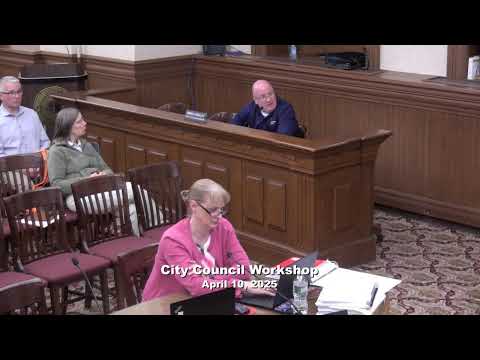
Erica Kidd, deputy director for utilities, told the Lewiston City Council that the utilities’ Local Capital Improvement Program starts with work on combined sewer overflow (CSO) separation and other collection-system priorities, and that funding requests shown in the budget packet are “all bonded.”
The projects range from a Whipple Street separation that requires coordination under a railroad crossing permit to a programwide push to install cured‑in‑place liners in older sanitary mains. Kevin Gauthier, director of Lewiston Public Works, said the work is driven by federal requirements and long-standing consent/administrative orders.
“This project is to actually separate that system,” Kidd said when introducing the CSO work, explaining the goal is to keep storm water out of the sanitary sewer during wet weather. Gauthier said the city is “well past our initial 15 years” on CSO work and must “continue to, to vet these out and not have discharges to the river during wet weather event.”
Gauthier said Lewiston has pursued storage optimization — multiple storage tanks and a storage tank being constructed at the treatment plant — but that separation remains necessary because some parts of the collection system both overflow and add unnecessary base flow to the plant. “So we’re saving money by doing the separation, as well as being in compliance with our permits,” he said.
Council members pressed on timing and cost. Councillor Glint asked, “What happens if we don’t do it?” Gauthier warned that under the Clean Water Act and the city’s permit with EPA and the State DEP the city could be cited for overflows or illicit discharges. Kidd told the council the projects presented for this year are proposed to be financed through bonding and that “this will not increase the tax rate for this year.” She added that bond repayment would be borne by utility customers through the water/sewer/storm accounts.
The LCIP packet also includes a request for $1.2 million for cured‑in‑place lining of sanitary mains and manholes (described at the meeting as trenchless, manhole‑to‑manhole lining). Kidd noted the funding ties to the city’s obligations under an Environmental Protection Agency administrative order first signed in February 2017: “Environmental Protection Agency administration order signed in 02/2017 requires many specific actions the city must take. This is a minimum funding requirement that, we are requesting.”
Gauthier said the city’s collection system totals roughly 150 miles and that the department has completed video inspection of essentially the entire system this year, which informs where lining and other repairs are needed. “We just finished videoing all of that,” he said. Councilors asked about pace: current funding at the staff’s plan is expected to line roughly five to six miles a year; Gauthier said that level is cheaper than full replacement and that some mains — newer reinforced concrete interceptors — do not need lining.
Other projects covered under the utilities LCIP during the workshop included storm‑drain inspection and repairs, replacement of old pump station equipment and generators, and multiple water main replacements across the city. Councilors asked whether the bond would ever be charged to the general fund; staff replied the bonds for these projects would be paid from the utilities’ funds and utility rates, not the property tax levy.
Where the work will be done: staff highlighted a Whipple Street area separation that requires permitting through CSX rail corridors and will enable separation of the east‑of‑tracks neighborhood; they also described ongoing meter and flow‑model updates needed for a five‑year master plan due to DEP that will prioritize future projects.
Kidd and Gauthier stressed regulatory drivers and long‑term asset management rather than discretionary choices. “We’re not looking to line and rehab 100% of the system,” Gauthier said; the priority is older clay, asbestos‑cement and brick pipes that show structural decline. On treatment‑plant storage and other mitigation measures, staff said those investments buy time and flexibility but do not eliminate the legal obligation to control overflows.
The council did not take any formal votes during the presentation; staff asked councilors to review the LCIP materials and flagged that the projects presented would be bonded in coming years and the utilities rate structure is the revenue source for repayment.
Ending: Staff said they will return to the council with more detailed breakdowns — including a better percentage estimate of how much of the system must ultimately be relined and a five‑year plan tied to inspection results required by the EPA administrative order. Councilors and staff scheduled further budget workshops to discuss tradeoffs between one‑time fund balance projects and bonded capital needs.