Get Full Government Meeting Transcripts, Videos, & Alerts Forever!
Get email alerts on the Budget topic
No spam. Unsubscribe anytime.
City manager warns of $27–28 million FY2026 operating gap; proposes critical needs and public engagement
Summary
City staff presented an updated FY2026 budget outlook showing an operating deficit in the range of $27–28 million driven mainly by weaker sales tax projections, and identified a set of ‘critical needs’ totaling about $14.6 million that staff recommends prioritizing for continued funding.
City Manager Michael Tamir and finance staff on April 8 updated the Tucson City Council on the FY2026 budget outlook, reporting a larger shortfall than earlier estimates and listing near‑term “critical needs” staff recommends protecting.
Numbers and shortfall: Finance staff said weaker recent sales‑tax receipts and revised state revenue forecasts have pushed the FY2026 projected operating deficit to roughly $27 million to $28 million. The presentation showed projected FY2025 year‑end available general‑fund balance would be lower than previously estimated (city managers reported a drop from about $63.8 million to about $53.9 million in the projected year‑end balance after recent sales tax weakness). The FY2026 preliminary column in staff materials showed a projected negative year‑end available fund balance of about $8.1 million if no corrective actions are taken.
Critical needs and tentative approvals: Staff described a list of “critical needs” — items the city manager intends to recommend for funding despite the revenue squeeze — totaling about $14.6 million for FY2026. That package includes additional Tucson Police sworn positions, staffing for a day‑truck operation in Tucson Fire (about 14 positions), public‑safety communications staffing (seven positions), an Office of Violence Prevention and Thrive Zone investments (~$2 million and several staff), a $4 million contribution toward an ongoing general‑fund capital replacement program, and $1 million for critical public‑safety IT backbone work.
Supplemental requests and tentatively approved items: Departments requested roughly $82 million in supplemental positions and non‑personnel items across funds (the presentation noted 50 requested new general‑fund positions totaling about $8.9 million, and additional non‑general‑fund position requests). Staff said some tentatively approved items in the general fund and non‑general funds have been incorporated into the five‑year financial plan where possible, but the city remains far from balanced.
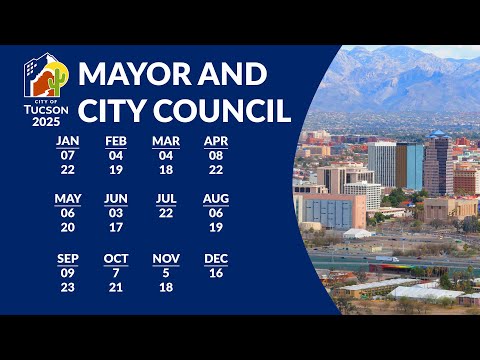
Council engagement and next steps: Tamir emphasized the city must balance the budget and that adopting a nominally balanced FY2026 budget is not enough; staff said the city needs to build additional cash balance to address multi‑year commitments and the investment plan. Staff will present a recommended budget on April 22; council must adopt a final FY2026 budget by June 3. Staff also highlighted public engagement: an online budget survey open through April 11 (already more than 1,800 responses at the time of the presentation), employee outreach, and a virtual community budget town hall scheduled for April 10.
Why it matters: Staff said the shortfall is driven mainly by lower sales‑tax collections than previously forecast, not immediate changes in city policy. Tamir and CFO Anna Rosenberry and Business Services Director Angel Ozomela told council they are preparing options that include spending reprioritization and revenue alternatives. Council members asked for additional detail on departmental vacancy prioritization, how to visualize core vs. discretionary services, and how to sequence potential fee or tax changes. Several council members urged preserving investments that protect vulnerable residents while also asking staff to identify operational efficiencies and potential new revenue sources.
Ending: Tamir told council the city will return with the recommended budget April 22 and that staff will continue to refine revenue projections and present specific corrective options before the June 3 adoption deadline.