Get Full Government Meeting Transcripts, Videos, & Alerts Forever!
Get email alerts on the Energy Rebates And Permitting topic
No spam. Unsubscribe anytime.
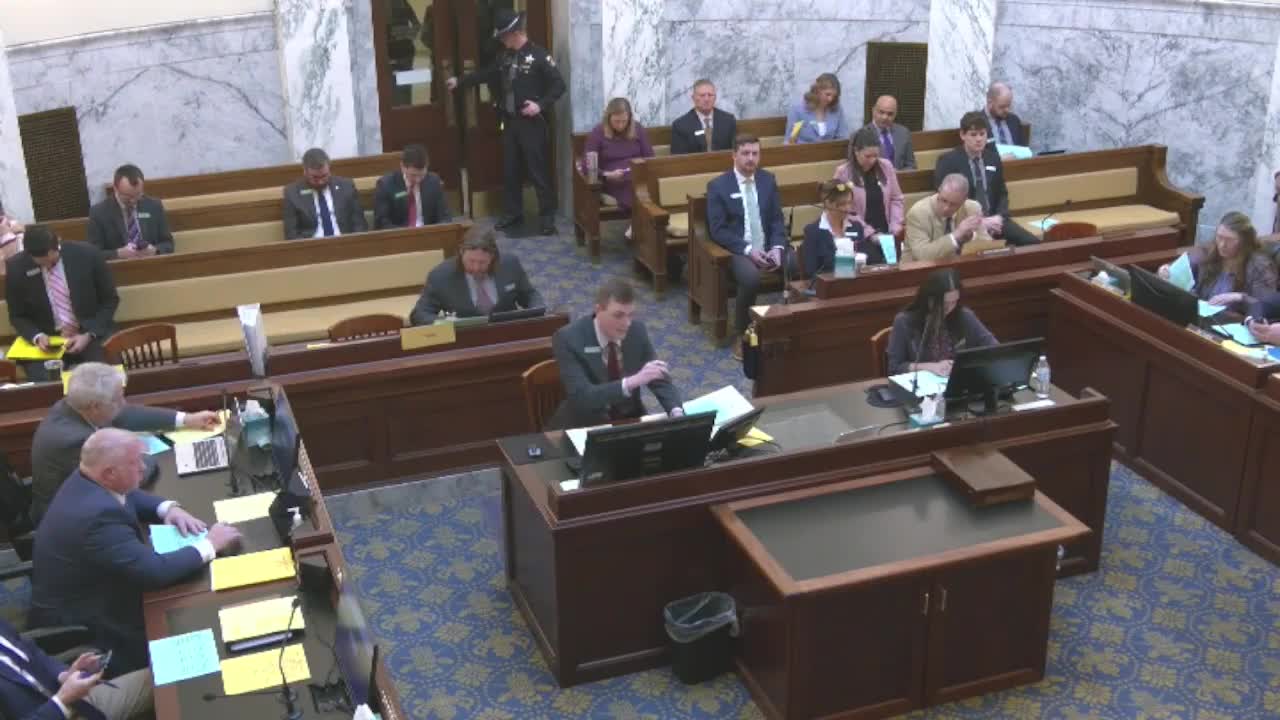
JFAC deadlocks on Office of Energy proposals for federal rebates and new 'Speed Council'
Summary
After multiple motions and amendments, the appropriations committee did not advance a combined package to administer federal home energy rebates and to fund a governor-backed Speed Council; several motions passed in the Senate roll but failed to secure majority support in the House during the committee session.
The Joint Finance-Appropriations Committee repeatedly debated and voted on funding for the Office of Energy and Mineral Resources’ (OEMR) request to administer federal home energy rebates and on a governor-proposed Speed Council to streamline permitting for large infrastructure projects. Committee members considered several motions with different funding levels and combinations of federal and general-fund requests; none produced a final, bipartisan majority in both chambers during the hearing.
Analysts described OEMR’s FY2026 request as including an ongoing federal appropriation to administer a Home Energy Rebates program created under the Inflation Reduction Act with roughly $80.8 million authorized to the state; the agency requested $24.5 million of federal funds in FY2026 to administer rebates (roughly $20 million for direct rebates to households, $4 million for a third-party implementer, and personnel and limited-service positions). The governor’s recommendation included those federal funds plus additional general-fund support (approximately $431,100 ongoing and $170,000 one-time in the governor’s recommended package) to form a governor-led Speed Council to streamline permitting and develop a public project tracking dashboard.
Callie Younger, the newly installed OEMR administrator, addressed the committee and said she supports the Speed Council initiative and emphasized the focus on critical minerals permitting rather than wind or solar. “I am Callie Younger. I am on week 3 as administrator for Office of Energy and Mineral Resources. I'm really excited about the speed council,” she said. She described the council as modeled on prior federal efforts and aligned with federal agency priorities.
Committee members split over combining the two initiatives. Multiple motions followed: one combined motion that included federal rebates and Speed Council funding failed to secure a majority on both the Senate and House sides of the committee; subsequent substitute motions changed funding amounts multiple times. At one point, a motion that included $12.25 million in federal rebates plus $431,100 in general-fund Speed Council money failed to gain a majority (the committee recorded votes and several reversals during the sequence), and a later motion adjusting the Speed Council to smaller general-fund amounts similarly did not achieve a majority in both chambers. At one point a motion reached an 8–1 Senate vote in favor but failed in the House (5–4) and thus did not carry as a bicameral committee recommendation.
Because the committee did not secure the required majority on both sides for an enduring recommendation during the hearing, the OEMR requests for the rebate-administration appropriation and the Speed Council did not move forward from this session. Committee members said the requests could be reintroduced or reconsidered at a later date.